
Turpan town is smaller than imagined, and one day covers its most flavorful corners. The logic stays anti-sun: see the Sugong Minaret at dawn when its brick shaft reads best in low light, hand noon and afternoon to two indoor venues where the cruelest hours dissolve into air conditioning, and after eight the city truly wakes, with the grape night market's trellises holding the most comfortable seats in town.
Walking leads, buses and taxis assist, and single rides mostly stay at flag fare. Put the on-foot legs at dawn and dusk; once the sun climbs, move only between indoors. Local hours run two late and many shops open at ten, which suits this route exactly.
Itinerary at a glance
| 10:00 | Sugong Minaret: A Singular Qing Brick Tower |
| 12:30 | The Old Granary Museum: Reading the Oasis through Wheat and Naan |
| 15:00 | The Turpan Art Museum: Air-Conditioned Cover under the Cruelest Sun |
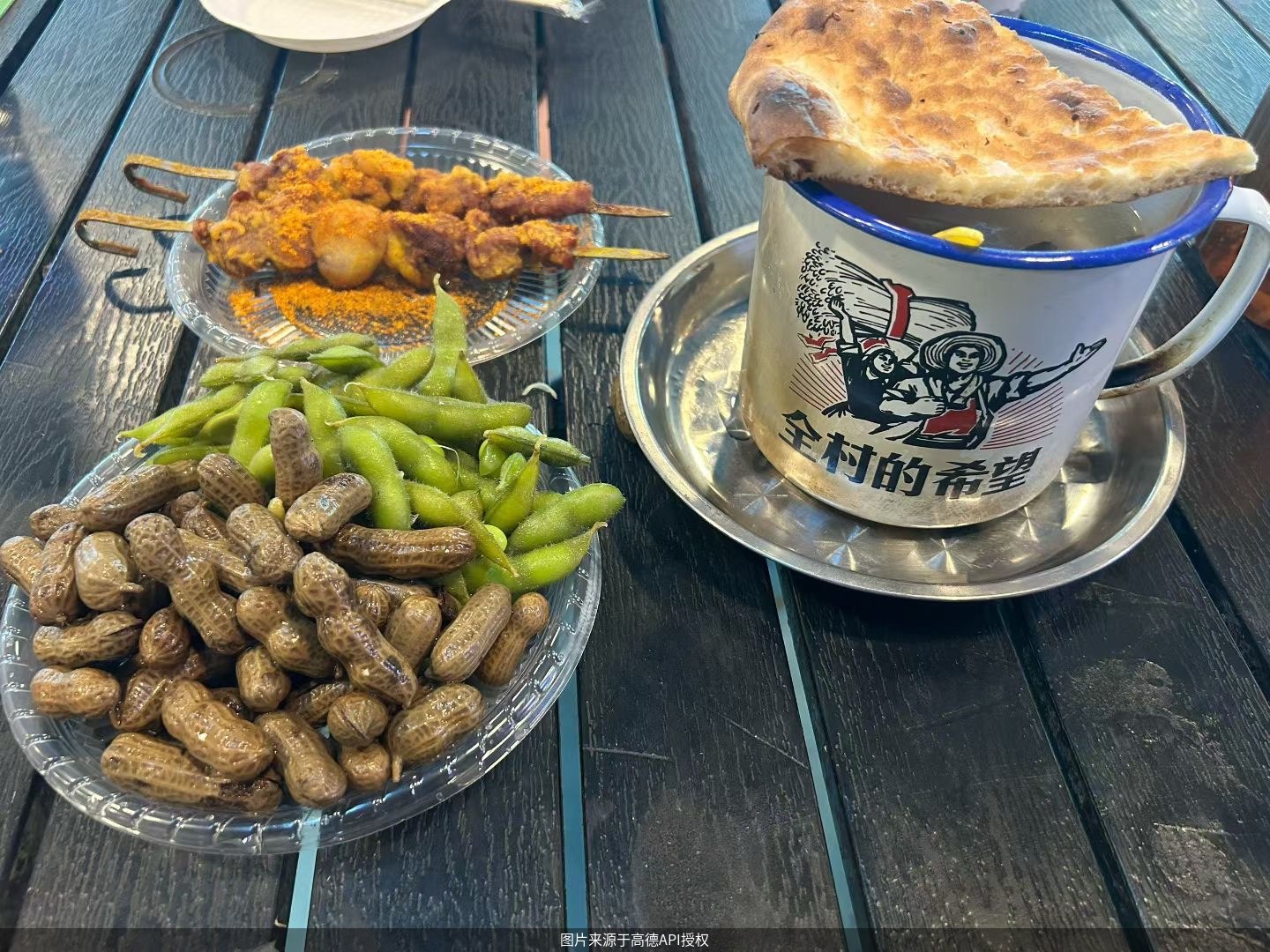
| 20:30 | The Turpan Grape Night Market: The Whole Town Dining under the Trellises |
The route, stop by stop
Sugong Minaret: A Singular Qing Brick Tower
Sugong Minaret, also called Emin Minaret, rose in the Qianlong era when the local prince Emin Khoja built it in gratitude for Qing investiture, an Islamic-style tower whose ochre bricks weave fifteen geometric patterns with no glazed tile at all, decoration achieved by brickwork alone, unique among Chinese pagodas.
The mosque hall beside it spans its prayer space on raw earth and timber, light slanting through high windows, quiet enough to hear footsteps. Visit with reverence: dress conservatively, keep voices low, and ask before photographing inside. Dawn's slant light on the brick face is the tower's best hour.
The Old Granary Museum: Reading the Oasis through Wheat and Naan
Converted from actual granaries, the museum holds Turpan's grain memory as an oasis farming hub: storage forms, measures, water mills and dough work, a sequence that explains how the basin turns karez water into naan and pulled noodles. The display is compact, comfortably under an hour.
Midday crowds are thinnest, and the air conditioning answers the hour's hard requirement. Lunch nearby afterward, with pulled noodles and pilaf within walking range.
The Turpan Art Museum: Air-Conditioned Cover under the Cruelest Sun
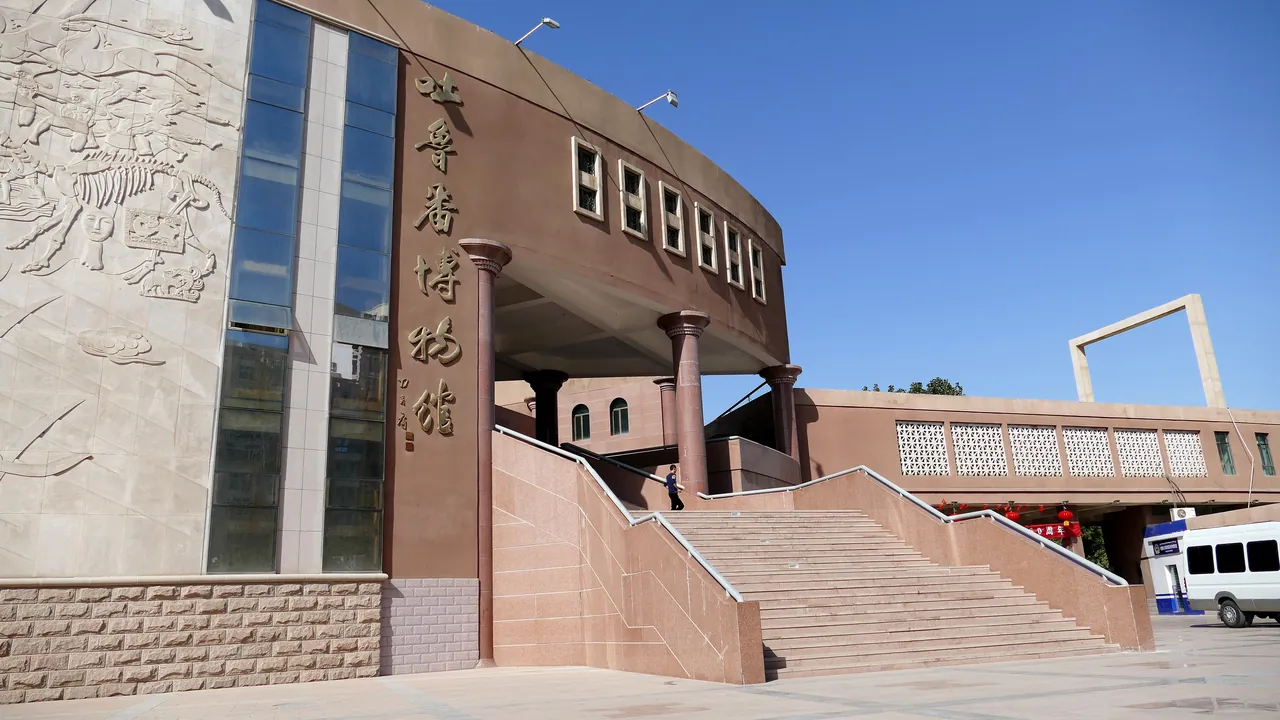
Three in the afternoon is the basin's thermal peak, and the art museum is the route's cooling capsule: local painters' vineyards, karez wells and folk-life canvases plus calligraphy shows, pre-stringing the brickwork seen at the minaret with the street life coming at the night market.
An hour of quiet, cool viewing with seats for lingering; travelers indifferent to art can equally treat it as a rest station that happens to hang exhibitions.
The Turpan Grape Night Market: The Whole Town Dining under the Trellises
The night market opens beneath grape trellises: grill smoke, samsa-oven perfume and iced-yogurt chill mingling, with locals seating after nine and visitors arriving just in time for the best atmosphere. Grilled lamb, spicy braised sheep trotters, pulled noodles and iced kvass form the base order, closing on seedless white raisins as dessert.
Under the trellises you hear Uygur, Mandarin and every accent of China at neighboring tables, the loosest moment of a Turpan day. Stroll back to the hotel afterward as the wind finally cools, the day complete without hurry or gasping.
| Getting around |
|
| Budget | The minaret runs about RMB 40-45 while the rest are free or low cost; the day's meals and town transit land near RMB 100-150 pp. |
| Best time | Year-round, with summer demanding an early-out, midday-hide, evening-return rhythm; spring and autumn walk easily all day; keep the on-foot stretches to dawn and after dark. |
FAQs
Is a full day of walking in Turpan town feasible given the heat?
Feasible, if walking splits to dawn and dusk: the morning minaret and night market carry the entire stroll quota while noon moves only indoors, keeping outdoor walking under two hours all day. Summer days regularly pass forty degrees, and any let-us-just-walk-a-bit impulse must yield to air conditioning; this is physics, not fitness.
Can you climb the minaret, and what etiquette applies at the mosque?
The shaft stays closed to climbing; the exterior and its brick details are the point, one circle reading all fifteen patterns. At the mosque, remove hat and shoes, cover shoulders and knees, women carry a headscarf; never disturb prayer times and ask before photographing inside. Stay courteous with staff, who are generally warm to out-of-town visitors.
With only half a day, which town stops make the cut?
Protect the minaret and the night market: the first is town's only heavyweight monument, the second its densest slice of living life. The granary and art museum are air-conditioned bonuses, pick one under pressure or drop both and give the afternoon to the Grape Valley direction. The half-day structure is one tower at dawn, one market at night.
Is night-market food safe, and what should sensitive stomachs do?
Hygiene roughly matches eastern night markets, and queue length is the best filter, fast turnover means fresh stock. Three rules for tender stomachs: order skewers well done, skip raw and chilled salads for now, and never chain iced drinks straight onto hot food. Pack stomach remedies; Turpan eating runs meaty and oily, so buffer accordingly.