
Turpan's countryside needs no sights to prop it up: vine trellises, drying houses, naan pits and the karez's open channels are scenery worth slow looking in themselves. The design centers on stayability, day one living Grape Valley's farmhouse rhythm, day two following the water through villages and gardens, day three back downtown for souvenirs and the night market. Low strain, dense experience, made for the city-drained.
The countryside's keyword is being hosted: enter farmyards by the owner's rules, accept milk tea and melon when offered, ask prices before picking, ask people before photos. No checklists, no dashes, two or three points a day and the rest given to canopies, tea and productive idleness.
Itinerary at a glance
| Day 1 · 09:30 | Grape Valley, Vines and Drying Houses: The Oasis's First Lesson |
| Day 1 · 13:00 | Grape Valley, the Farmhouse Call: Lunch and the Afternoon under the Trellis |
| Day 1 · 20:30 | Putao Li Old Teahouse: Night Wind and Chess Stones |
| Day 2 · 10:00 | Karez Paradise: The Source Lesson of Water |
| Day 2 · 15:00 | The Naan Culture Folk Park: An Afternoon beside the Pits |
| Day 2 · 20:00 | Jiaohe at Sunset: The Country Day's Dusk Lesson |
| Day 3 · 10:00 | Sugong Minaret: The Countryside Civilization's Monument |
| Day 3 · 12:30 | The Turpan Grand Bazaar: The Country Haul's Total Purchase |
| Day 3 · 20:30 | The Turpan Grape Night Market: The Country Trio's Closing Feast |
The route, stop by stop
Grape Valley, Vines and Drying Houses: The Oasis's First Lesson
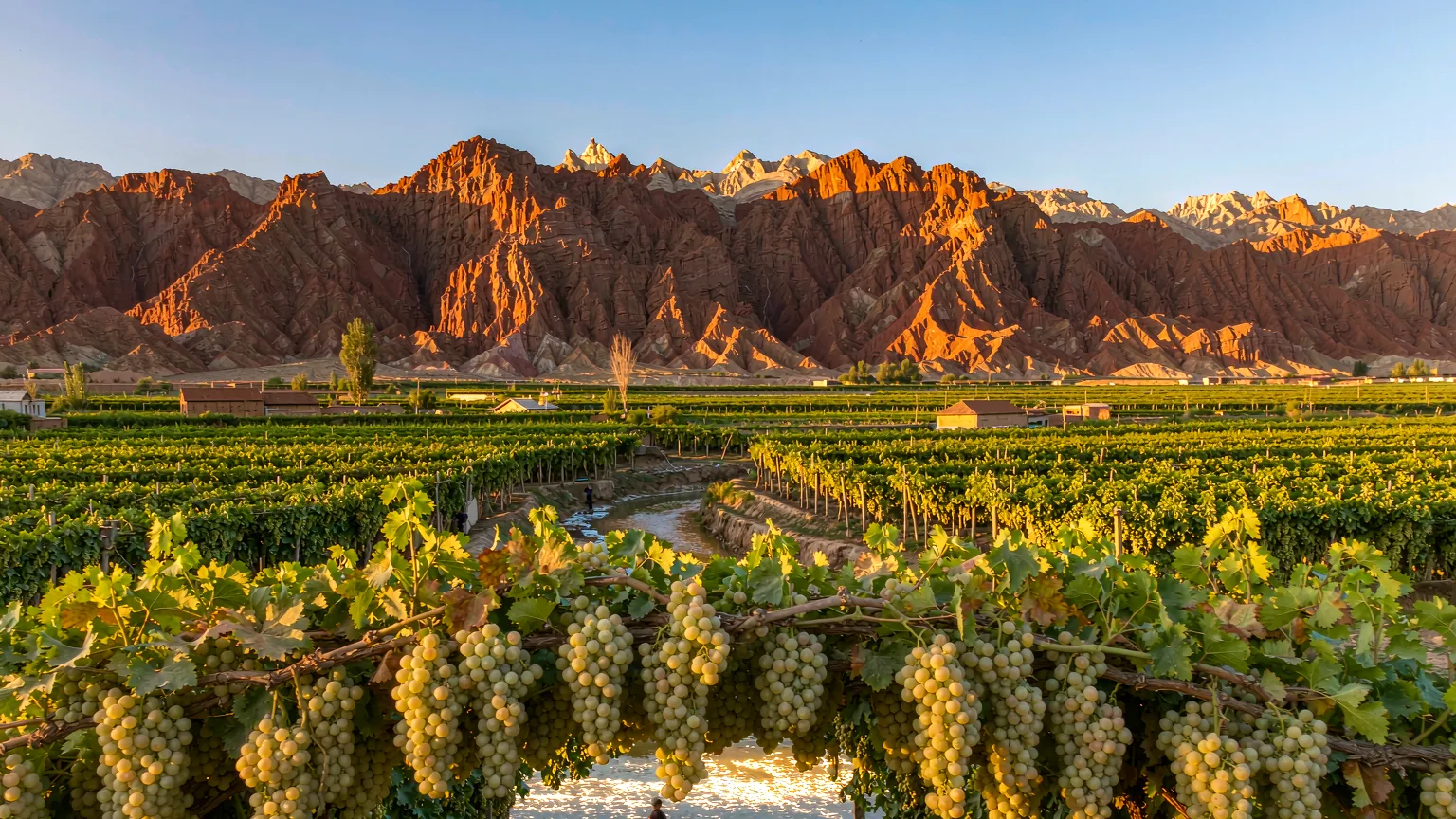
Enter the valley in the morning cool, structure before snacks: vine plots line the channels, trellis construction, open water channels and hillside drying houses each doing one job. The drying houses' pierced brick walls let crosswinds wick moisture away, and the whole fresh-grape-to-raisin process hangs right there on the wall.
Two hours for a loop; working farmers nod back at smiles and waves, the universal language. Morning light sifted through vine leaves makes this the double golden hour, for camera and for walking.
Grape Valley, the Farmhouse Call: Lunch and the Afternoon under the Trellis
Sit down to the farmhouse lunch of pilaf, skewers and seasonal melon, then the real program starts: daybeds spread under the trellis, the teapot arrives, the household's children chase chickens, and you drink tea under the vines doing exactly nothing. The Turpan farmhouse afternoon owns a proper word for this, the midday siesta.
Go deeper by helping pick a basket of grapes or turning the drying raisins on the racks, hosts usually delighted to teach. Schedule zero movement for this afternoon; half the countryside trip's flavor lives right here.
Putao Li Old Teahouse: Night Wind and Chess Stones
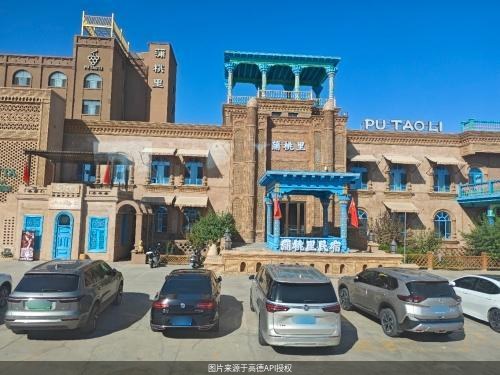
Back downtown, settle into the old teahouse to close the farmhouse day: brick tea with naan, listening to local elders' games and chatter. The teahouse relaxes further at night, the breeze outside escorting the day's heat away.
Day one carried little information but dense feeling; flip through the day's photos before sleep, since tomorrow follows the water.
Karez Paradise: The Source Lesson of Water
The country day's second lesson is water: the karez brings Tianshan snowmelt underground to every field channel, and the water that ran beside yesterday's vines is its downstream reach. The tunnels' twenty-degree cool, the shafts and reservoirs in the flesh, explain exactly where an oasis comes from.
An hour with signage and explanation doubles as noon heat cover; afterward every open channel in the countryside reads differently, living heritage in motion.
The Naan Culture Folk Park: An Afternoon beside the Pits
The afternoon belongs to naan: the folk park shows pit construction, slapping technique and the whole naan family tree at once, plus a hands-on bake to carry home. The countryside trip's souvenir resolves here, your own baked naan outclasses any packaging.
Indoor halls stay cool through the post-noon stretch; tea afterward in the park or nearby, saving dinner appetite for the post-sunset market.
Jiaohe at Sunset: The Country Day's Dusk Lesson
Enter Jiaohe at eight and put the countryside lens back onto the historical stage: every open channel, drying house and naan pit of the day has its ancestor inside this two-thousand-year earthen city. At sunset the walls ignite layer by layer in slant light as the cool wind finally clocks in.
The countryside trio's only monument moment lands harder for its two days of groundwork: every ordinary thing of oasis life is archived in this empty city.
Sugong Minaret: The Countryside Civilization's Monument
The last day returns downtown to the minaret: fifteen brick patterns raised from local earth by local craftsmen, the standing monument to the countryside's crafts. The adjacent mosque hall's raw-earth and timber frame is an oasis materials-history in itself.
After ten the light slants soft and the brick geometry gains depth. Dress conservatively, keep voices low, and ask before photographing inside.
The Turpan Grand Bazaar: The Country Haul's Total Purchase
Midday at the bazaar is restocking: the raisins, dried mulberries and apricots tasted at farmhouses stand graded and tidy, taste before weighing, quotes by the kilo. Fill any farm-buying gaps here, or pivot to honey and safflower tea for variety.
Lunch resolves near the bazaar, noodles or samsa; the afternoon goes to hotel rest and packing, luggage sorted while daylight holds.
The Turpan Grape Night Market: The Country Trio's Closing Feast
The closing feast sits under the night market's trellises: skewers, grilled eggs, iced yogurt and seasonal fruit, a total review of three country days of flavor. Evening wind under the vines, neighboring tables' laughter and the grill's perfume all count as part of the trip.
Afterward, the final luggage audit and goodbye: what the countryside teaches is simple, go slower, say thanks when hosted, and carry the sweetness of raisins home.
| Getting around |
|
| Budget | Entries total about RMB 250-320 (Grape Valley RMB 60-75, karez RMB 40, naan park RMB 40-50, Jiaohe RMB 70, minaret RMB 40-45), farmhouse meals RMB 40-80 pp, with charter or taxis by need. |
| Best time | May-June brings fresh canopy green and September-October full fruit with drying houses working, the two peaks of country experience; July-August demands strict heat pacing; winter's farmhouse fires have their own charm. |
FAQs
Is a farmhouse visit awkward, and what about the language barrier?
Not at all, farmhouses see endless guests, and your job is to relax: accept the offered tea, nod and smile, and thank them, one word of Uygur thanks, rehmet, earns extra warmth. The language kit is threefold, smiles, gestures and the phone calculator, which settle prices and quantities fine. Longer stays invite learning a phrase or two from the family, doubling the goodwill.
How does picking work on price, and when is the best season?
Picking weighs what you take, so confirm unit price at the gate; fresh grapes run seasonal prices, sweetest and dearest in August-September. Never pick without buying, and never make hosts pick for nothing. Some yards also grow apricots, mulberries and figs by season, just ask. Photograph freely, but everything eaten gets weighed.
Should the three country days include a farmhouse night?
One night is worth it: stars over the trellis, dawn birdsong and fresh-baked naan smell are beyond any hotel. Do note farmhouse lodging is basic, private baths not guaranteed, so hygiene-sensitive travelers pack a sleeping-bag liner. The compromise, night one at the valley farm and two nights back downtown, keeps both ends' advantages.
Does this countryside line strain elderly travelers?
Not at all, this is Turpan's kindest line for elders: two or three points daily, slow pace, many indoor stops, and farmyards are all sit-and-look. Three cautions: the noon heat rule applies to elders most strictly; low daybeds demand slow rises for stiff backs and knees; and the night market crowds, so seat yourselves before peak.