
Five days is Turpan in full: the town's human sites (museum, minaret, Jiaohe), the eastern line's geology and grottoes (Flaming Mountains, Bezeklik, Gaochang), the oasis's agricultural base (Grape Valley, karez) and Shanshan's desert, all included at no one's expense. The rhythm advances as two human days, one eastern day, one oasis day, one desert day, with every day's outdoor work held to morning and evening.
The trip's keyword is discipline: 14:00-17:00 goes indoors unconditionally, and that single rule guarantees the quality of all five days. Charter four days (the Shanshan day can price separately) for the least drama, taxis suffice in town. Carry the trinity of hat, water and sunscreen, the sun is the only opponent deserving respect.
Itinerary at a glance
| Day 1 · 10:00 | The Turpan Museum: The Five-Day Timeline's Origin |
| Day 1 · 17:30 | Sugong Minaret: The Five Days' First Landmark |
| Day 2 · 09:30 | Jiaohe Ancient City: The World's Oldest Earthen City |
| Day 2 · 15:00 | Karez Paradise: The Underground Cool Lesson after Noon |
| Day 3 · 09:30 | The Flaming Mountains: The Eastern Line's Red Opening |
| Day 3 · 11:00 | The Bezeklik Thousand Buddha Caves: The Uygur Murals in Person |
| Day 3 · 17:00 | Gaochang Ancient City: The Vast Dead Capital before Sunset |
| Day 4 · 09:30 | Grape Valley: The Oasis's Harvest Floor |
| Day 4 · 16:30 | The Naan Culture Folk Park: Baking Your Own |
| Day 5 · 09:30 | The Kumtag Desert: The City-Edge Desert's Closing Act |
| Day 5 · 13:30 | The Shanshan New Town Night Market: Lunch and Recovery after the Sand |
| Day 5 · 20:30 | The Turpan Grape Night Market: The Five-Day Curtain Call |
The route, stop by stop
The Turpan Museum: The Five-Day Timeline's Origin
Starting at the museum is the best investment going: giant rhino fossil, mummies and thousand-year documents spread the basin's depth at once, giving the next four days' ruins, caves and channels their dates. A national first-class museum, comfortably two hours.
Keep the afternoon loose for jet lag and dry-heat adjustment, with the minaret opening the trip properly at dusk.
Sugong Minaret: The Five Days' First Landmark
Dusk gives the minaret its kindest light: fifteen brick geometries gain depth in the raking sun, and the mosque hall's raw-earth and timber hush completes the visit. As a singular Qing-era Islamic tower, it opens the local craft story.
Dress conservatively, keep voices low, and ask before photographing inside; dinner downtown and an early night after.
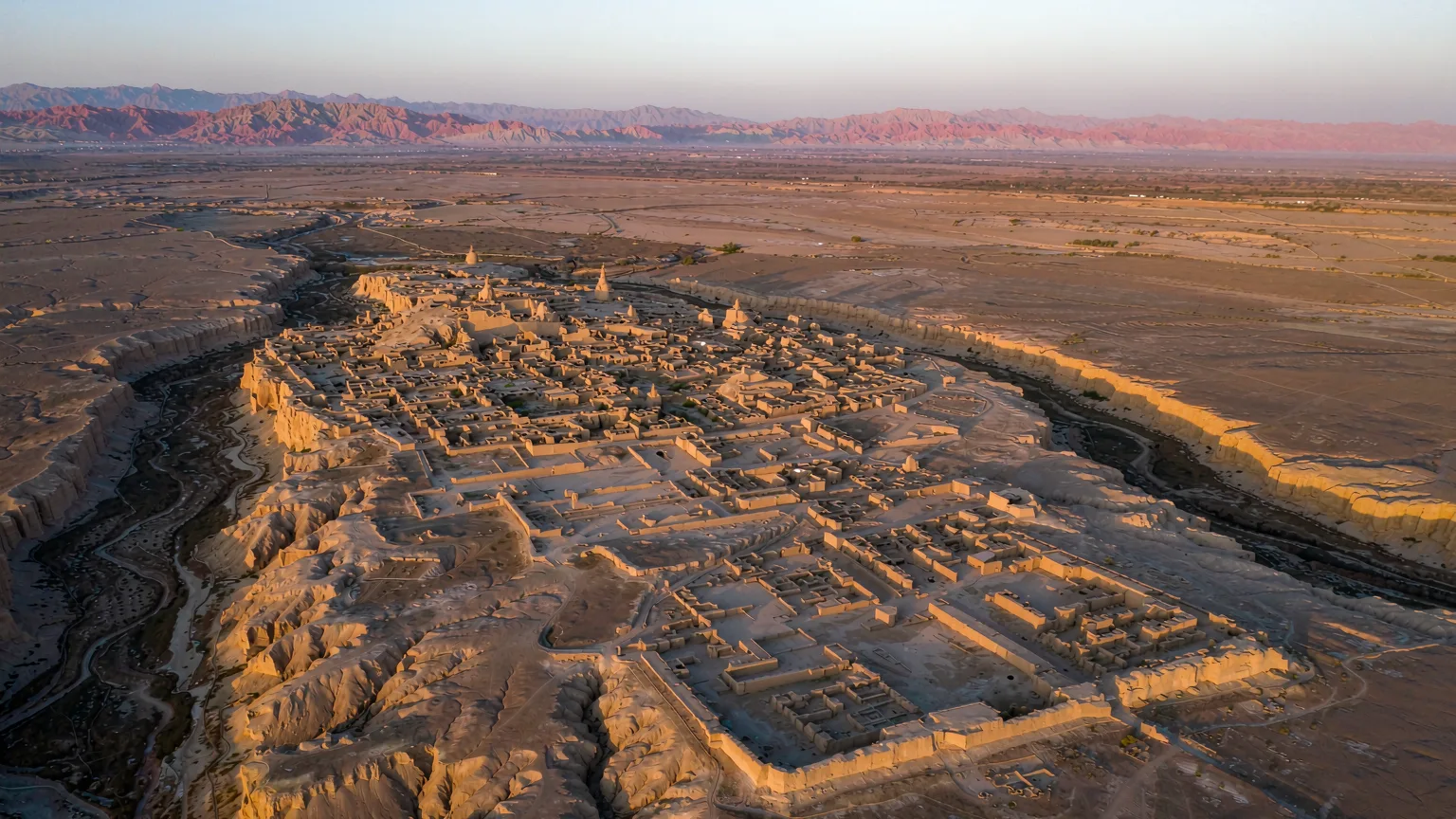
Jiaohe Ancient City: The World's Oldest Earthen City
Day two's heavyweight opens early: the city carved downward from its plateau, central avenue, stupa grove, offices and housing all legible. Dawn's raking light and thin crowds make the only atmosphere-blessed slot, ninety minutes for the circuit.
Prioritize the hundred stupas and the sunken monastery, then the overlook for the whole plateau; tickets and hours follow the official notice.
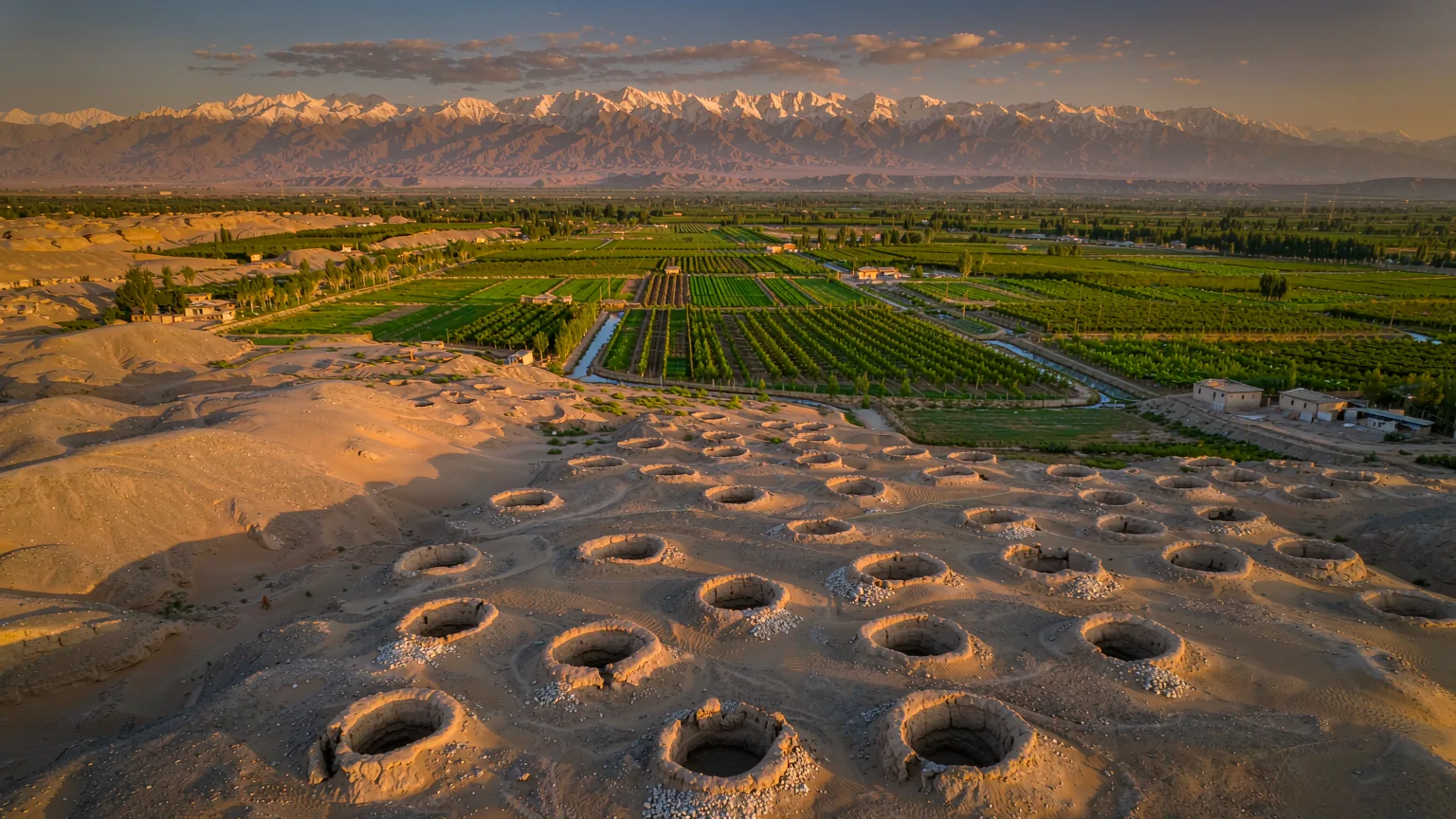
Karez Paradise: The Underground Cool Lesson after Noon
After the heat's peak, dive into the karez tunnels: twenty-degree air, flowing snowmelt, shafts and reservoirs in full arrangement, explaining the oasis's origin in one visit, with the site's standing beside the Great Wall and Grand Canal made tangible.
An hour's visit with the water-sharing section of the signage prioritized; spend leftover afternoon on town wandering or a nap, banking energy for the night market.
The Flaming Mountains: The Eastern Line's Red Opening
The eastern line starts early: dawn keeps the mountains dark red with crisp folds and the staff thermometer reading low, a chance to verify the legend firsthand, ground that burns at seventy by day is merely warm underfoot at sunrise.
Forty minutes suffice, shoot and leave before ten as ground heat climbs; the day's main course waits in the gullies behind, at Bezeklik.
The Bezeklik Thousand Buddha Caves: The Uygur Murals in Person
The grottoes in the Mutou Valley's cliff flourished under the Uygur kingdom of Qocho, murals blending central-plains, western-regions and Uygur styles with donor figures and sutra-tableau colors still legible; the sections lost abroad a century ago leave silent annotations on bare walls, part of the experience.
Open caves rotate for conservation, an honest hour; photography barred inside; the gully runs cooler than the plateau, keeping late-morning visits comfortable.
Gaochang Ancient City: The Vast Dead Capital before Sunset
Enter Gaochang at dusk, riding the shuttle in and walking the core: rammed ramparts running long in slant light, with the Xuanzang lecture legend, the khan's fortress and the Great Buddha Temple forming the capital's frame. The evening finally allows standing and shooting at leisure.
Two hours for the visit, the walls' sunset silhouette the day's best photograph; dinner back downtown or at a nearby farmhouse after.
Grape Valley: The Oasis's Harvest Floor
Day four returns to the oasis itself: trellises, open channels and drying houses form one complete agricultural system, come September the vines hang heavy and the drying houses smell of the season. Farm-direct buying follows taste-before-weigh, with seedless whites and rose-scents headlining.
Two hours for the field loop at mid-morning, a farmhouse pilaf under the canopy at noon, and a proper siesta until the sun slants.
The Naan Culture Folk Park: Baking Your Own
The afternoon's workshop sits at the naan park: pit construction, slapping technique and the naan family tree at once, with your own baked naan cooled and bagged as the five days' most dignified souvenir. Indoor halls stay cool through the post-noon stretch.
Tea afterward, saving dinner appetite for the market; this is the five days' last full indoor block, so bank some legs for tomorrow's sand.
The Kumtag Desert: The City-Edge Desert's Closing Act
The last day crosses to Shanshan: the Kumtag Desert touches the county streets at zero distance, dunes starting beside the road. Dawn's ridgelines cut sharpest with barefoot sand exactly warm, sandboarding and buggies priced separately, and photography the main course in the post-sunrise hour of crispest light-shadow.
Two hours on the dunes suffice; guard gear in wind and change lenses only inside the car.
The Shanshan New Town Night Market: Lunch and Recovery after the Sand
Down from the dunes, lunch resolves in Shanshan's county streets: the new-town market's daytime noodles, skewers and kvass run honest portions under cool canopies. When three o'clock softens the sun, take the road back toward Turpan town.
The return can glance at the mountains' western stretch, reaching town near five, with the closing night market waiting for the five days' final proper meal.
The Turpan Grape Night Market: The Five-Day Curtain Call
The curtain call returns to the grape night market: skewers, grilled eggs, iced yogurt and seasonal fruit, converting five days of ancient cities, grottoes, channels and desert into a grounded, satisfied stomach.
Afterward the final audit: sealed fruit, packed boxes, fresh fruit padded against bruising. Turpan's five days are not an ending but a first appointment, with the vines' spring flowering already on the calendar.
| Getting around |
|
| Budget | Entries total about RMB 450-550 with shuttles, a four-day charter RMB 1,200-2,000 per vehicle, meals RMB 80-150 pp daily; five days land near RMB 1,000-1,600 pp before lodging. |
| Best time | April-June and September-October are comfortable; July-August works with every day strictly split into morning and evening halves; from September the valley hangs fruit and drying houses run full, the harvest bonus window. |
FAQs
Are five days too many? Does Turpan really deserve five?
Two days can take the essentials (Jiaohe, karez, the mountains, Grape Valley); five buys composure, the two ancient cities unhurried, the caves without clock pressure, the desert without a same-day dash, and every market eaten slowly. Dense-style travelers compress to three and drop Shanshan; depth-and-pace travelers will find five exactly right.
How should days split between Turpan and Urumqi?
The classic ratio is three or four days in Urumqi plus five in Turpan, an hour by rail with luggage left behind in Urumqi. Urumqi covers city, museums and the Tianshan while Turpan covers ruins and landforms, complementary rather than repeating. On a single week, three plus four holds by dropping the Shanshan day.
Which stops across the five days can drop?
Lowest priority sits with the naan park and the minaret, important but half-day finishable, then en-route fillers like the earth-art park. The core five are immovable: Jiaohe, Gaochang, Bezeklik, the karez and the Kumtag. Trim by keeping two cities, one grotto, one channel, one desert, adjusting the rest by legs and interest.
How should the budget break down?
Entries run about RMB 450-550, the four-day charter RMB 1,200-2,000 per vehicle (light per-head after splitting), meals RMB 80-150 pp daily, town transit trivial. Excluding lodging, RMB 1,000-1,600 per person is the sane five-day band; shopping excluded, with raisins and naan leading all Xinjiang on value.