
Seven days is Turpan in full: culture (museum, minaret, bazaar), water (the karez and Jiaohe at sunset), the eastern line (mountains, caves, Gaochang), the oasis (Grape Valley) and the desert (Kumtag) each own whole days, with a pace loose enough for waking naturally every morning. Deep travel means doubling time at each site, seeing the ruins twice and eating the market three times, not sweeping a checklist.
Prep is three tasks: the museum's real-name booking (closed Mondays); deciding whether the Shanshan day overnights (recommended, for desert sunset); and negotiating one four-day charter bundle (two eastern days plus Jiaohe and the oasis days). Heat discipline runs all seven: 14:00-17:00 indoors, with morning and evening carrying every outdoor hour.
Itinerary at a glance
| Day 1 · 10:00 | The Turpan Museum: The Seven-Day Preface |
| Day 1 · 14:30 | The Old Granary Museum: The Oasis Logic from Wheat to Naan |
| Day 2 · 10:00 | Sugong Minaret: Ornament Written in Brickwork |
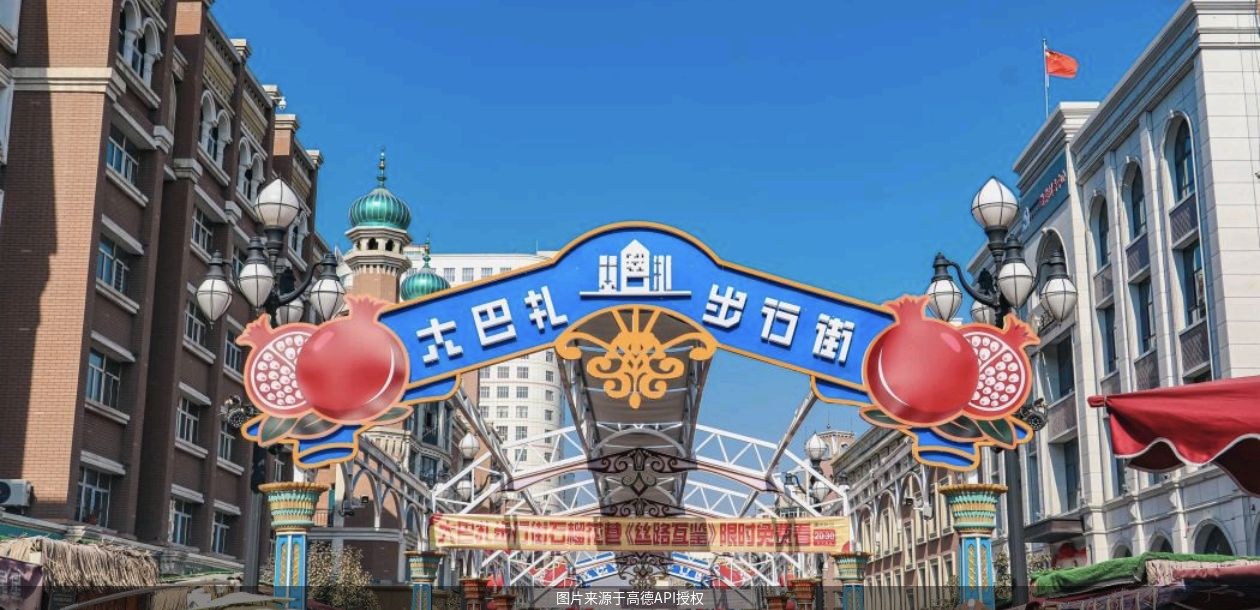
| Day 2 · 16:00 | The Turpan Grand Bazaar: Five Kilometers of Stall Geography |
| Day 3 · 10:00 | Karez Paradise: The Seven Days' Water Source |
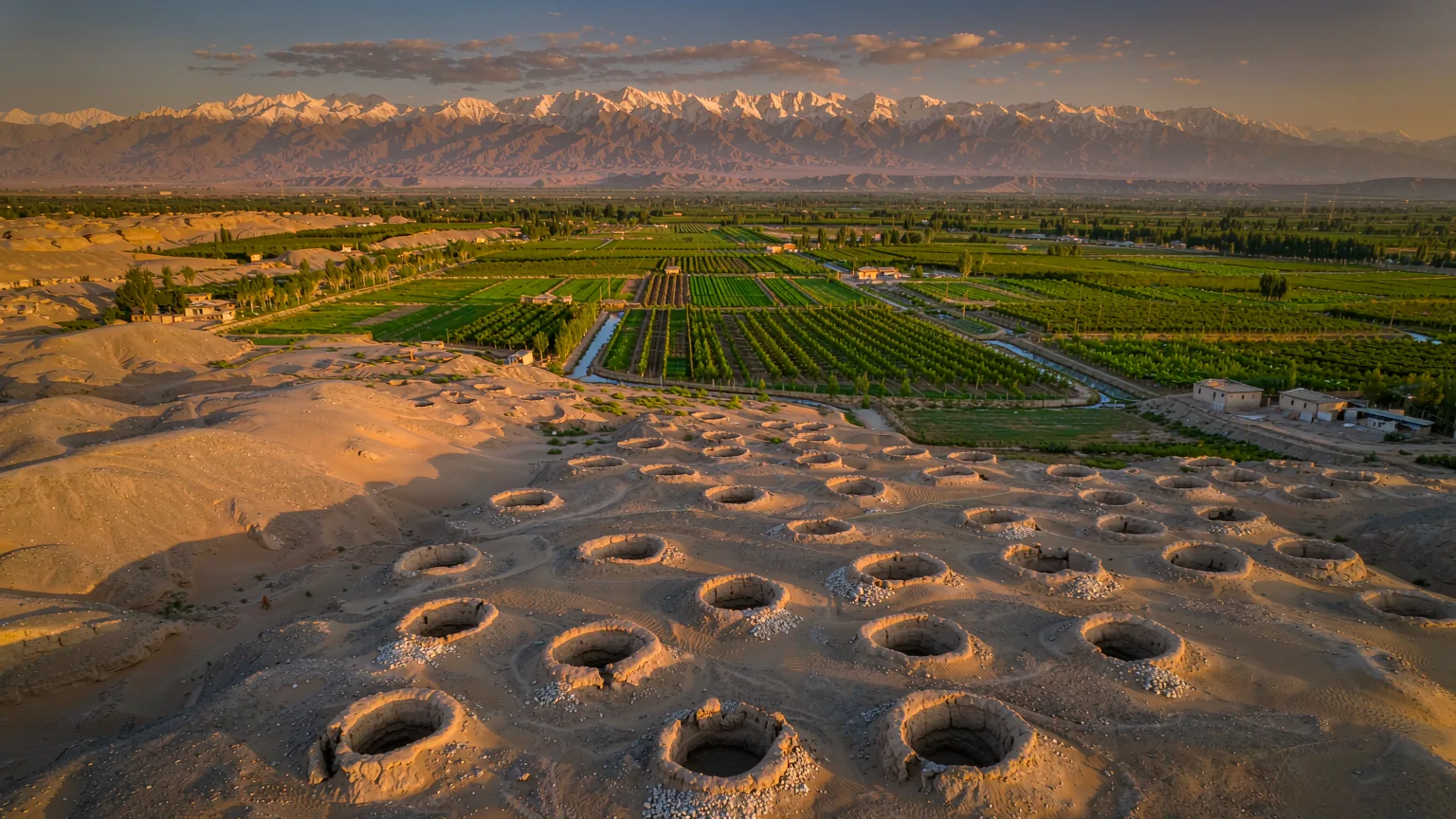
| Day 3 · 20:00 | Jiaohe at Sunset: The Empty City Lit by the Setting Sun |
| Day 3 · 21:45 | Putao Li Old Teahouse: Night Wind and Tea to Close the Day |
| Day 4 · 09:00 | The Flaming Mountains: The Eastern Line's Dawn Window |
| Day 4 · 11:00 | The Bezeklik Thousand Buddha Caves: Uygur Murals on the Cliff |
| Day 5 · 09:30 | Gaochang Ancient City: The Vast Capital at Morning |
| Day 5 · 16:30 | Grape Valley: The Oasis at Dusk and the Farmhouse Table |
| Day 6 · 09:30 | The Kumtag Desert: A Full Day with the City-Edge Sand Sea |
| Day 6 · 13:30 | The Shanshan New Town Night Market: Lunch and Siesta between Sand Sessions |
| Day 7 · 14:00 | The Naan Culture Folk Park: The Closing Workshop |
| Day 7 · 20:30 | The Turpan Grape Night Market: The Seven-Day Curtain Call and the Shopping Sweep |
The route, stop by stop
The Turpan Museum: The Seven-Day Preface
Deep travel opens with a preface: the giant rhino fossil rolls the basin back twenty million years, the mummy gallery demonstrates aridity as natural embalmer, and the document hall lets Silk Road traders speak again. Two hours build the timeline that dates every ruin, cave and channel of the coming six days.
Priority goes to the documents: every office you will see at Jiaohe and Gaochang finds its titles and names in the cases. Closed Mondays, so clear it from the seven-day grid first.
The Old Granary Museum: The Oasis Logic from Wheat to Naan
Hide from the afternoon in the old granary: converted grain stores line up storage forms, measures, water mills and dough work, explaining how karez water becomes naan and noodles. Compact enough for a leisurely ninety minutes, cool and quiet through the post-noon stretch.
Lunch nearby after, giving the rest of the afternoon to hotel rest; day one deliberately runs low-density, a buffer for adjusting to dry heat.
Sugong Minaret: Ornament Written in Brickwork
Day two morning belongs to the minaret: a Qianlong-era Islamic tower whose ochre bricks weave fifteen geometric patterns with not one glazed tile, ornament achieved by masonry alone, unique in the Chinese pagoda sequence. Mid-morning raking light models the brick geometry best.
The adjacent mosque hall's raw-earth and timber hush completes the visit; dress conservatively, keep voices low, and ask before photographing inside. The stop builds a local-craft reference for every ruin ahead.
The Turpan Grand Bazaar: Five Kilometers of Stall Geography
Stalls run full from four: dried fruit graded into place, seedless whites, rose-scents and blackcurrants each holding territory, with textiles and instruments opening along the aisles. The deep-travel mode is record-only, noting grades, unit prices and stall locations for a precision sweep on day seven.
Free samples are an intelligence system, one or two per stall building your palate baseline; the naan pits and samsa ovens refuel the browsing.
Karez Paradise: The Seven Days' Water Source
Day three exposes the underlying logic: every oasis, vine and livelihood in Turpan is supplied by the two-thousand-year karez system underground. Twenty-degree tunnel air, shafts and reservoirs in the flesh, and the water-sharing displays explain exactly where the water comes from.
The deep-travel extension walks an open channel: watching water flow from village edge into vine rows teaches what living heritage means. An hour in the tunnels plus half an hour along the channel.
Jiaohe at Sunset: The Empty City Lit by the Setting Sun
Enter Jiaohe at eight as heat retreats and cool wind clocks in, the low sun lighting the two-thousand-year earthen walls layer by layer while the central avenue's shadows lengthen and the stupa grove turns gold first. Deep travel means staying the full session: the same city, twice a civilization site.
Summer sunsets run 21:00-21:40; dinner downtown after the crowd drains, with a light layer and a full phone for the cooling night.
Putao Li Old Teahouse: Night Wind and Tea to Close the Day
The teahouse after sunset is the deep traveler's charging station: a pot of brick tea with naan, the click of elders' chess stones, the day's ruin frames replaying a second time. One secret of deep travel is giving key experiences a rumination slot, and this is Turpan's rumination room.
RMB 20-40 per person buys seats until closing; confirm tomorrow's eastern-line plan with the driver before turning in.
The Flaming Mountains: The Eastern Line's Dawn Window
Day four enters the eastern line at the mountains before the heat: dawn keeps the red sandstone folds crisp, the staff thermometer low, heat shimmer yet to rise off the gravel. The red is oxidized sandstone and mudstone conspiring through uplift and wind.
Forty minutes for photos and the thermometer, leaving by ten as ground heat climbs; deep travelers can narrate the geology to companions now, as the museum's groundwork starts paying interest.
The Bezeklik Thousand Buddha Caves: Uygur Murals on the Cliff
The grottoes in the Mutou Valley cliff flourished under the Uygur kingdom of Qocho, murals fusing central-plains, western-regions and Uygur styles, donor costumes and sutra compositions standing as living reference for Central Asian studies; the sections cut away abroad leave silent annotations, worth a long pause.
Open caves rotate, an honest hour, photography barred inside; matching the guide's style notes to the museum's cases ties the seven-day knowledge thread into a knot.
Gaochang Ancient City: The Vast Capital at Morning
Day five's heavyweight is Gaochang: a vast rammed-earth capital with walls beyond sight, where Xuanzang lectured on his westward journey. Ride the shuttle in and walk the core, the khan's fortress and Great Buddha Temple framing the site as slant light turns the earth honey-colored.
Two hours for the visit; the deep-travel posture is ten minutes sitting at the wall's base, imagining caravans through the gates, until the empty city starts talking.
Grape Valley: The Oasis at Dusk and the Farmhouse Table
Shift from the ruin to Grape Valley as the trellises enter their best hour: vines, channels and drying houses in one complete agricultural system, pilaf and milk tea in a Uygur farmhouse while sunset pins the drying houses' silhouettes to the hillside. Deep travel stretches this dinner to two hours, conversation outranking distance.
Taste seedless whites before weighing, buying one small pack tonight for tea, with the bulk sweep saved for day seven's bazaar finale.
The Kumtag Desert: A Full Day with the City-Edge Sand Sea
Day six crosses to Shanshan: the Kumtag Desert touches county streets at zero distance, dawn ridgelines sharpest with barefoot sand exactly warm. The deep-travel play runs two sessions, sandboarding and photos in the morning, a county-town rest at noon, returning after four for sunset, taking every light the desert offers in one day.
Sandboarding and buggies price separately; execute the anti-sand kit for gear, sealed bags, a blower, lens changes inside the car.
The Shanshan New Town Night Market: Lunch and Siesta between Sand Sessions
The gap between sand sessions resolves in Shanshan's county streets: the new-town market's noodles, skewers and kvass at honest portions under cool canopies, then a two-hour siesta in an air-conditioned cafe or hotel lobby until the sun relents.
The split-day design exists so nothing must be endured: the noon desert could fry eggs, and forcing through it mines the whole itinerary.
The Naan Culture Folk Park: The Closing Workshop
Day seven schedules nothing early: wake naturally, pack, check out and store bags, then take the closing workshop at the naan park in the afternoon, pit construction, slapping technique and the naan family tree at once, baking your own to carry home. Deep travel's final lesson is doing it yourself.
Indoor halls stay cool through the post-noon stretch; cool your naan before bagging, a homecoming gift outclassing anything boxed.
The Turpan Grape Night Market: The Seven-Day Curtain Call and the Shopping Sweep
The curtain call runs two steps: first the precision sweep at the stalls noted days ago, grades and prices already known, twenty minutes done; then the feast under the night market's trellises, skewers, grilled eggs, iced yogurt and seasonal fruit, digesting seven days into one satisfied meal.
Afterward the final audit and goodbye: sealed fruit, packed boxes, receipts in order. Turpan read over seven days is no ending, the promise to return for the vines' spring flowering already filed in your head.
| Getting around |
|
| Budget | Entries total about RMB 550-650 with shuttles, a four-day charter RMB 1,200-2,000 per vehicle plus RMB 400-600 for the Shanshan day, meals RMB 80-150 pp daily; seven days land near RMB 1,500-2,200 pp before lodging. |
| Best time | April-June and September-October are comfortable; July-August stays viable under strict heat discipline; September hangs fruit and runs the drying houses full, the deep itinerary's richest month. |
FAQs
Is a seven-day pace too loose? Will it get boring?
The looseness is deliberate: one theme per day, outdoors at the edges, teahouse or siesta underwriting every afternoon. Boredom only arrives if you treat travel as a checklist and Turpan as a stack of sights; read it as a local chronicle instead and seven days fit exactly. Still restless, make Shanshan a day trip, drop the granary, and compress to five.
Should the seven days involve changing hotels?
Do not. Turpan town is small and every day trip radiates from it, so hotel-hopping only adds packing tax. The single exception is the Shanshan day, ceding that night to a county hotel while the other six nights stay put at one downtown address, laundry and stored boxes untouched.
How do the months rank for a seven-day run?
September first (fruit hanging, drying houses running, heat retreating), October second (crisp air but the grape season closing), May-June third (fresh canopy, first melons), July-August fourth (viable under strict heat discipline), winter fifth (quiet and cheap with some experiences shut). Land the trip in mid-to-late September and these seven days peak in value.
After seven days, how do I continue to Urumqi or Hami?
Both directions flow: Urumqi an hour by rail, swapping basin heat for Tianshan cool, best followed by the lake and city museums; Hami about two hours by rail, continuing the eastern Gobi-and-melon theme. The luggage strategy is travel light into Turpan with the big bags parked at a Urumqi hotel, saving effort in both directions.