
Accept one premise for walking Urumqi: this city keeps its own hours, stirring near ten, baking its residents indoors by mid-afternoon, and coming back to life after dark. The route follows that pulse, galleries in the morning and noon, the river valley and hilltop toward evening, so one day delivers both the city's best paintings and its best night.
Buses and taxis link the legs, with walking concentrated inside museums and along the valley path, nothing strenuous. The two museums are free with booking, Shuimogou is the locals' everyday green refuge, and the Red Hill pagoda closes the loop. About twelve thousand steps in all, closer to a local Sunday than any checklist dash.
Itinerary at a glance
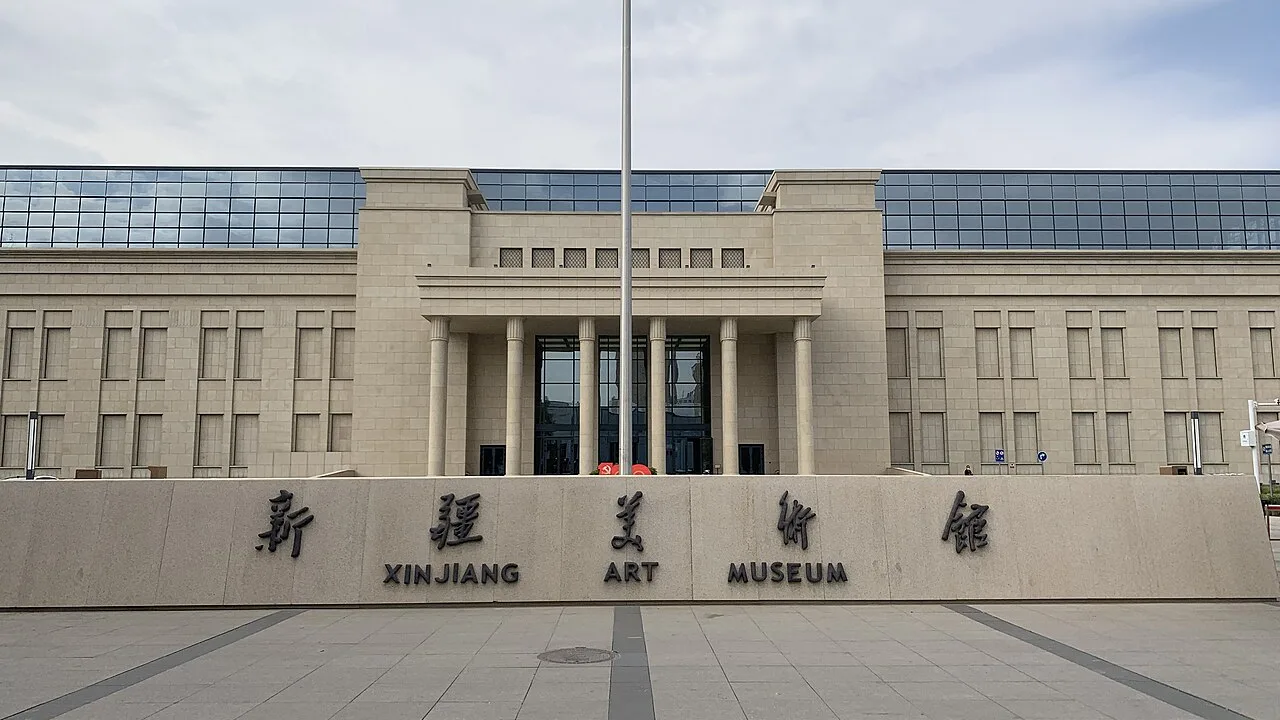
| 10:00 | The Xinjiang Art Museum: National-Grade Shows, Zero Admission |
| 12:30 | The Urumqi Museum: How a Frontier City Got Here |
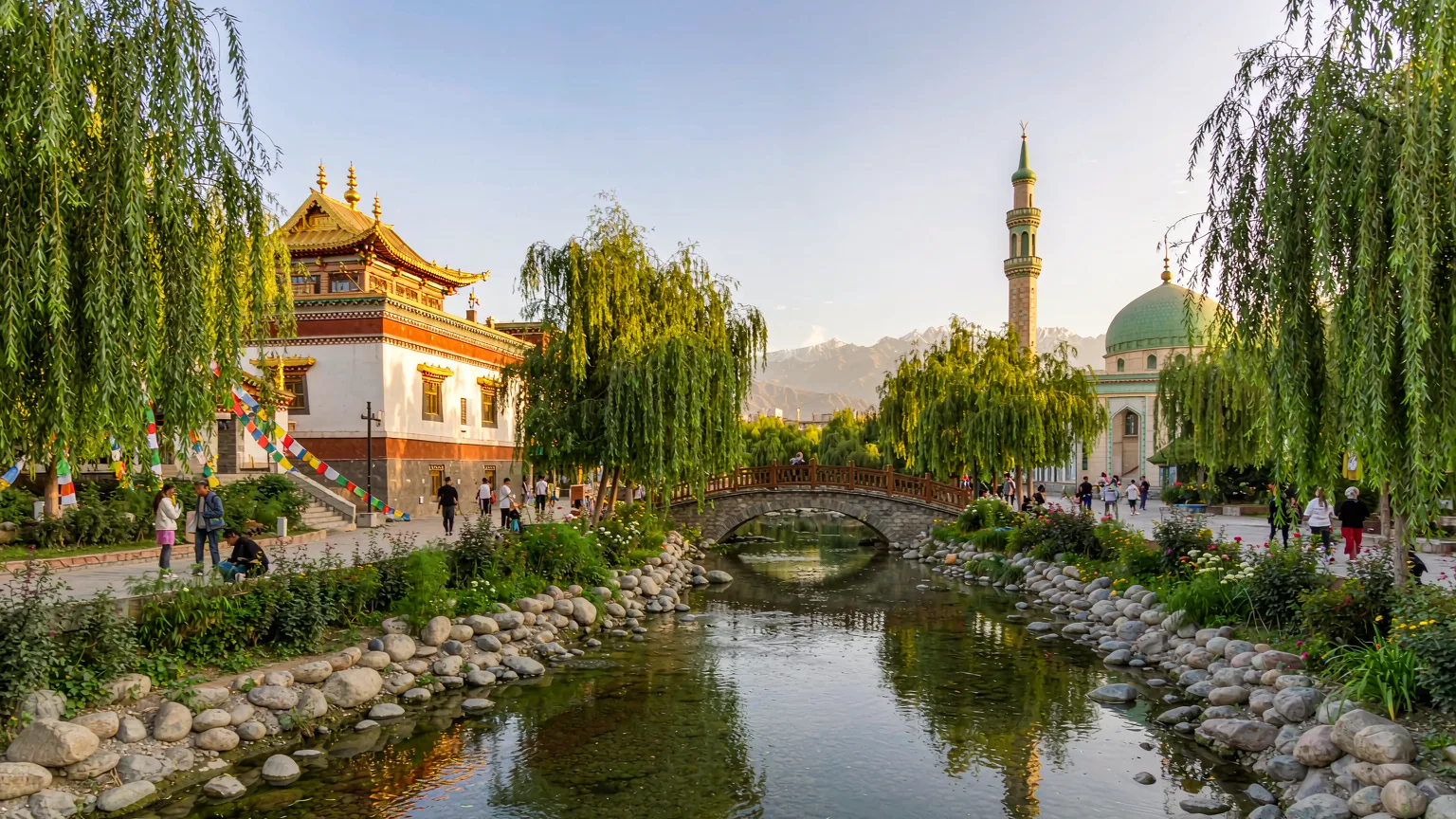
| 16:00 | Shuimogou Scenic Area: The River Valley on the City's East Side |
| 20:00 | Hongshan Park at Night: Urumqi Inside Its Own Lights |
The route, stop by stop
The Xinjiang Art Museum: National-Grade Shows, Zero Admission
The museum's permanent and rotating shows hang on Xinjiang subjects: Tianshan and desert poplars in oil, bazaars and dance in prints, plus folk textiles and craft objects. Unlike the crowded halls of first-tier cities, rooms stay quiet and lighting honest, so you can stand before one canvas until it yields, no queue pressing behind.
Watch for two strains: local painters' ferociously saturated mountains and grasslands, and contemporary work on Silk Road and oasis life, revealing how a younger generation handles inherited subjects. Free admission at this standard is a genuine northwest surprise.
The Urumqi Museum: How a Frontier City Got Here
Where the regional museum covers the land, this one sticks to the city itself: founding in the Qing era, trade routes, multi-ethnic street life, and the city's remaking in recent decades. The old-photography room moves people most, one street's faces and shop signs changing cast across decades, like leafing through a family album.
The permanent display takes about ninety minutes. If folk culture pulls you, linger at the clothing and household cases; everyday objects explain this city's blended character better than any grand narrative. Exit into mid-afternoon and ride straight for Shuimogou's shade.
Shuimogou Scenic Area: The River Valley on the City's East Side
Named for the old water mills that once lined it, the valley lets the Shuimo stream escape the hills between tree-shaded paths, the locals' after-work stroll. The valley floor runs two or three degrees cooler than town, and in summer evening the coolness is concrete: water sound, leaf shade, elders fanning on benches.
Walk the main path upstream to the gap in the hills and back, about an hour round trip. Pavilions and tea stands dot the way; sit for a bowl of tea and watch anglers, chess players and wedding shoots. No checklist pressure here, the loosest hour of the walk.
Hongshan Park at Night: Urumqi Inside Its Own Lights
In summer the sun sets close to 21:30, so an eight o'clock climb catches the seam between daylight and lamplight: the western sky burns first, then block after block of windows come on, and the pagoda's silhouette sharpens into deepening blue. It is the city's most workable vantage, generous to both tripods and phones.
Night empties the park into runners and strollers going their own ways. If the evening still has room after descending, the streets below are lighting their supper stalls; a bowl of noodle soup or a few skewers closes the day the way a local would.
| Getting around |
|
| Budget | Both museums are free with booking, Shuimogou and Hongshan free; the day costs only meals and taxis, about RMB 100-180 pp. |
| Best time | Works all day May through September; in July-August push the outdoor stretches to evening and keep noon indoors among the galleries. |
FAQs
Is Shuimogou worth the detour, or just an ordinary park?
It is more than an ordinary park: the Shuimo stream flows year-round and the path climbs into the hills beside it, with greenery among the densest inside the city. Expect a walk rather than a sight and it delivers best; come at evening when slanted light flatters every frame.
Do both museums require booking, and can I enter same-day?
Both are free with mandatory real-name booking, each through its own WeChat account, not interchangeable. Weekdays usually admit same-day bookings; weekends deserve a day's lead. Show the booking code or your passport at the door, and mind the Monday closures when planning.
How tiring is this route, and what about the midday heat?
Effort stays moderate, about twelve thousand steps mostly inside museums and along the valley. The two-to-three o'clock sun is the harshest hour, so the fix is the city museum right after lunch, all indoors, keeping outdoor legs for after four. Carry water; refill points in the valley and park are sparse.
Is Hongshan Park safe at night, and is a solo night climb sensible?
The park opens at night with steady foot traffic and lit main paths, so a solo climb is reasonable; stick to main routes and skip unlit side trails. With summer sunset near 21:30, go up around eight for the glow, wait for the lights, and descend by ten into street-side suppers. Carry valuables in front and standard caution applies.