
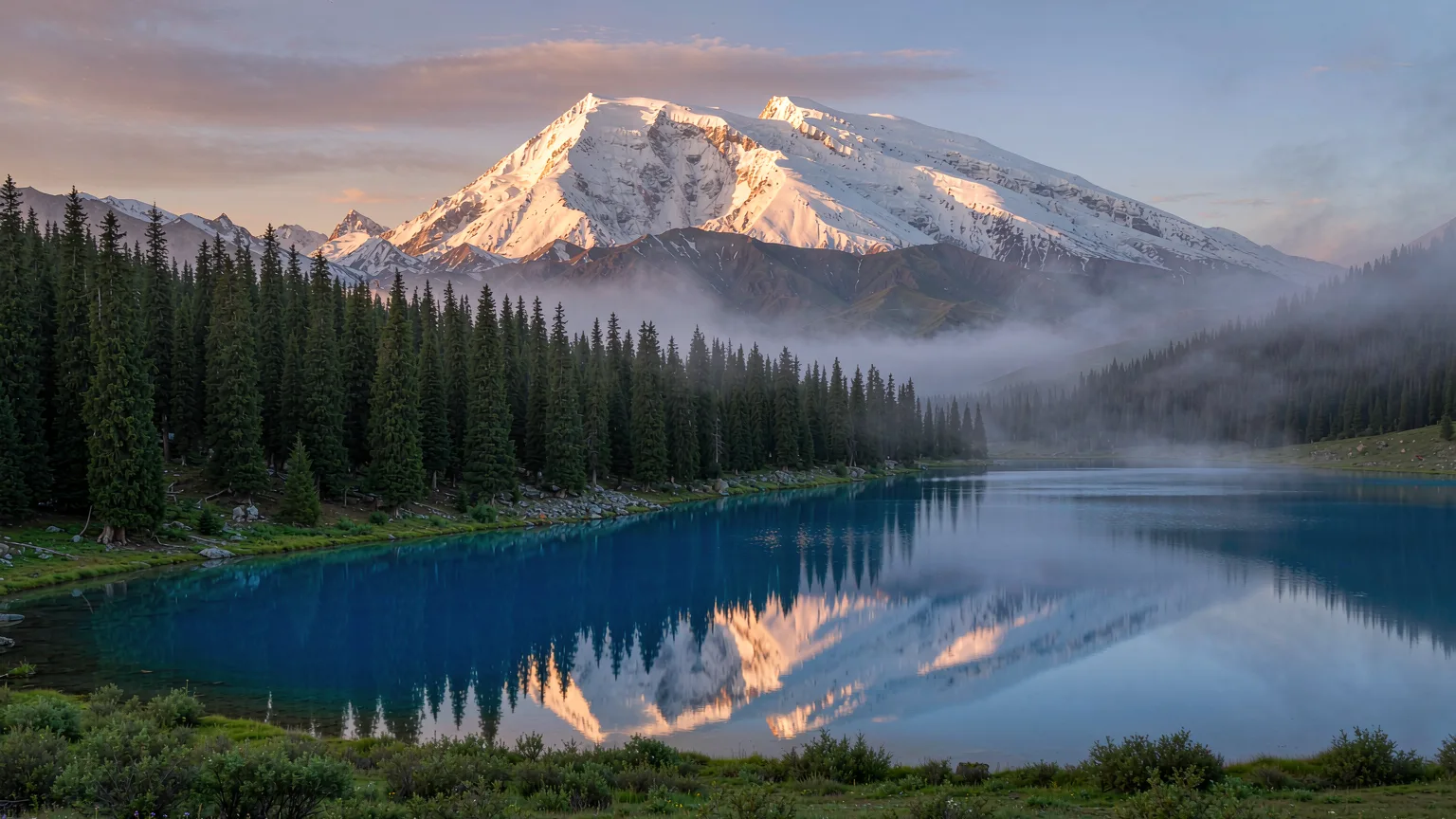
Urumqi ranks among China's capitals nearest snow mountains: on clear days Bogda's snowline hangs over downtown. The three-day loop circles exactly that ring: day one at Heavenly Lake of Tianshan, watching snow peaks reflect at nineteen hundred meters; day two south into the canyon, then west into Nanshan Pasture's spruce and waterfalls; day three keeps half a day for an urban valley and a high viewpoint, closing unhurried.
All three reserves sit within about a hundred kilometers of town; chartering is the efficient way, while join-in day tours work but surrender the clock. Mountain temperature swings are extreme, so pack fleece or a light down jacket even in summer. Altitude is a non-issue, the lake sits under two thousand meters and most feel nothing. With Xinjiang hours running two late, schedule departures on local time and skip the dawn grind.
Itinerary at a glance
| Day 1 · 09:00 | Heavenly Lake of Tianshan: The Alpine Lake at Bogda's Foot |
| Day 1 · 13:30 | The Maya Mountain Lookout: Heavenly Lake from a Second Altitude |
| Day 1 · 20:30 | Hongshan Park: The City at Night after the Mountains |
| Day 2 · 09:30 | The Tianshan Grand Canyon: Zhaobi Mountain and the First Look Inward |
| Day 2 · 12:00 | Deep in the Canyon Boardwalks: Meltwater, Footbridges and Lunch |
| Day 2 · 16:00 | Nanshan Pasture, West Baiyanggou: A Waterfall inside the Spruce |
| Day 2 · 21:00 | Hetian Second Street Night Market: Hot Soup after the Descent |
| Day 3 · 09:30 | Shuimogou Scenic Area: A Rest Day for the Legs |
| Day 3 · 14:00 | The Yamalik Mountain Viewpoint: A Panorama to Caption Three Days |
| Day 3 · 18:30 | Erdaoqiao: Ending a Nature Loop in Street Steam |
The route, stop by stop
Heavenly Lake of Tianshan: The Alpine Lake at Bogda's Foot
Heavenly Lake lies about 110 kilometers southeast of Urumqi in Fukang, an alpine lake at roughly 1,900 meters fed by Bogda's meltwater. Legend seats the Queen Mother of the West's peach banquet here, and her lakeside temple makes a short side call. The real protagonist is lake against snow peak: an almost implausible blue-green surface with Bogda's snowline pressing the southern end.
A lakeside boardwalk loop takes forty to sixty minutes on foot, while the cruise boat offers the water-level angle. Morning light runs front-lit and the peak reads sharpest, so shoot early. Shuttles are mandatory from the gate to the shore, the mountain road bends hard, and motion-sickness pills deserve packing.
The Maya Mountain Lookout: Heavenly Lake from a Second Altitude
Maya Mountain rises west of the lake; ride the cableway up and follow the boardwalk to the lookout, where limestone pinnacles like horse teeth gave the hill its name. From above, the lake becomes a jade pendant set in spruce, the only angle delivering the full shape, the canonical postcard frame for photographers.
The path sits above two thousand meters; pace yourself, let elders and children stop at the first platform which already holds most of the view. Clouds build on the mountain in the afternoon and visibility flips fast, so schedule here early in that window with slack to spare.
Hongshan Park: The City at Night after the Mountains
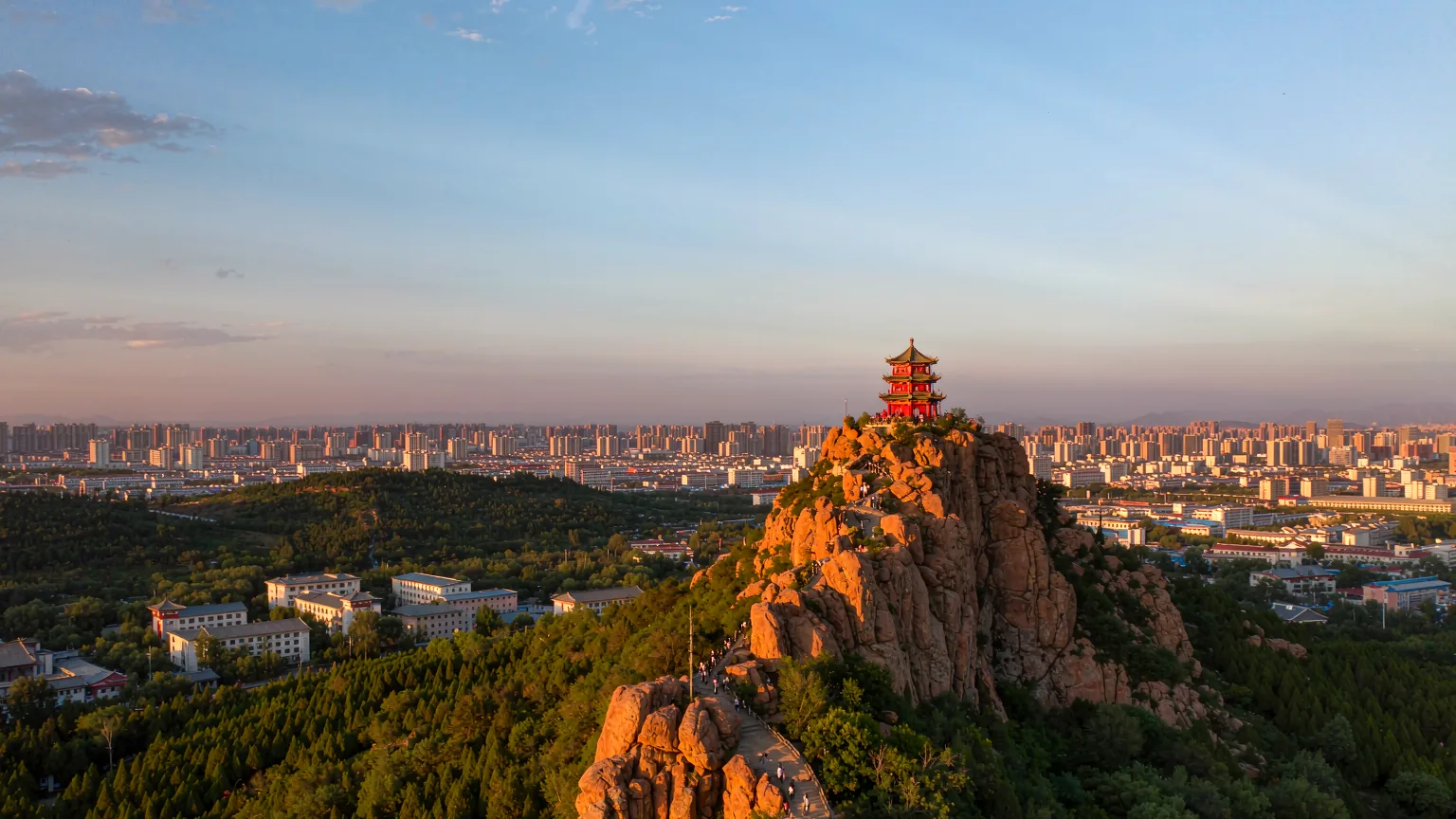
The drive back from the lake lands by early evening; after dinner, stroll Red Hill and pin the prologue onto the city's own skyline. The park keeps a cool night breeze, the pagoda stands lit against the dark, and the mid-hill platform overlooks a sea of lit blocks with, on lucky evenings, a last trace of Bogda in the remaining sky.
The stop is deliberately light and unhurried, a walk in all but name. Today carries the longest driving of the three days, so sleep early; tomorrow's canyon wants fresh legs.
The Tianshan Grand Canyon: Zhaobi Mountain and the First Look Inward
The Tianshan Grand Canyon sits in Urumqi County about fifty kilometers south of the city, the most reachable canyon on the range's north slope. The first act inside is Zhaobi Mountain, a cliff like a vast standing screen at the valley mouth with spruce climbing from base into crevices. The park shuttle follows the river inward; step off at the first stop and take the boardwalk past racing snowmelt at your feet.
The canyon reads nothing like the lake: where the lake is open alpine breadth, the canyon is vertical pressure, knife-cut ridgelines overhead and violent meltwater below. Taking both in a single day assembles the Tianshan's two faces.
Deep in the Canyon Boardwalks: Meltwater, Footbridges and Lunch
Deeper along the boardwalks the voices thin out, leaving water and wind. Footbridges cross the rapids at the most photogenic spans; walk to the end and return, two to three hours total, trimmable by energy. Even at noon few stretches catch direct sun, though ultraviolet stays strong, so keep the sunscreen honest.
Lunch resolves at the Kazakh-style points inside the reserve, hand-grabbed meat and baursak fried dough with milk tea, honest portions at fair prices; the surer play is packed food picnicked on a viewpoint bench, with the canyon doing the set design.
Nanshan Pasture, West Baiyanggou: A Waterfall inside the Spruce
West Baiyanggou is the pasture's longest-opened valley, a boardwalk following the stream uphill under spruce tall enough to demand a tilted neck, ending at a waterfall of several dozen meters that hangs a small rainbow in the afternoon spray. Kazakh herder yurts dot the valley; step in for milk tea and dried cheese curds.
The pasture's texture differs again from the canyon: hard rock walls there, soft meadow and forest here, cattle and sheep scattered over slopes like casually tossed chess pieces. The boardwalk round trip takes about two hours, horse rides price by segment, so settle route and rate before mounting.
Hetian Second Street Night Market: Hot Soup after the Descent
Day two lands back in town near nine, and the night market is the only sane destination: a mountain day's burn wants carbohydrates and hot soup. Order skewers, pulled noodles and offal soup without ceremony; the altitude never got high, but the step count started at twenty thousand.
Sit down and you will hear nothing but local accents at the next tables, the truest quality test of any night market. Eat, then head back early to stretch and soak; day three still holds half a nature date.
Shuimogou Scenic Area: A Rest Day for the Legs
Morning three drops the pace on purpose: the Shuimogou valley path runs flat and shady, exactly what legs worn by two mountain days want. Stroll the Shuimo stream past anglers, chess players and stroller pushers; after alpine lakes and canyons, everyday urban ease feels novel again.
Good legs can loop the path in about an hour; spent ones should sit at a tea stand, where the valley's cool breeze and hot tea are Urumqi's cheapest therapy. Lunch resolves at the valley mouth or back downtown.
The Yamalik Mountain Viewpoint: A Panorama to Caption Three Days
Yamalik Mountain rises on the city's west side, its viewpoint spreading Urumqi flat as a map: the block clusters, the riverbed expressway, and the Tianshan range beyond. For two days you looked at the city from mountains; this afternoon you look at mountains from the city, and the flip suddenly makes three days of geography legible.
On clear days the snowline toward Bogda shows to the southeast, matching the memory of day one at the lake. Footpaths climb a little further, evening light suits photographs best, and this makes the loop's perfect final stop.
Erdaoqiao: Ending a Nature Loop in Street Steam
Put the loop's last meal at Erdaoqiao: after three days of snow peaks, cliff walls and grassland, walking back among naan pits and grill ovens is itself part of the experience, a sensory gear change. Order skewers with pulled noodles and a pot of brick tea, and the nature loop ends steaming.
With energy left afterward, circle the dried-fruit stalls and finish the souvenir list, carrying the landscapes home by the kilo, a fitting coda.
| Getting around |
|
| Budget | Entries and shuttles total about RMB 400-500 (Heavenly Lake RMB 150-190, the canyon near RMB 100, West Baiyanggou about RMB 40), with a three-day charter around RMB 500-700 per day before meals and lodging. |
| Best time | June-September is the golden window, the lake thawed and pasture at its greenest; mid-to-late September turns birches gold and the canyon and pasture into autumn; winter closes some trails. |
FAQs
Is a three-day charter expensive, and is there a cheaper way?
Charters bill by day, roughly RMB 500-700 for a sedan, and split across three or four people the cost is modest for clock freedom and luggage aboard. The budget play is the station's tourist through-coaches plus reserve shuttles, well established for both the lake and the canyon, with the drawback of fixed timetables and no impromptu stops. Solos and couples take the coach; families and trios charter.
Between Heavenly Lake and the Grand Canyon, which one?
The landscapes differ completely and both deserve a visit, but forced to choose: for open water, snow reflections, modest legs or seniors and kids, take the lake, done by shuttle and gentle boardwalk; for hiking and geology with energy to burn, take the canyon, whose immersive depth the lake cannot offer. With time for both, lake first then canyon runs the smoother route.
Will altitude sickness be a problem, and do I need oxygen?
Largely no: the lake sits near 1,900 meters and the Maya lookout just over 2,000, within most people's comfort zone, and Urumqi itself lies near 800 meters. Walk a little slower, drink water, and skip the oxygen cans. Travelers with cardiovascular conditions should consult their own doctors; everyone else can relax.
What gear does a summer mountain day need?
Think in three layers: a wicking base, a windproof shell, and fleece or light down in the pack, since lakeside and summit run ten degrees below town with real wind. The sun trio of hat, cream and sunglasses is non-negotiable at altitude. Choose grippy shoes for the boardwalk-and-dirt mix, and carry a power bank plus some cash, signal and QR payments fail now and then deep in the reserves.