
Five days is Urumqi's honest size: one cannot cover snow peaks plus pasture, and three would waste the city's museums. The plan sets a rhythm of two mountain days, one pasture day, two city days: the lake and canyon first, Nanshan Pasture mid-trip, then museums, bazaar and night markets, an energy curve that crests early and eases late, matching most travelers.
The spread of the three country reserves makes a charter near-mandatory, while the two city days need no car at all. Xinjiang runs two hours late, so the table keeps local clock: leaving at ten is not late, dinner at ten is on time. Sunscreen, a jacket and walkable shoes are the five days' three pocket charms.
Itinerary at a glance
| Day 1 · 10:00 | Xinjiang Uygur Autonomous Region Museum: A Coordinate System First |
| Day 1 · 15:00 | Hongshan Park: The City's First Calling Card |
| Day 1 · 19:30 | The Grand Bazaar: First Sight by Night |
| Day 2 · 09:30 | Heavenly Lake of Tianshan: Alpine Blue under the Snow Peaks |
| Day 2 · 13:30 | The Maya Mountain Cableway: The Lake from Above |
| Day 3 · 09:00 | The Tianshan Grand Canyon: A Full Day in the Vertical World |
| Day 3 · 16:00 | Nanshan Pasture, West Baiyanggou: Grassland after the Canyon |
| Day 4 · 10:00 | The Geological and Mineral Museum: Rereading the First Three Days |
| Day 4 · 15:00 | Shuimogou Scenic Area: The Trip's Designated Lazy Afternoon |
| Day 4 · 17:30 | Erdaoqiao and the Grand Bazaar: Serious Shopping Hours |
| Day 5 · 11:00 | The Urumqi Museum: A Civic Footnote to Close the Trip |
| Day 5 · 17:30 | The Hetian Second Street Night Market: The Five-Day Farewell |
The route, stop by stop
Xinjiang Uygur Autonomous Region Museum: A Coordinate System First
Opening five days at the museum is the best investment going: two hours build Xinjiang's time frame, and every lake, pasture and bazaar of the next four days slots into place. Work the main history galleries and the mummy hall, where the Loulan beauty and Tang relics demand to be seen in person.
Day one stays in town, leaving room for jet lag and the local clock. After the museum, keep the afternoon loose and let Red Hill Park switch you on by evening.
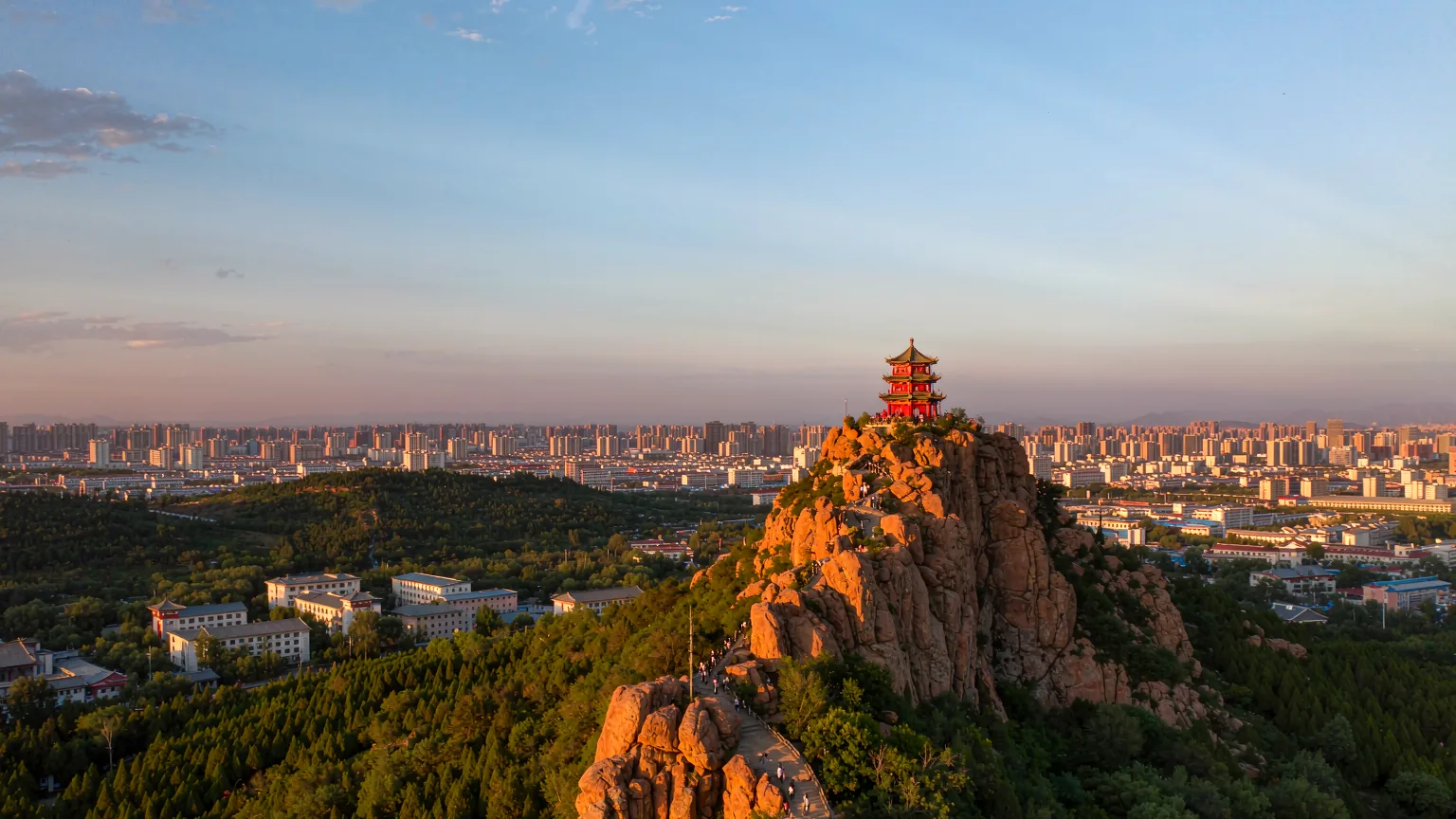
Hongshan Park: The City's First Calling Card
Red Hill is the city's geographic and mental origin, the Qianlong-era grey-brick pagoda on top visible across town. The mid-hill platform frames the block clusters against Bogda's snowline, making the phrase capital nearest the snow mountains concrete on day one.
The perimeter loop takes forty gentle minutes, right for a first day. Light softens toward evening for easy photos; dinner nearby afterward and an early night bank tomorrow's energy.
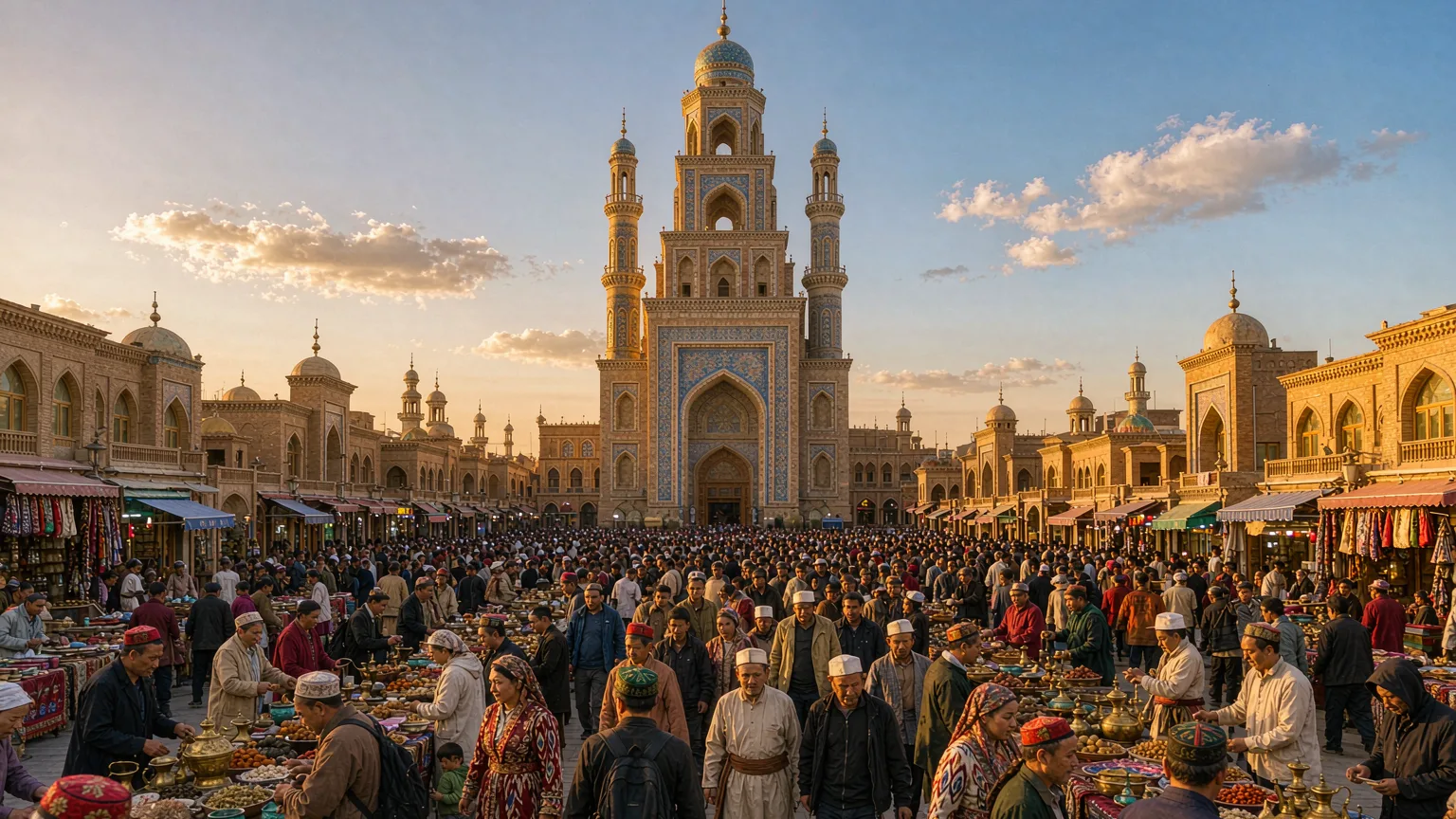
The Grand Bazaar: First Sight by Night
Night one belongs to the bazaar, look before buying: the lit Silk Road tower, square dancing, indoor halls of fruit and textiles, a first full taste of the city's density. Buy nothing tonight, note prices and favorite stalls, and return on day four afternoon for serious shopping.
Dine on site, respectable skewers and pilaf. Day one closes here; tomorrow, up the mountain.
Heavenly Lake of Tianshan: Alpine Blue under the Snow Peaks
Day two belongs wholly to the lake: an hour and a half by road, a mandatory shuttle up, a surface near 1,900 meters, and Bogda's reflection as the signature frame. The shoreline loop takes forty to sixty minutes, and the boat, extra cost but worth it, completes the snowline from the water.
The Queen Mother's temple sits high by the shore, a short side call. Morning light front-lights the peak and afternoon clouds build, so finish key shots before midday.
The Maya Mountain Cableway: The Lake from Above
After lunch ride the cableway up Maya Mountain, where the boardwalk ends at the lake's best vantage: the whole jade surface set in spruce, limestone pinnacles ranged like horse teeth. The stops density is enormous, half an hour yielding the day's finest set of frames.
Above two thousand meters pace gently; elders and kids can stop at the first platform. Clouds build fast in the afternoon, so the pre-two o'clock window is the reliable one.
The Tianshan Grand Canyon: A Full Day in the Vertical World
Day three goes to the canyon, fifty kilometers out. The shuttle follows the river inward, Zhaobi Mountain screening the mouth, boardwalks pushing deep along meltwater streams between rock walls and spruce taking turns in frame. Two to three hours inside, with midday shade making this the five days' kindest-to-skin day.
Lunch resolves at the Kazakh-style point, hand meat with milk tea. Afternoon light slants from the valley mouth and the backlit boardwalks turn cinematic; walk slowly, rush nothing.
Nanshan Pasture, West Baiyanggou: Grassland after the Canyon
Canyon to pasture runs about an hour, and afternoon suits West Baiyanggou: spruce, stream and waterfall in a softer register than the canyon, with yurts and cattle in frame. Two hours round the boardwalk, or sit out on the mouth's grass slope if legs object.
Spent travelers can compress this to yurt milk tea at the mouth plus half an hour of slope walking, and that flexibility is the line's virtue. Eat properly back in town tonight; tomorrow is a city leg-rest.
The Geological and Mineral Museum: Rereading the First Three Days
Day four eases back in town, morning at the geological museum: ores, gems, meteorites and the three-mountains-two-basins model explaining exactly how every mountain and lake of the past three days came to be. Children plant themselves here, and adults stall before giant petrified wood.
A leisurely two hours, lunch downtown after. Small, free or cheap, it is the perfect low-intensity hinge after three field days.
Shuimogou Scenic Area: The Trip's Designated Lazy Afternoon
The afternoon is deliberately empty: the valley path runs flat and shady, tea stands beckon, anglers and chess players provide the show. Any five-day plan needs one such half day, or the return home holds only exhaustion without aftertaste.
One hour in the valley completes it; no need to finish the trail. Evening flows straight from the valley to Erdaoqiao as the shopping window opens.
Erdaoqiao and the Grand Bazaar: Serious Shopping Hours
Tonight repays the shopping debt from night one. The target trio: dried fruit (taste before weighing, vacuum-seal), Atlas silk (hand feel over claims), and small crafts. The stalls you noted the first night now pay off, with pricing already in your head.
When both hands are full, go eat; skip heavyweight battles entirely, carpets and jade require an eye most lack. Back at the hotel, shelve the vacuum packs neatly so the last day travels light.
The Urumqi Museum: A Civic Footnote to Close the Trip
The last morning belongs to the city museum at the loosest pace: old photos and veteran shop signs string five days of urban memory into one line, snow peaks to pasture to bazaar, closing on how the city became itself. Ninety minutes and the mood lands just right.
Farewell lunch nearby before checkout, pulled noodles or a plate of skewers, ordered purely by your own taste, itinerary be damned.
The Hetian Second Street Night Market: The Five-Day Farewell
Close at Hetian Second Street: grilled eggs, skewers, iced yogurt, a final review of five days of flavors. Ten at night is the city's peak hour, and no ritual ends a trip better than a market dinner.
Afterward, scroll the photos and check the bags, vacuum packs flattened to the suitcase floor. When you leave tomorrow, the capital nearest the snow mountains will see you off on the same late clock.
| Getting around |
|
| Budget | Entries and shuttles total RMB 450-550, a three-day charter RMB 1,500-2,100 per vehicle, city days cheap; five days land near RMB 1,200-1,800 pp before lodging. |
| Best time | June-September peaks overall, with mid-to-late September adding autumn color; Golden Week packs crowds and lifts charter prices, so shoulder seasons win when possible. |
FAQs
Are five days too tight, and can the plan shrink or extend?
Five days is Urumqi's comfortable floor; cutting to four means dropping the geological and city museums while keeping lake, canyon and pasture. Two extensions: add a rest day of hot springs and citywalk, or add two days for Turpan, one hour away by high-speed rail, where Jiaohe and the karez wells richly repay you. Adjust by energy curve, never by checklist guilt.
Can this five-day route work without a charter?
Yes, with the caveat that timetables own your clock: tourist coaches serve the lake and canyon while pasture buses run thin and still need onward hops. Solo, costs stay fine; for two or more, do the math, a three-day charter at RMB 1,500-2,100 split four ways beats four coach tickets by little, and buys freedom and through-routing, so chartering usually wins.
Which meals across the five days deserve the most attention?
Three dinners: night one at the bazaar wins atmosphere, the Kazakh hand meat inside the canyon wins setting, and the last night's Hetian Second Street market wins range. Every other meal can resolve nearby, since the city's floor is high and bad kitchens do not survive. Give whole roast lamb and samsa one dedicated sitting each.
How many layers does a summer run of these five days need?
Three layers carry it: a wicking short-sleeve base, one fleece or light down, one wind-and-water shell. Town hits the low thirties while lakeshore and canyon mornings can sit near ten, a twenty-degree swing is normal. One grippy pair of shoes does the whole trip plus sandals for town nights. Keep sunscreen and rain gear in the carry-on, never checked.