
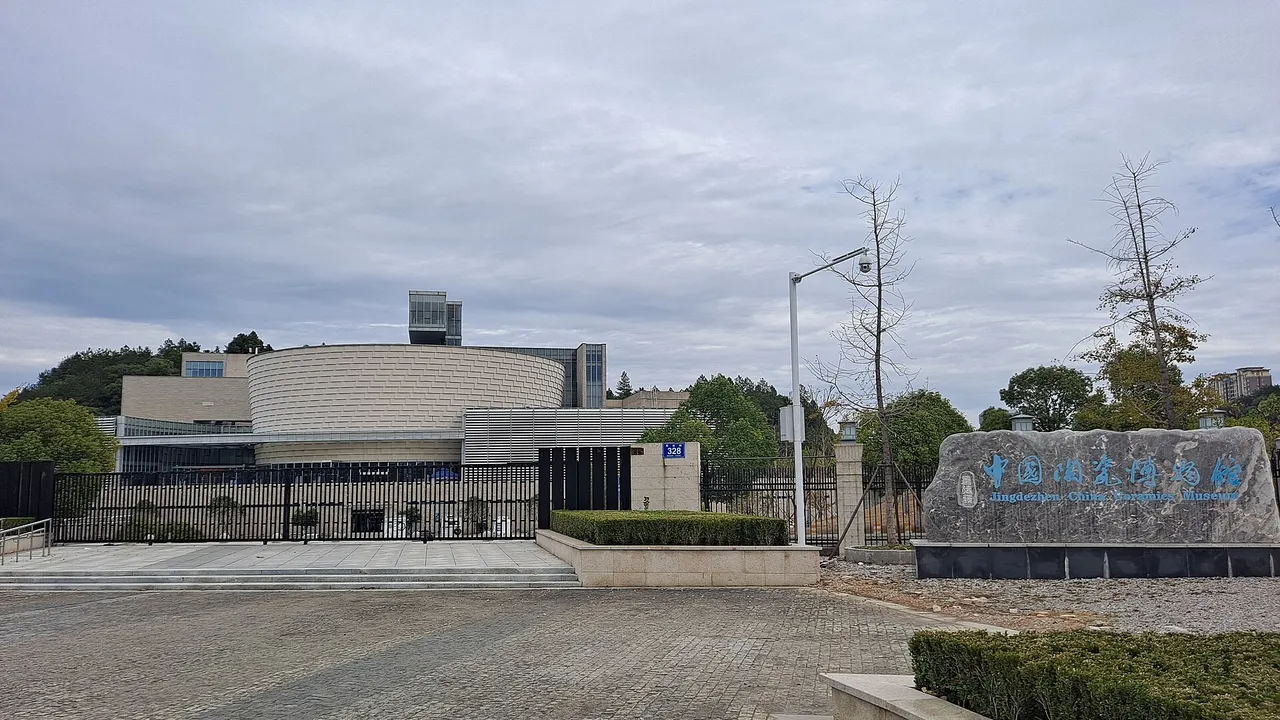
Hand the day to museums and the history of porcelain reads chapter by chapter: the ceramic museum as the chronology, the Imperial Kiln Site as the official-kiln scene, the Imperial Kiln Museum as shard-level archaeology of tribute ware, and the Hutian remains as folk kilnology in situ. Only after both lines, official and folk, does the thousand-year burn make sense.
Two words govern the day: booking and closing days. The ceramic museum is free with real-name slots, the imperial complex closes Mondays, and Hutian sits in the eastern suburbs, twenty minutes by taxi. Order the day by difficulty and nothing jams.
Itinerary at a glance
| 09:00 | China Ceramic Museum: Building the Timeline First |
| 12:00 | Imperial Kiln Site: The Official Kiln in Situ |
| 14:00 | Imperial Kiln Museum: The Ming Rebuilt from Shards |
| 16:00 | Hutian Kiln Site: A Millennium of Folk Kilns in Place |
The route, stop by stop
China Ceramic Museum: Building the Timeline First
Enter at opening and walk the chronology from the ground floor up: Han plainness, the sheen of Five Dynasties qingbai, the blue of Yuan underglaze, Ming-Qing polychrome exuberance. The axis once fixed in your head, the next three stops hang details on it. The beloved pensive luohan, the Silent Bodhisattva, sits mid-building with its usual honor guard.
If contemporary clay interests you, do not skip the modern galleries on the top floor, master potters beside academy voices, a fair compass for where the craft is heading.
Imperial Kiln Site: The Official Kiln in Situ
The Imperial Kiln grounds in the old town's center produced Ming-Qing imperial porcelain, and the excavation strata below the Dragon Pearl Pavilion preserve the smashed, buried rejects, the bluntest evidence of the system: what the throne touched, even broken, never reached the market. Glaze workshops, kiln remains and shard finds lay out the production line in place.
Order matters: excavation area first, then climb the pavilion, and from the top the whole compound's Ming-Qing footprint snaps into view.
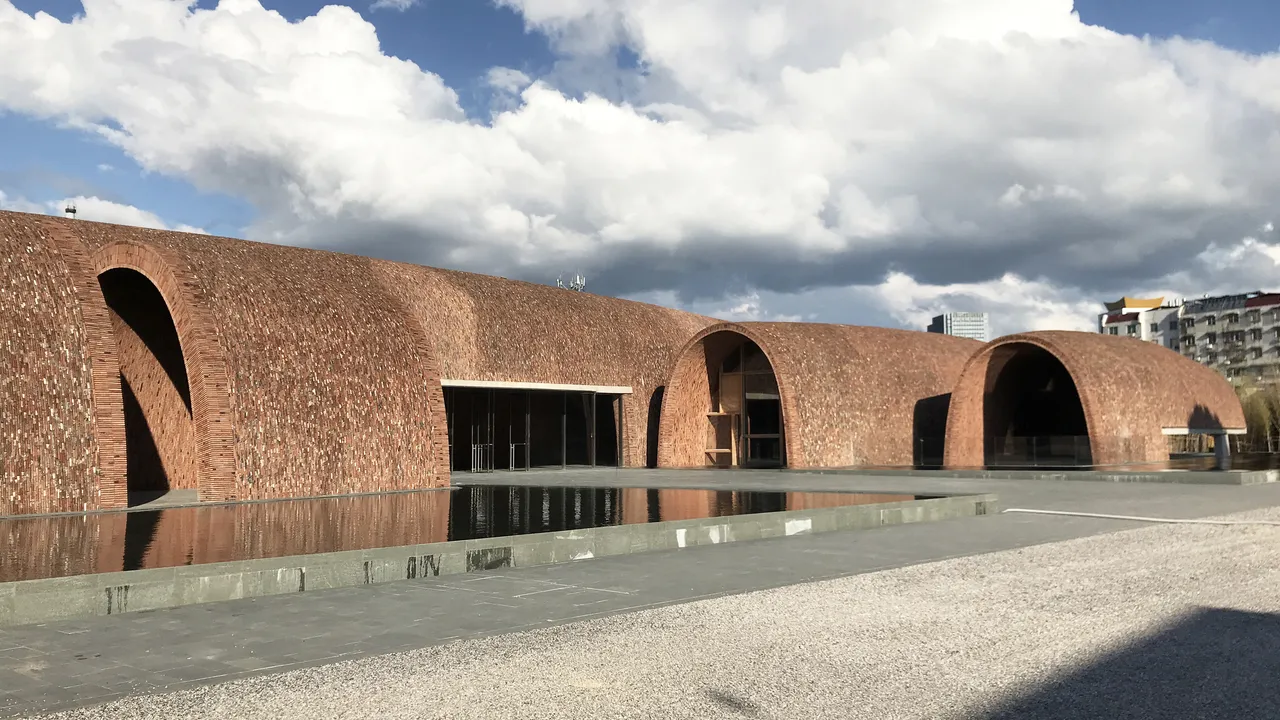
Imperial Kiln Museum: The Ming Rebuilt from Shards
The Imperial Kiln Museum's vaulted brick halls have won architecture prizes, but the protagonists are the vessels reassembled from shards. From hundreds of thousands of fragments recovered at the kiln grounds, teams rebuilt doucai cups and Xuande blue-and-white piece by piece; behind every label bearing the word restoration lies a giant jigsaw.
Read the restoration notes: fragment counts, color logic, conjectured missing parts, all spelled out, far more interesting than admiring finished ware alone.
Hutian Kiln Site: A Millennium of Folk Kilns in Place
Hutian, in the eastern suburbs, was the flagship of the Song-Yuan folk kiln system, its qingbai ware shipped down the Chang River for export. The park preserves dragon-kiln and workshop remains, with shard mounds several meters deep and kiln hills swelling like barrows nearby. The display hall sets out the qingbai lineage, mirroring what the morning's ceramic museum showed.
It is the quietest stop of the day, few visitors, and a breezy, fieldwork looseness inside the protective shelter.
| Getting around |
|
| Budget | Mostly free booked museums; budget RMB 60-120 pp including the Taoyangli combo ticket and transport. |
| Best time | Works year-round in climate-controlled halls; on holidays camp free slots three days ahead. |
FAQs
What if I cannot book a free slot at the ceramic museum?
Three routes: camp for cancellations, which drip back early and late; book off-peak slots, best after two in the afternoon; or shift the museum to a weekday apart from the kiln complex. Tickets are real-name, so skip scalpers, IDs get checked at entry.
Which is more interesting, official or folk kilns?
By taste. Official kilns mean perfection and rule, most startling in the buried rejects and shard restorations; folk kilns mean scale and commerce, clearest in Hutian's kiln hills and mounds. See both if time allows, but in one day let the imperial complex lead and close with Hutian as the counterweight.
Can four museum stops fit one day?
Yes, if you set a two-hour alarm at the ceramic museum and leave after the chronology, saving slack for the restoration galleries. Depart for Hutian before four, twenty minutes each way, keeping the day's taxi bill under about RMB 50.
Do I need a guide or audio device?
Rent an audio guide at one of the two big museums at least; without narration the chronology reads as a vase parade. Free docent tours run on fixed slots per the daily notice, and the kiln museum's own labels are detailed enough that slow reading substitutes.