
The porcelain capital's landscape has hidden behind its china fame too long. Its terrain is a history of ceramics in itself: the Sanbao stream valley yielded glaze stone, the hills of Gaoling named the scientific term for kaolin worldwide, and Yaoli's deep mountains hold kiln sites beside tea gardens. Three days out of town walk that natural base layer.
Fix transport early: buses toward Yaoli run sparse, so charter a car for the two mountain days, about ninety minutes from the city. Sleep two nights in Yaoli or Meiling, then loop home via Kaolin and Fuliang on day three, no backtracking.
Itinerary at a glance
| 第1天 09:30 | Sanbao Village: Opening the Valley Walk |
| 第1天 14:00 | Sanbao Peng Art Center: A Gallery in the Valley |
| 第2天 09:00 | Yaoli Old Town: A Kiln Port beside the Water |
| 第2天 14:00 | Wanghu: Old-Growth Forest and the Nanshan Waterfall |
| 第2天 17:30 | Meiling: Valley Dinner and a Night's Rest |
| 第3天 09:00 | Kaolin National Mining Park: Where a Word Was Born |
| 第3天 13:30 | Fuliang Old Yamen: The Administration behind the Porcelain |
| 第3天 15:30 | Bingding Kiln: A Modern Footnote to Wood Firing |
| 第3天 18:00 | Taoxichuan: The Landing Point Back in Town |
The route, stop by stop
Sanbao Village: Opening the Valley Walk
The Sanbao kiln valley climbs along its stream, a hundred pottery studios on the slopes, water and boardwalk keeping company all the way. Mornings are quiet and studios open one by one; watching a potter throw or mix glaze beats any exhibition.
The valley runs about four kilometers to its head, walkable whole or by taxi to the top and back. Signage is clear and forks few, so wander freely.
Sanbao Peng Art Center: A Gallery in the Valley
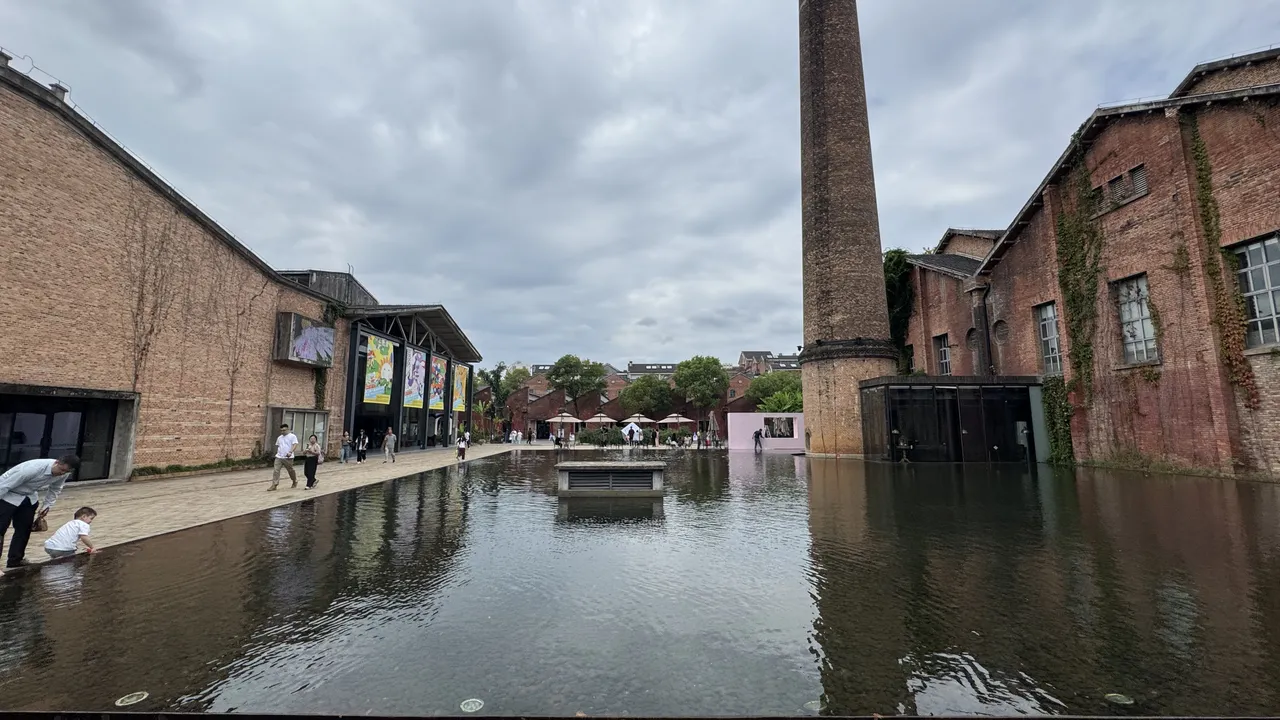
Mid-valley, the Peng Art Center is the valley's architectural landmark, concrete and rammed-earth halls tucked into the woods, shows rotating roughly every two months on contemporary ceramics and design. After the galleries, the roof terrace reads the whole valley and studio cluster.
An hour or so chains with the Sanbao walk; afternoon light slants into the halls, kind to cameras.
Yaoli Old Town: A Kiln Port beside the Water
Yaoli's old name meant kiln port, and the kiln part is literal: it was the shipping hub for the Raonan kiln complex. The town lines the Yao River with Ming-Qing streets, the Cheng ancestral hall and the Shigang Shenglan mansion, stone bridges and water-powered hammers still in place. Morning light on white walls and black roofs is the town's best hour.
The main street takes half an hour, two if you linger at hall and lintel; teahouses abound, so sit for a Fuliang tea before moving on.
Wanghu: Old-Growth Forest and the Nanshan Waterfall
Half an hour's drive from Yaoli, Wanghu keeps a fine high-mountain old-growth forest, giant trunks and a looping boardwalk. Deep in the woods the Nanshan Waterfall runs fullest after rains, its sound rolling through the valley. The grade is gentle, fine for seniors and kids.
About two hours on foot; the forest air is dense and worth a slow pace. The viewing platform mists up lenses, so pack a cloth.
Meiling: Valley Dinner and a Night's Rest
Between Wanghu and the old town, Meiling is a holiday hamlet along the woods, farm stays and guesthouses lining the stream. Dinner is on site, cured pork with bamboo shoots, free-range chicken soup and just-picked greens, then a streamside stroll into a night with nothing but water sounds.
Sleeping here sets up day three toward Kaolin without backtracking; budget travelers can return to the old town, all drives under twenty minutes.
Kaolin National Mining Park: Where a Word Was Born
The scientific name kaolin comes from this very hill. The village keeps ancient mine pits, water-powered hammers and tailings piles, the white spoil spreading over the valley like snow, the site where the term was minted. A loop trail circles the pits in about an hour with clear panels on mining history.
Old houses in the village and the Dongbu wharf belong to the same heritage system; with time to spare, see where kaolin once loaded onto boats.
Fuliang Old Yamen: The Administration behind the Porcelain
Fuliang's old yamen is among Jiangxi's best-preserved county seats, its Tang-era tea-tax wealth giving it special rank. The main and second halls and rear garden unfold in order, plaques and couplets mapping the spatial order of county government, and the gate tower overlooks the Chang River and old town plan.
About ninety minutes, convenient on the run back to town; if ancient buildings are not your pull, the main hall and tower suffice.
Bingding Kiln: A Modern Footnote to Wood Firing
On the way back, the Bingding kiln is a private wood kiln by an architect, a traditional kiln chamber sheltered under a concrete shell. The building is a photography draw, and when firing is underway the glow at the mouth is another kind of sight.
Half an hour suffices, mostly viewed from outside; entering the kiln house to see loading requires booking ahead.
Taoxichuan: The Landing Point Back in Town
End the three days at Taoxichuan: drop bags, take a proper dinner in the dining quarter, and fill in any block browsing left over from the city. Two mountain days leave your legs grateful for the brick lane, and if the market is on, one last small cup makes a fitting mountain souvenir.
From Taoxichuan, the North Station is about twenty minutes by taxi, a calm finish to the route.
| Getting around |
|
| Budget | The Yaoli combo runs about RMB 100 with small fees elsewhere; two chartered days cost RMB 700-900, so plan RMB 900-1300 pp over three days. |
| Best time | Apr-May and Oct-Nov are best, cool valleys and full falls; in summer pack rain gear and repellent, and expect frosty paths at Wanghu in winter. |
FAQs
Can this route work without a charter car?
Technically yes, with a cost: buses to Yaoli are sparse with early last runs, and the Wanghu-Meiling legs nearly require taxis or ride shares. For two or more, charter wins, about RMB 700-900 for the two mountain days, split, and far calmer than piecemeal taxis.
Do I need the Yaoli combo ticket, or can I just stroll the town?
The town streets are free, with the combo covering ticketed halls like the Cheng ancestral hall and Shigang Shenglan plus outlying sights such as Wanghu. Buy it if halls and mansions pull you; riverside strolling and tea run free. The Wanghu forest merits entry, so the combo usually wins.
Where should I sleep across the three days?
Night one in town near Taoxichuan for the Sanbao start; night two in Yaoli or Meiling to cut mountain backtracking. If you prefer to travel light, sleep two nights in town with a long day two. Village guesthouses tighten on peak weekends, so book three or four days ahead.
Is the mountain pace hard on seniors and kids?
Manageable. Wanghu's path is gentle at a slow gait, Sanbao runs mostly flat, and the hardest stretch is Kaolin's dirt trail, where seniors can enjoy the village edge and pit rim only. Mountain day-night swings are big, pack layers, and bring motion-sickness pills before the drive.