
Jinghong is a small city made for walking, the Lancang threading through it, the urban stroll radius under five kilometers. Today everything yields to the everyday: the fair streets at dawn, chanting from the temple, a turning pottery wheel, tops and kites on the square.
A city day and a park day are two different Bannas: in the parks you are a visitor, in the city a passerby. Give your arrival or departure day to this line and Dai life gains a texture no performance leaves behind.
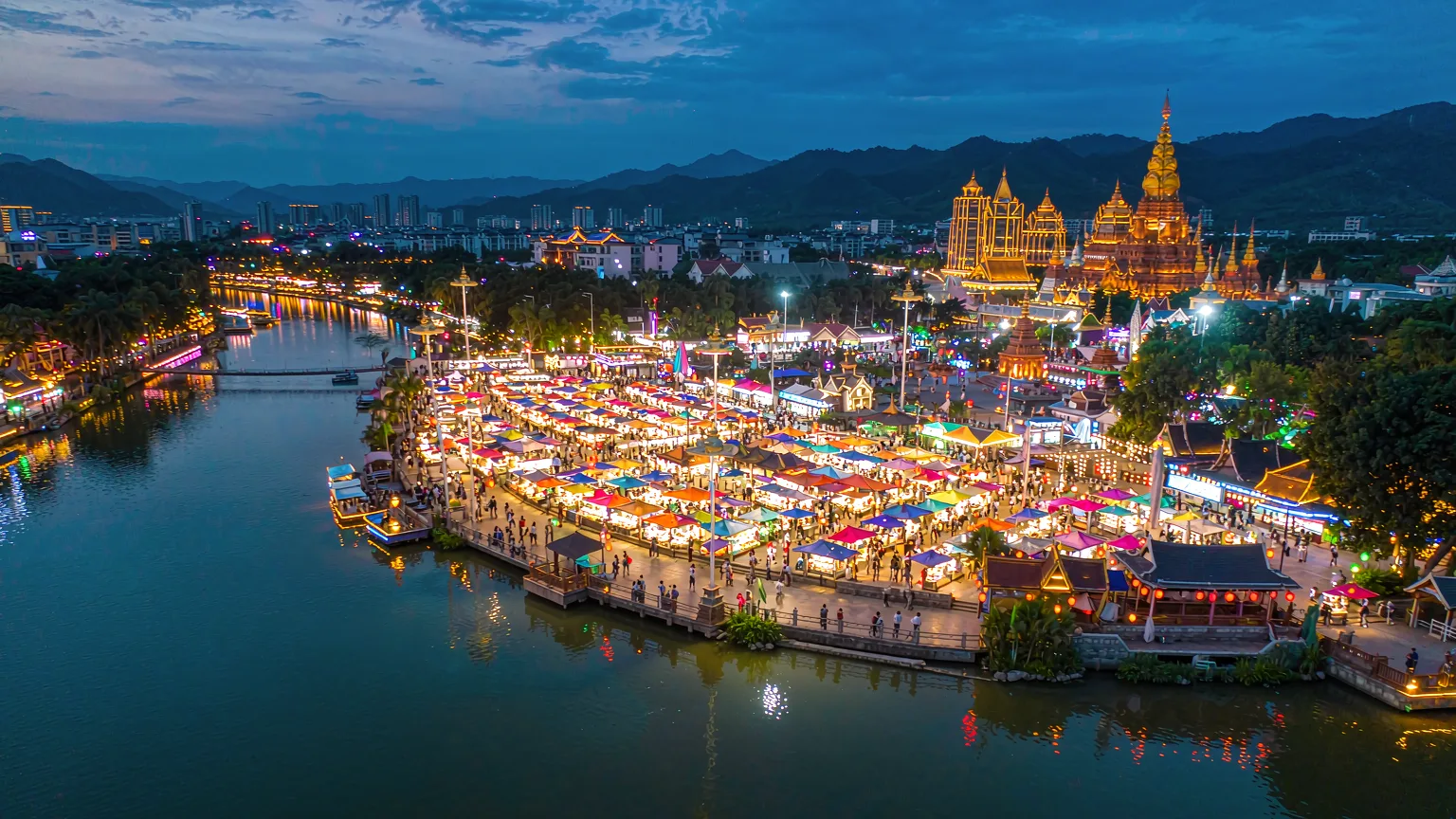
Itinerary at a glance
| 08:00 | Gaozhuang's Morning Fair: The Day Starts at the Market |
| 10:00 | The Chief Buddhist Temple: Chanting under the Golden Roofs |
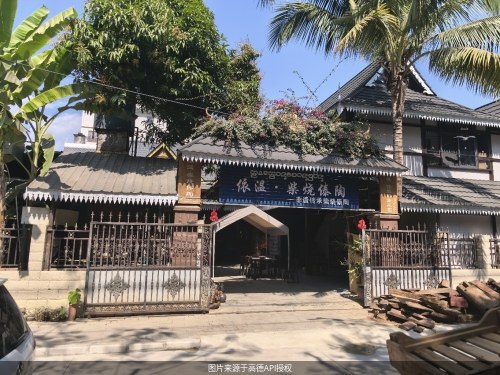
| 14:00 | Yiwen Wood-fired Dai Pottery: The Dai Craft at the Wheel |
| 16:30 | Jinghong's Water-Splashing Square and the Lancang Bank: The City's Afternoon Tea |
The route, stop by stop
Gaozhuang's Morning Fair: The Day Starts at the Market
Gaan bai means gathering in Dai, and Gaozhuang's dawn edition is the locals': vegetable, flower and incense sellers rolling out stalls while worshippers carry lotus past toward the temple. At this hour Gaozhuang has no performance in it, only life.
Learn a few things at the market: bundled lemongrass, limes and bird's-eye chilies, wild greens in Dai women's back-baskets, and unnameable fruits on the tables. Buy one and taste it; the seller will explain what it is and how to eat it, a free anthropology lesson.
The Chief Buddhist Temple: Chanting under the Golden Roofs
The Chief Buddhist Temple is the highest-ranking monastery in the prefecture, adjoining Manting Park, its Thai-style golden roofs and ornate porticos blazing in sunlight. Chanting often runs at 10 am; stand outside the hall and listen, a quality no photograph carries.
Mind the etiquette: shoes off inside halls, knees and shoulders covered, no pointing at Buddha images, and circle the stupa clockwise. The bodhi tree and the palm-leaf scripture displays repay a slow look, this being the heartland of Theravada Buddhism in China.
Yiwen Wood-fired Dai Pottery: The Dai Craft at the Wheel
Dai slow-wheel pottery holds national intangible-heritage status, its shapes and motifs drawn from Dai home life, water jars, lamp stands, the ridge ornaments of temple roofs. The Yiwen workshop shows the forming process, offers hands-on throwing or pinch sessions, and on kiln-opening days the full chamber of fired pieces comes into view.
The workshop keepers are usually family-lineage craftspeople, and a few minutes of talk outearn any placard. Experience pieces need drying and firing, so walk-away items are small raw forms, while finished wood-fired pieces run from tens to hundreds of yuan.
Jinghong's Water-Splashing Square and the Lancang Bank: The City's Afternoon Tea
The Water-Splashing Square is Jinghong's civic living room and the festival's main arena, on ordinary days given to kites, spinning tops and square dancing. The riverside path runs off its western side, the Lancang opening wide here, hills across the water stretching the sunset slow.
Find a drinks table by the river and wait for the light. Jinghong's dusk starts tinting around 6:30 and closes by 7:30, the hour that best ends a city day. When dark falls the Gaozhuang lights come on, and with legs left, the walk back lands you at the market for dinner.
| Getting around |
|
| Budget | Mostly free venues; the pottery session runs RMB 50-100, with food and rides adding about RMB 100-180 pp. |
| Best time | Year-round; November to March runs coolest, and mid-April's festival dresses the square and lanes in celebration by itself. |
FAQs
Is a city-only day monotonous without the rainforest parks?
No, the density actually runs higher: market, temple, craft and riverfront each take a stretch at your own pace. It complements rather than replaces the forest, fitting best as arrival buffer or departure close, and you will meet more local people in this one day than in three at the parks.
What are the taboos at the Chief Buddhist Temple?
Five cores: shoes off in halls, knees and shoulders covered, no disrespectful gestures or poses before Buddha images, women do not touch monks, and circle stupas clockwise. Check signs before photographing, stay silent during chanting, and when unsure copy the locals, that way is never wrong.
Is the Dai pottery session worth a dedicated slot?
Worth it for craft lovers, being the city day's only chance to carry home something you made, tied directly to a heritage craft. For pure sightseers, twenty minutes watching the forming process suffices, leaving the budget and time elsewhere; both choices stand.
Where is the best riverside sunset spot?
The mid-riverside stretch near the bridge holds the widest view, open water and a full far-bank ridgeline; for seats, take a waterside table at a river cafe half an hour ahead. The embankment steps on the square side run quiet, the calm version of the spot. Wind picks up around sunset, so add a light layer.