
Xishuangbanna's cultural density hides in the shadow of its rainforest fame, and today's task is to recover it: the morning reads the lineages of the Dai, Hani, Jinuo, Bulang and other resident peoples at the Ethnic Museum, the afternoon grounds the book knowledge at the Chief Buddhist Temple and Manting Park, and the bonfire show lands the emotional close.
All three stops sit in Jinghong, so the pace can run slow. Culture days punish rushing: two hours for the museum, one for the temple, two for the royal garden, and a show at night, an information load just inside the digestion threshold.
Itinerary at a glance
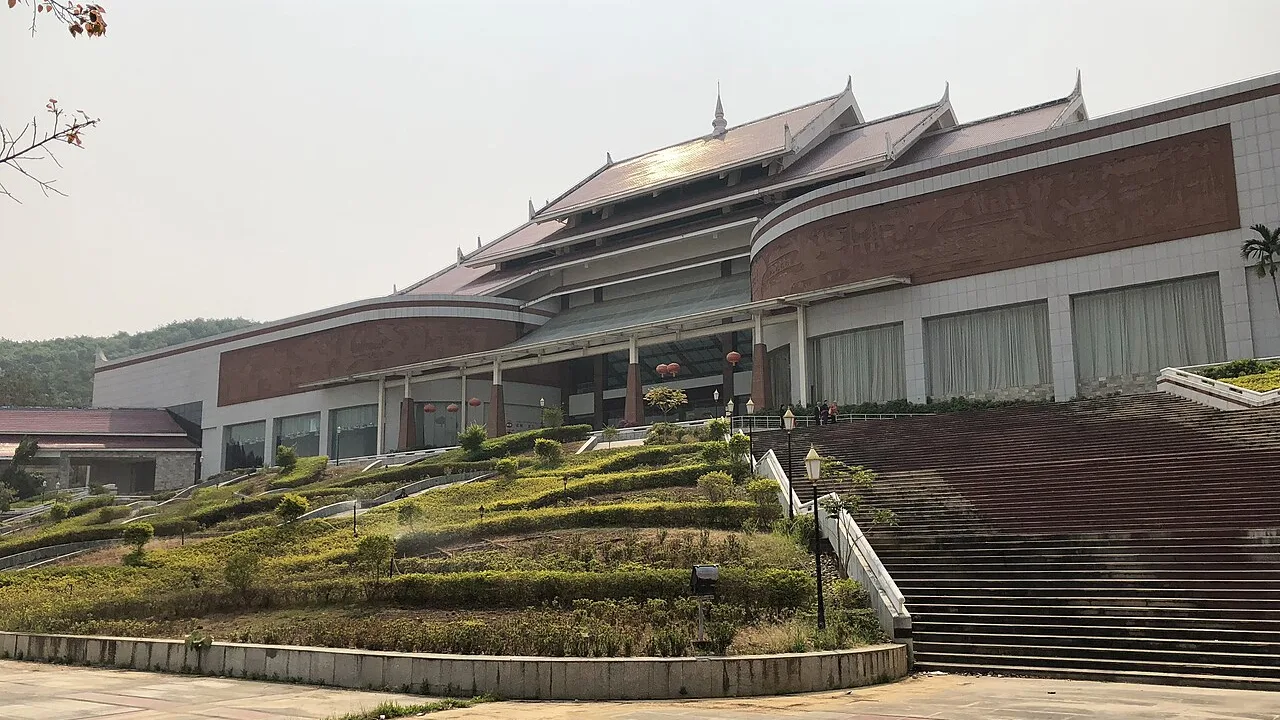
| 09:00 | Xishuangbanna Ethnic Museum: The Contents Page of Twelve Peoples |
| 13:30 | The Chief Buddhist Temple: From Display Case to Living Ground |
| 15:30 | Manting Park: A Dai Cosmos inside the Royal Garden |
| 19:30 | The Mekong Night Song-and-Dance Bonfire: A Whole Evening of Dai Portraits |
The route, stop by stop
Xishuangbanna Ethnic Museum: The Contents Page of Twelve Peoples
The permanent exhibition splits by people and theme, with Dai history, palm-leaf scriptures, traditional dress and stilt-house architecture carrying the main weight, and substantial halls for the Hani, Jinuo, Bulang, Yao and others. Spend ten minutes reading the floor plan first, then choose which halls get the deep walk.
The richest rooms cover Dai history and Theravada Buddhism: the Water-Splashing Festival, the making of palm-leaf scriptures, the evolution of Dai script. See the museum before the temple and many details shift from pretty to legible, which is this day's key ordering.
The Chief Buddhist Temple: From Display Case to Living Ground
Entering the Chief Buddhist Temple with the morning's knowledge changes everything: the tiered roofs of the main hall match the hierarchy you read about, the Buddha images' hand gestures and the palm-leaf displays now have sources, and the worshippers circling the stupa turn Theravada from a noun into a verb.
The temple anchors the Dai calendar's festival rites, so if you hit one, ritual density runs high. Ordinary visits take one to two hours, with the golden roofs, the white elephant sculpture and the bodhi tree as three musts, and elders outside answer simple questions kindly.
Manting Park: A Dai Cosmos inside the Royal Garden
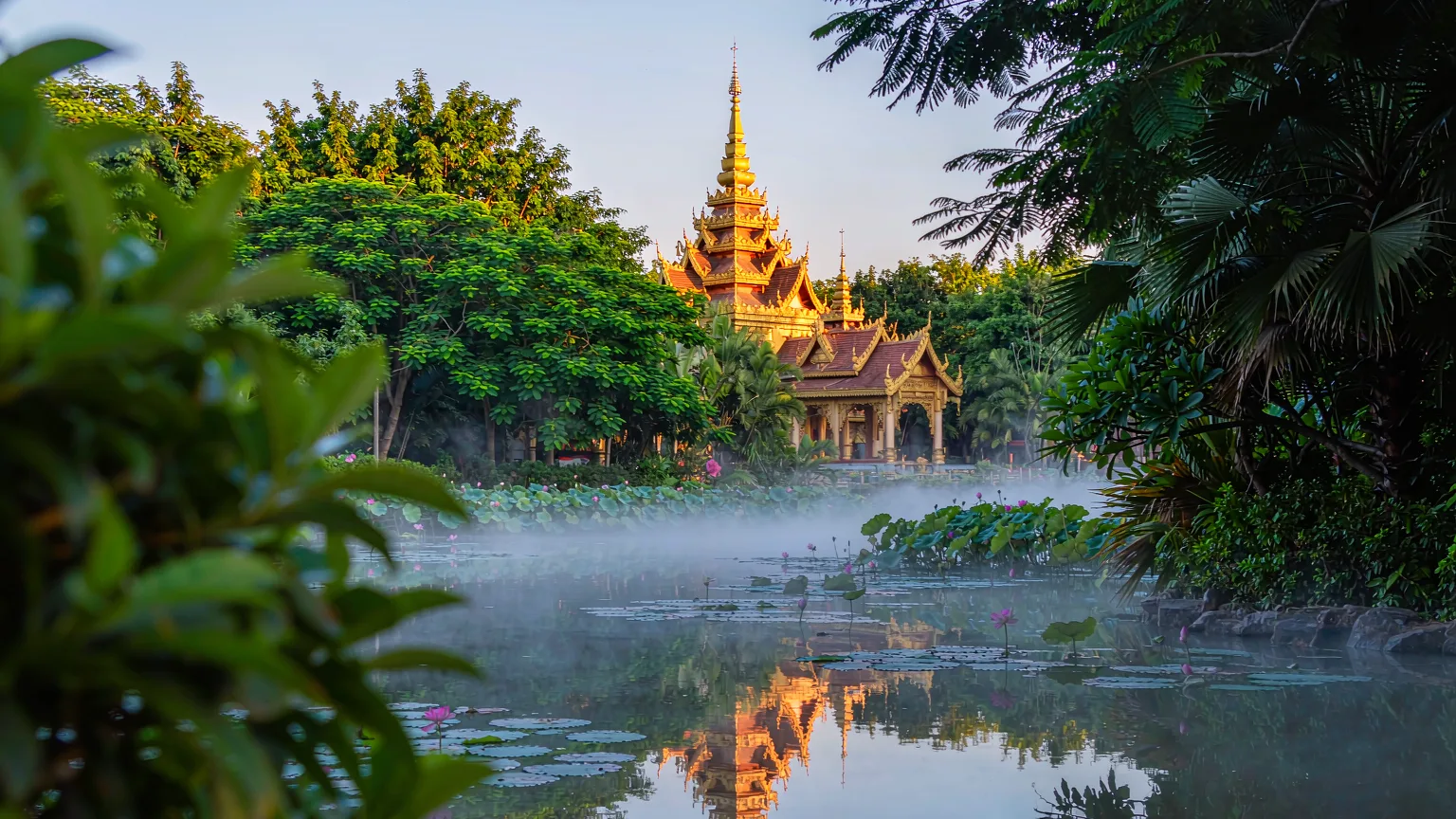
Manting began as the Dai king's garden, and its layout is a pop-up book of Dai culture: the white pagoda echoing a famous original, Release Lake carrying the practice of merit release, the royal-elephant zone restoring the white elephant's place in the king's procession. Walk two slow hours and finish every sign.
The Premier Zhou memorial square is the garden's modern layer: in 1961 Zhou Enlai met the Burmese premier here, and the bronze statue and lotus pond draw the photos. Light warms through the garden at dusk, the day's best photographic hour.
The Mekong Night Song-and-Dance Bonfire: A Whole Evening of Dai Portraits
Manting's evening song-and-dance bonfire ranks among Banna's most polished stage products: the show lines up Dai, Hani, Jinuo and Bulang music and dance, laying out the differences in dress, sound and movement across two hours, a perfect closure to the museum's morning framework.
The second half gathers everyone around the bonfire, hands linked in circles, with shy types free to watch from the rim. The park's lighting plays well against the dark at dispersal, and the walk back to Gaozhuang settles dinner exactly.
| Getting around |
|
| Budget | The museum is free by booking, Manting Park runs RMB 40-54, and the evening bonfire show ticket RMB 180-280; the day totals about RMB 250-350 pp. |
| Best time | Year-round; the museum keeps the usual Monday closure, and shows move indoors in the rainy season to garden night venues in the dry. |
FAQs
Can the museum and temple order be flipped?
Yes, at a cost: with the museum first, the temple annotates itself; reversed, the temple stays mostly visual. If only one survives a tight day, deep travelers keep the museum, sightseers keep the temple plus Manting, a trade settled by interest.
Is the bonfire show worth the money? Too touristy?
It is indeed a tourist product, but well executed and ethnographically above its class, ideal for gathering the day's fragments from museum and temple. On a tight budget, the free street performances at Gaozhuang substitute for atmosphere, one tier down in depth.
Is this culture route manageable with seniors?
Everything here runs low-exertion: the museum lends wheelchairs, Manting runs carts, the show seats everyone, and shoe-off halls are the only friction, with the outer corridor for resting. The real variable is afternoon heat, which the morning museum slot conveniently dodges.
How does this route change during the Water-Splashing Festival?
The museum runs as usual except Mondays, the temple sees peak rite density, Manting packs its events, and the bonfire may add shows or move venues. The price is crowds and rates together, with museum bookings tighter. If the festival is your reason for coming, finish this route two days before it starts.