
Banna's village line lives in the shadow of the park line, yet villages are this land's everyday form: the Dai Park on the Ganlanba plain downstream, Mengjinglai on the Myanmar border, the Jinuo hamlets in the hills. Three days run from the river to the border and up the mountain, opening both ethnic and geographic layers.
The line's core experience is being invited: inside a Dai house, at a Dai table, at a village chanting. Village travel runs half a beat slower than parks, so shift down to strolling gear, and in three days you will bank real faces instead of ticket stubs.
Itinerary at a glance
| D1 10:00 | Dai Park: The Afternoon Session at the Splashing Ground |
| D1 14:30 | The Five Villages and Manchunman Temple |
| D1 19:00 | A Dai Park Night: The Riverside Market and Sleeping in a Dai House |
| D2 09:30 | Mengjinglai: The First Village on the Myanmar Border |
| D2 12:30 | Mengjinglai: A Dai Lunch and the Slow Wheel |
| D2 14:00 | The Single-Tree Forest at Daluo: A Boundary Made of One Tree |
| D3 09:00 | Jinuo Mountain Village: The People of the Last Mountain |
| D3 11:30 | The Jinuo Old Tea Hills: A Short Tea-Mountain Loop |
| D3 14:30 | The Xishuangbanna Medicinal Herb Garden: The Rainforest's Pharmacy |
The route, stop by stop
Dai Park: The Afternoon Session at the Splashing Ground
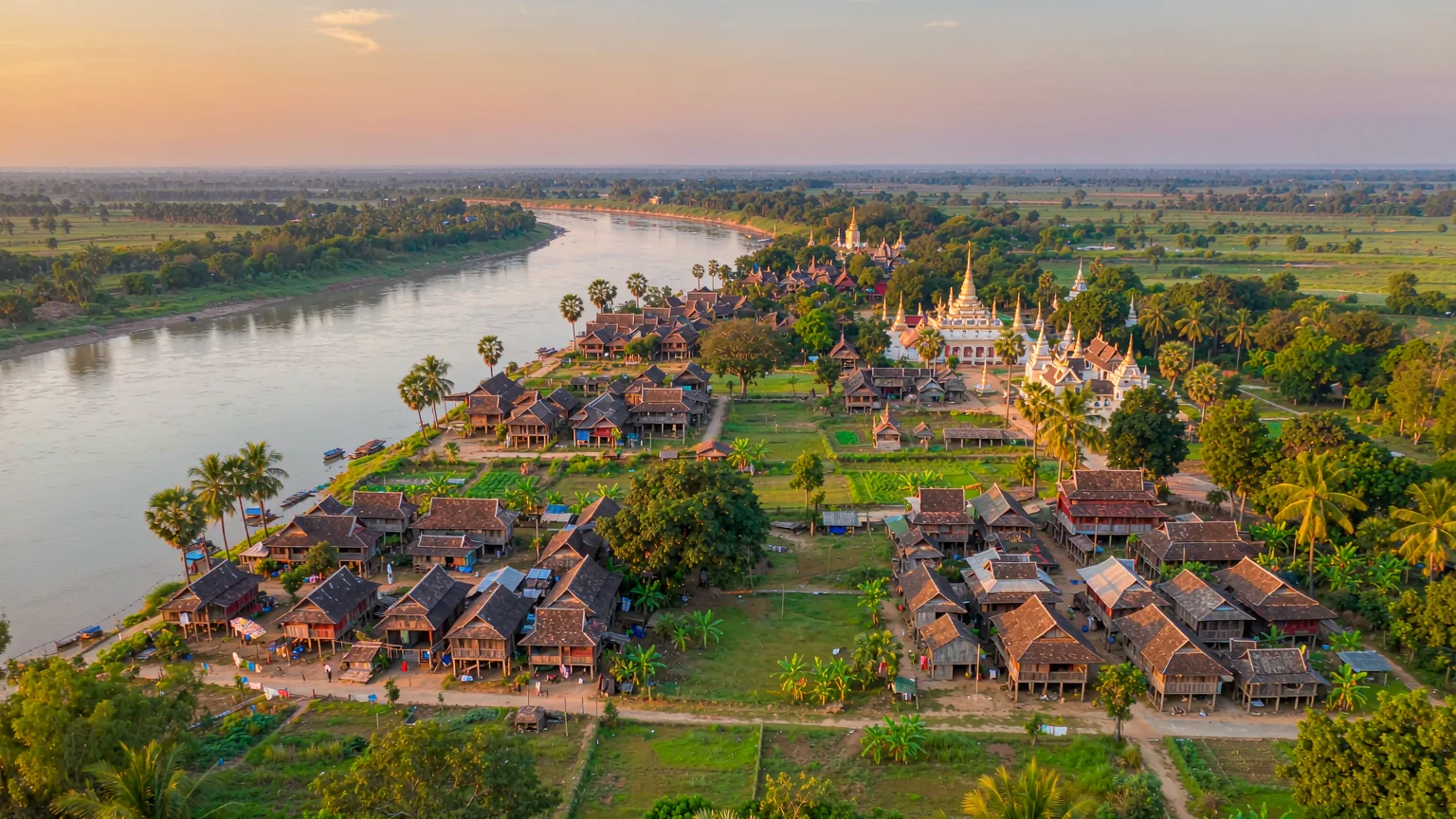
Dai Park sits on the Ganlanba plain downstream on the Lancang, five Dai villages gathered together. The splashing ground runs fixed daily sessions, visitors in Dai dress ringing the pool, water flying at everyone once the music starts. The dry prefer the outer ring, and the committed pack a change of clothes.
Mid-April's festival is the year's main stage, water and blessing thrown together; ordinary sessions are performance by nature, yet the joy is real, and children laugh here harder than anywhere else in the parks.
The Five Villages and Manchunman Temple
After the splash, walk the villages: Manchunman, Manzha, Mangа and the rest built in stilted Dai style, farm tools in the open ground floor, living rooms and altars above. Manchunman Temple is the park's core old monastery, golden roofs and prayer flags among coconuts and talipot palms, with murals and a bodhi tree worth a slow look.
The lanes between villages beat the main road: frangipani over courtyard walls, corn strings under eaves, elders drawing water at the well. Home visits can be booked in the villages, sitting upstairs over smoked tea and the family's story, livelier than any plaque.
A Dai Park Night: The Riverside Market and Sleeping in a Dai House
Dai Park's night belongs to villagers: a small riverside market selling grilled fish and jelly noodles, elders chatting around a television in the village clearing. Sleeping in an in-park Dai guesthouse is the recommended move, insects and the river after dark, roosters at dawn, no road to rush the next morning.
Dinner stays at the guesthouse or a village kitchen, wrapped grills and roast chicken over smoked tea. Ganlanba nights run cooler than Jinghong, so close with a riverside walk and bank energy for the border day.
Mengjinglai: The First Village on the Myanmar Border
Mengjinglai sits at Daluo town beside the border river, famed as the first village on the Myanmar line. Its stilted Dai houses survive intact, the village mixing its own temple and white stupa with Burmese-styled elements, the boundary marker and river right behind, prime photo ground.
Its uniqueness is the one-village-two-countries feel: Myanmar's hamlet across the water, two visible lives a glance apart. Cooperate with the border checks, carry your ID, and follow instructions inside the border zone.
Mengjinglai: A Dai Lunch and the Slow Wheel
Lunch happens at a Dai household in the village: wrapped grills, roast chicken and a pot of smoked tea eaten on the veranda of a stilted house with vegetable beds below. Afterward join the village's slow-wheel pottery or Dai-paper session, national heritage crafts thriving in this border hamlet.
A session runs about an hour; where drying time beats your schedule, pick pieces that leave the same day. The border afternoon carries a special hush, the boundary river its background track.
The Single-Tree Forest at Daluo: A Boundary Made of One Tree
The Single-Tree Forest is one ancient banyan grown prodigious, aerial roots landing as trunks until a lone tree stands acres wide, right on the Myanmar line. The site is small, an unhurried hour, its shaded border view rhyming with the morning at Mengjinglai.
After 4 pm light falls through the curtain of aerial roots, the golden hour for photos. Dai snack stands at the gate, roast chicken and bamboo rice, make the right afternoon tea before the evening return.
Jinuo Mountain Village: The People of the Last Mountain
Day three climbs the Jinuo hills. Formally recognized only in 1979, the Jinuo people carry a complete cultural narrative, the great drum legend, the sunflower totem, the machete-cloth dress, packed into two hours of guide and performance at respectable density.
The Jinuo hills rank among the ancient Six Great Tea Mountains, with tasting rooms in and around the village. The tea-averse still earn from walking the tea plots and rainforest edges, a different green from Ganlanba's.
The Jinuo Old Tea Hills: A Short Tea-Mountain Loop
The Jinuo hills rank among the ancient Six Great Tea Mountains, and the old-garden path around the village threads tea bushes and camphor trees in a forty-minute loop. In picking season, baskets weave through the rows, the green here pruned and disciplined.
Taste a spring or rainy-season brew at the tea house by the fields, and one cup sketches the difference craft and terroir make. Buying is optional, the grower's telling is the content.
The Xishuangbanna Medicinal Herb Garden: The Rainforest's Pharmacy
The herb garden belongs to the medicinal plant research institute, collecting over a thousand tropical medicinal species, dragon's blood trees, amomum, areca and more, laid out by group. Its signage runs dense with science, reading the rainforest here as one enormous pharmacy.
Two hours covers the grounds, and the afternoon shade with herb scent is the gentle close the village line deserves. The ride back to Jinghong runs smooth, and a Dai dinner finishes the trip, three days of villages washed down with lime dipping sauce.
| Getting around |
|
| Budget | Village entries total about RMB 250-350, three days of car hire RMB 500-800, two village guesthouse nights RMB 300-500; with food and lodging the trip runs RMB 1500-2200 pp. |
| Best time | Year-round; the April festival makes Dai Park the main stage while ordinary days still run scheduled splashes, and the dry season cools the villages best. |
FAQs
Do the water-splashing sessions run daily?
Dai Park runs splashes daily in the early afternoon, times per the day's notice, with extra sessions and fuller atmosphere during the April festival. Spectator and wading zones are separate, so both levels of participation are legitimate, no obligation to get in the pool.
What should I watch for in the border villages?
Carry your ID and cooperate with checks; follow instructions at the boundary line, markers and fences, never crossing or shooting across; drones are banned outright in the zone. The village itself is an open tourist site with no extra formalities, so simply keep the discipline in mind.
What are village lodgings like?
Dai guesthouses are converted stilt houses with en-suite bathrooms the norm, air conditioning and mosquito nets usual, while soundproofing and fittings stay modest. The point is the experience, insects, wooden stairs, the host's smoked tea, things no hotel sells. The sleep-sensitive can take one village night and return to Jinghong for the other.
Any regret skipping Wild Elephant Valley and the botanical garden over three days?
The trade is deliberate: this route's theme is villages and people, leaving the nature aces to another trip or line. Wanting both, compress Dai Park to one day and add a valley day, a workable variant. For first visits, run the nature line before the village line; the order sets the depth of your impressions.