
Few read Jinghong as a city, most treating it as a transit lounge for the parks. These three days reverse that: day one reads its face, the pagoda, the river and the market; day two its interior, the urban depth of museum, library and science hall; day three its faith and its night.
The city line's advantages are self-paced and cheap: taxis and walking throughout, no car hire, every hop inside half an hour. Families with children rate day two's science museum and library unexpectedly high; culture readers build on the temple and the museum.
Itinerary at a glance
| D1 16:00 | Gaozhuang Xishuangjing and the Golden Pagoda: The City's First Impression |
| D1 19:30 | The Lancang Night Cruise: The Mekong after Dark |
| D2 09:00 | The Xishuangbanna Ethnic Museum: The City's Memory Bank |
| D2 11:30 | The Xishuangbanna Prefecture Library: The Locals' Study |
| D2 14:30 | The Jinghong Science Museum: Ground Station for Rainforest Science |
| D2 17:30 | Jinghong's Water-Splashing Square: The Town at Dusk |
| D3 09:30 | The Chief Buddhist Temple: The City's Heart |
| D3 14:00 | Manting Park: Using the Royal Garden Properly |
| D3 20:00 | The Peacock Princess Grand Theatre: A Peacock-Themed Close |
The route, stop by stop
Gaozhuang Xishuangjing and the Golden Pagoda: The City's First Impression
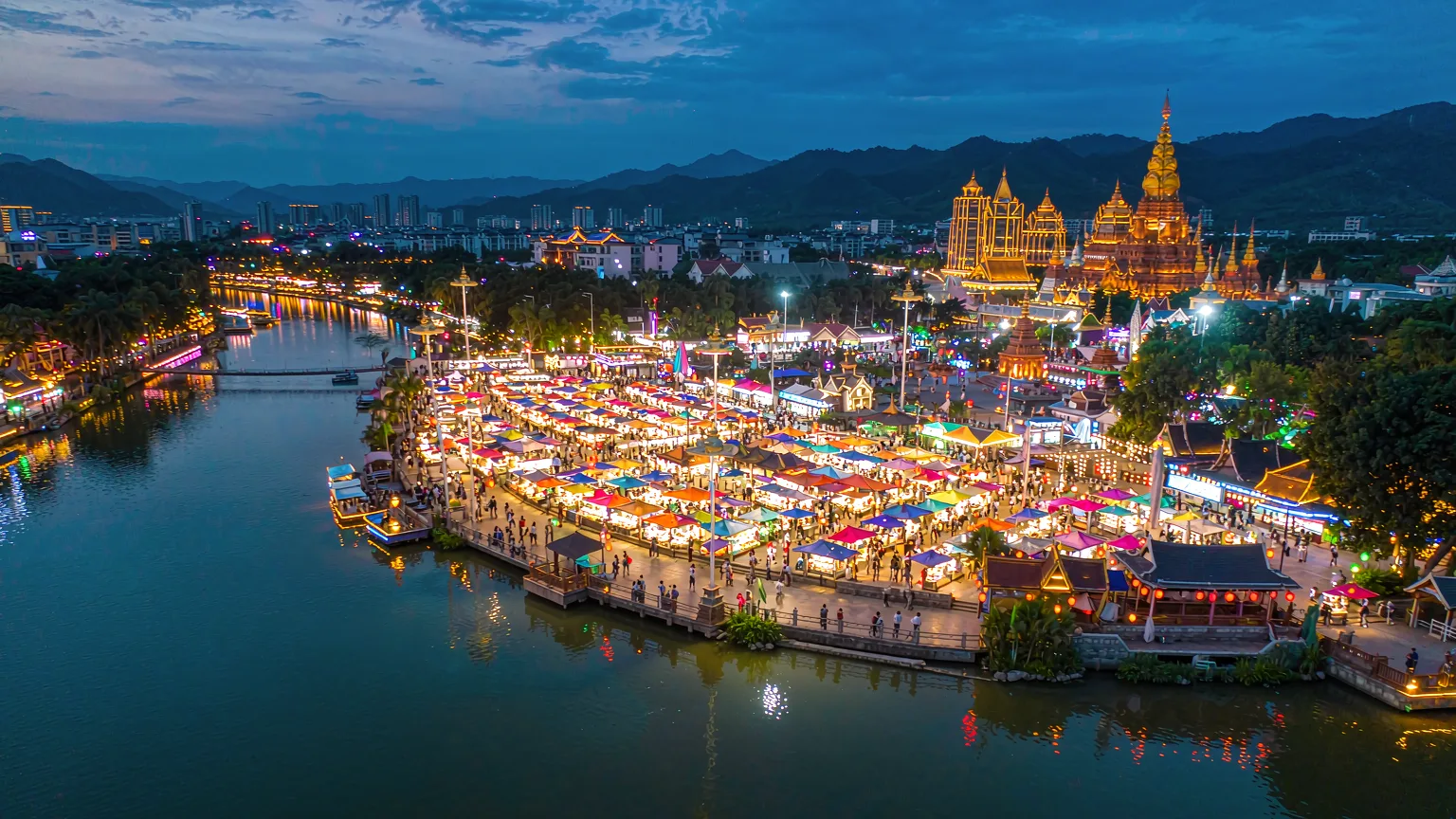
The city days open at Gaozhuang in the afternoon: one circumambulation of the golden pagoda as dusk gilds it, then a first pass down the fair streets of Dai houses, silver and dress shops before the crowds, drawing a map for tonight and tomorrow's market.
Around six, take the viewing deck once for the whole town: the Lancang sliding past the south side, buildings kept deliberately low, a gentle skyline. This is the best angle on Jinghong, a riverside city in no hurry.
The Lancang Night Cruise: The Mekong after Dark
The night cruise leaves from the town pier, one hour collecting both banks' lights, the pagoda's reflection at Gaozhuang, and the river wind, with deck spots worth contesting over cabin seats amid the shows and tea service.
Jinghong from the water is a different city: the density of lights falls, the ridgelines rise, and the phrase a city inside the rainforest reassembles itself. After docking, walk or hop back to Gaozhuang as the market hits full voice.
The Xishuangbanna Ethnic Museum: The City's Memory Bank
Day two opens at the museum, two hours erecting the frame of twelve resident peoples and Dai culture, with palm-leaf scriptures, dress, stilt architecture and rainforest livelihoods as the weight-bearing exhibits, audio guide recommended.
The museum keeps paying out over the following days: once the display cases make sense, the city's temples, motifs and street names start speaking. Free by booking, closed Mondays, so plan around it.
The Xishuangbanna Prefecture Library: The Locals' Study
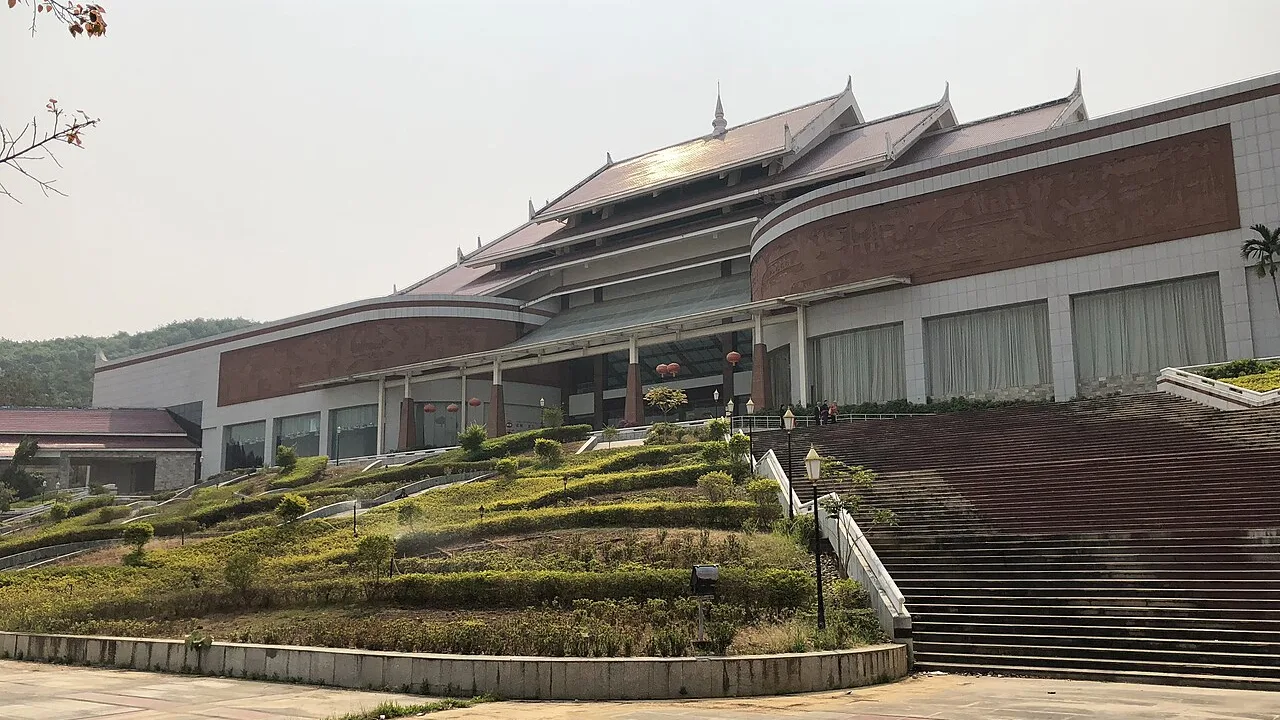
The prefecture library is the city line's most obscure and most comfortable stop: bilingual Dai and Chinese holdings, a local-documents room of Banna research, quiet reading seats. Travelers cannot get cards, but the reading areas open to all, and the afternoon air-conditioning and chairs reward a morning of walking.
The local-documents room's Dai-script books and old photographs merit an hour, the city's history more concrete here than at any sight. For families, the children's reading room's picture books and cooling make the perfect midday pause.
The Jinghong Science Museum: Ground Station for Rainforest Science
The science museum's exhibits circle rainforest ecology, weather and biodiversity, retelling what the garden and the elephant valley showed you through interactive stations, a playground for children and a revision class for adults, both legitimate.
If botanical garden or elephant valley sits in your plan, the museum works better first, concepts before fieldwork always flowing smoother. It closes early, so enter before 3 pm.
Jinghong's Water-Splashing Square: The Town at Dusk
Day two closes at the Water-Splashing Square, Jinghong's civic living room, kites, spinning tops and dance troupes all clocking in at dusk. Snack stands around the square solve dinner, grilled tofu and jelly noodles with a cup of cane juice.
The square reads the city at an angle no sight offers: no tourist narrative here, only the local evening. Half an hour on the steps gives you concrete contact with the town's looseness, something no show can substitute.
The Chief Buddhist Temple: The City's Heart
Day three starts at the Chief Buddhist Temple, morning light best for the golden roofs and the 10 am chanting the golden hour for sound. Arriving with the museum's background from day one, the halls' hierarchy, the Buddha images' hand signs and the festival calendar all begin to speak.
One to two hours covers it, and the side gate leads straight into Manting Park, the walking line seamless. Temple plus garden forms the most complete cultural block in town.
Manting Park: Using the Royal Garden Properly
Manting earns a full afternoon: the white pagoda and Release Lake as the core sights, the royal-elephant zone and palace remains adding history, the tropical plantings a small botany lesson in themselves. Carts answer tired legs, and a lakeside seat watching the pagoda's reflection is the standard rest move.
With an evening show booked, cover the western half by day and leave the east to the night routing. Dusk is town's best photo hour, warm light tuning the golden roofs and water to their best.
The Peacock Princess Grand Theatre: A Peacock-Themed Close
The city days' last night goes to the Peacock Princess Grand Theatre, where the staged peacock dance and Dai song-and-dance come finely made, lights and costume gathering the day's cultural threads into one full visual summary.
After the show the Gaozhuang market still trades, the last chance for supper and shopping. The city reading completes here: Jinghong is no transit stop but a place with depth, faith and a night of its own.
| Getting around |
|
| Budget | Main entries run RMB 150-250, cruise and show RMB 150-300, with three days of food and transport adding RMB 500-800 pp. |
| Best time | Year-round; November to March cools the town, and mid-April's festival maxes the urban atmosphere while bookings tighten. |
FAQs
How do I choose between the city days and the park line?
By purpose: first visit and short on time, take the park line, the rainforest and elephants being Banna's core assets; repeat visits, family trips, or slow deep travel favor the city line's density and comfort. The two also splice into a five-day version with city days as buffers.
Do the library and science museum deserve slots? Too obscure?
For families the science museum is near-mandatory, paying twice in air-conditioning and interactivity; the library suits travelers merging rest with reading. Pure sightseers may skip both for temple and market, a trade settled entirely by travel style.
Is it cruise or night market, or can both fit?
Both fit: one cruise hour, docked before eight, flows straight into the market, and seeing Gaozhuang lit from the river before entering it on foot is a clean line. If budget allows one, take the market, free and fuller of life; the cruise's value is the vantage, photographers first.
Does the rainy season hurt the city days much?
Barely: most of the city line is indoor or sheltered, the museum, library, science hall and theatre fear no rain, while the cruise and market run between showers. Put outdoor stretches in the morning window and retreat indoors when the afternoon rains, the standard rainy-season play here.