
With a single day, touch both of Xishuangbanna's faces: the rainforest south of the Tropic of Cancer, represented by Wild Elephant Valley, and the Dai world of fireworks and faith, represented by the pagoda at Gaozhuang, Manting's royal garden and the night market. North into the forest in the morning, back to the city after lunch, and give the night to the Lancang riverbank lights.
Transport is painless: the valley lies about forty kilometers north of Jinghong with direct park buses and shared cars, while the pagoda and Manting Park chain together on foot. Lower your elephant expectations, a sighting is fortune, not a ticket promise, but the rainforest below the raised walkways already earns the fare.
Itinerary at a glance
| 08:30 | Wild Elephant Valley: Raised Walkways and Asian Elephants |
| 13:00 | Gaozhuang Xishuangjing: The Golden Pagoda and the Fair Streets |
| 16:00 | Manting Park: Dusk in the Dai King's Garden |
| 19:00 | Mekong Starlight Night Market: Gaozhuang after Dark |
The route, stop by stop
Wild Elephant Valley: Raised Walkways and Asian Elephants
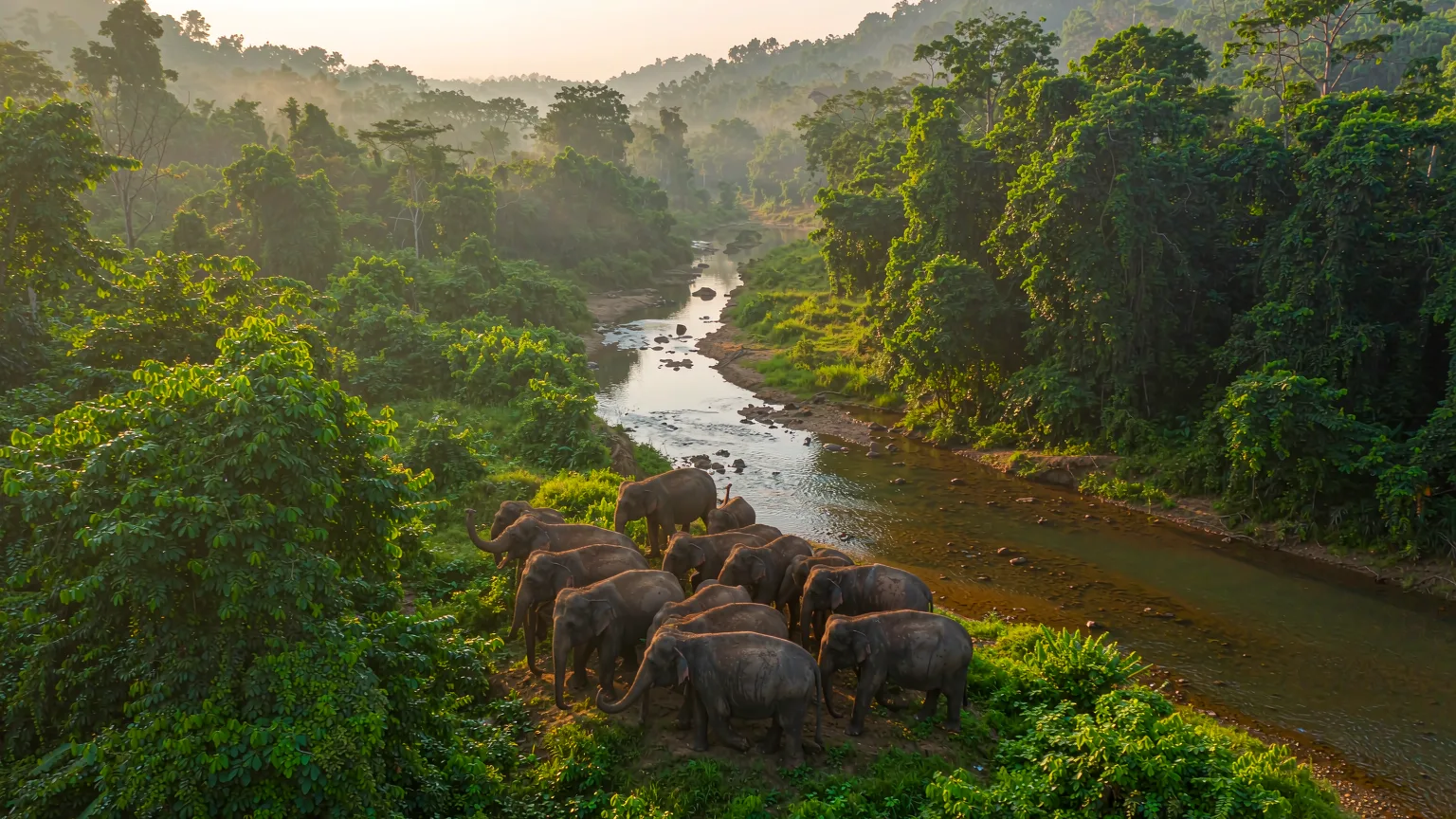
Wild Elephant Valley offers Xishuangbanna's best odds at wild Asian elephants, with herds visiting the valley's salt licks at dawn and dusk. The raised corridor runs along the canopy itself, walking at treetop height above a gully rainforest of strangler figs, buttress roots and lianas; even elephant-less, it is a dense lesson in rainforest.
Watch correctly by being quiet and patient: hold at the viewing points for ten minutes or more, listening as guides read the signs, tracks, dung and bent branches all testify. The on-site Asian elephant museum merits ten minutes and supplies the background.
Gaozhuang Xishuangjing: The Golden Pagoda and the Fair Streets
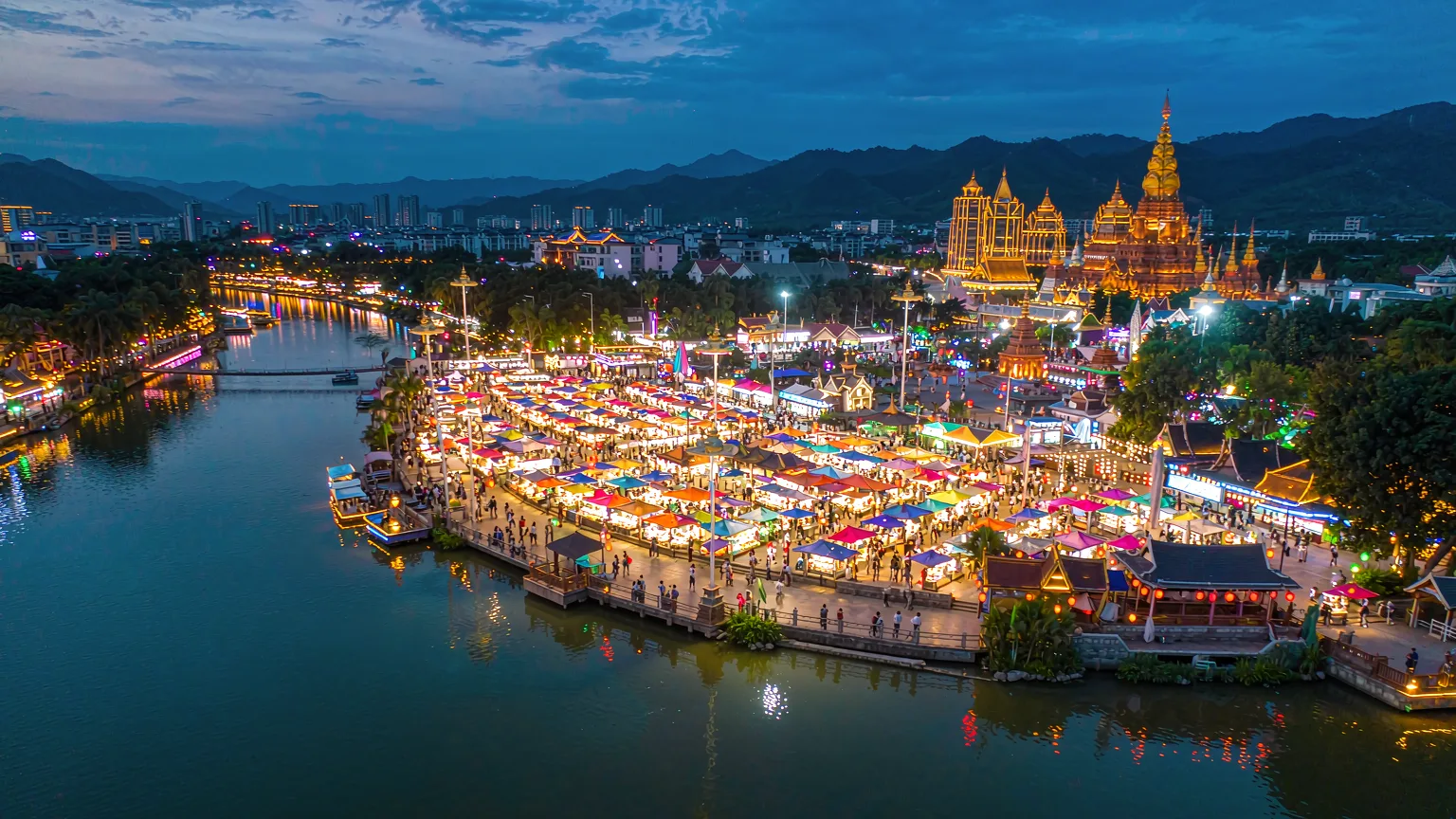
Back in Jinghong, the afternoon starts at Gaozhuang Xishuangjing. The golden pagoda is the city's landmark, rising gold above a cluster of Southeast Asian-styled buildings, its circumambulation path shared by worshippers and tourists at their own tempos. The fair streets behind it run with Dai timber houses selling Dai dress, silver and crafts.
Gaozhuang is calmer by day, good for reading the place first: renters of Dai dress cluster on the plaza in front, while empty-frame shots hide on the pagoda's rear side. Lao-style iced coffee and paruta make the right afternoon tea, saving stomach for tonight's market.
Manting Park: Dusk in the Dai King's Garden
Manting Park carries over thirteen hundred years, once the Dai king's own garden, its white pagoda, Release Lake and the Chief Buddhist Temple sharing a wall. Dusk is Manting's best hour: the heat has gone, the elephant grounds fall quiet, and lake light warms the white pagoda.
Walk the royal-elephant cultural zone and the Dai palace remains slowly, with benches by Release Lake holding the correct sunset position. If your evening includes the bonfire show or a performance, Manting lasts into the night, the garden changing into its lit second self.
Mekong Starlight Night Market: Gaozhuang after Dark
The Starlight Night Market ranks among Asia's largest, stalls running from the pagoda's base down to the Lancang bank. By day Gaozhuang is a sight; by night it is a bazaar: barbecue smoke, the sour heat of pounded chicken feet, artisan light-strings, with crowds peaking after 8 pm.
Divide eating from browsing: dinner at a Dai grill inside the market, lemongrass fish with pineapple rice as the standard pairing, while browsing goes to handmade silver, Dai-paper lamps and fruit stalls, with negotiations opening at half price. Afterward walk the river path; the Lancang night wind is the region's best free souvenir.
| Getting around |
|
| Budget | Wild Elephant Valley entry runs about RMB 60-70 and Manting Park RMB 40-54; with meals and rides the day lands near RMB 250-400 pp. |
| Best time | The dry season from November to April is steadiest; mid-April's Water-Splashing Festival turns the whole town jubilant yet doubles room rates, and elephant sightings peak on dry-season early mornings. |
FAQs
Can you really see wild elephants at the valley? What are the odds?
Yes, though the odds track season, hour and luck, peaking on dry-season early mornings at usually only twenty to thirty percent. Set expectations right: the rainforest and walkways are the certain yield, wild elephants the surprise bonus. The park's rescued elephants guarantee a close look, so never bet everything on the wild ones.
Do the valley and Gaozhuang fit in one day?
Yes, if the clock holds: into the valley before 8:30, out by 11:30 for lunch, on the road back before 1 pm, at Gaozhuang by three, into Manting at four, night market at seven. Any stage slipping an hour pushes the market out of the day. A hired car beats scheduled buses for control.
What is it like visiting during the Water-Splashing Festival?
Mid-April's festival is Xishuangbanna at full volume, water thrown across the whole city, dragon boats, sky lanterns, atmosphere maxed. The costs match: room rates double or triple, tickets run scarce, and sights pack solid. Joining means booking a month ahead; avoiding means skipping that week, both extremes live in these days.
What should I know about sun and insects?
Low latitude means fierce sun that burns even through cloud: sun sleeves, a hat and sunscreen are standard kit, with indoor or shaded projects around noon. Mosquitoes wake at dusk and by water, and dengue cases appear sporadically, so long trousers plus repellent is real protection, and persistent fever after bites calls for a doctor.