
Banna's table is a gift of the rainforest: lemongrass, lime leaf, bird's-eye chili, tamarind, with aromatics and sourness forming the backbone of Dai flavor. Today runs entirely inside Jinghong, four meals plus snacks en route, portions rationed by stomach rather than by distance.
Two words define Dai cooking: grilling and pounding. Wrapped grills steam ingredients in banana leaves over coals, locking the freshness in; pounding reduces everything in the mortar and starts again. First-timers should open with the safe pair, grilled fish and pineapple rice, saving the wrapped grills and the fierce salads for the second bite.
Itinerary at a glance
| 09:00 | Luoluo Ice House (Flagship): Opening on Paruta |
| 12:30 | Daizhuangyuan Dai Restaurant: Lemongrass Fish and Wrapped Grills |
| 15:30 | Wantai Lao Iced Coffee (Gaozhuang No.1): The Afternoon Buffer |
| 18:30 | Aishangjun Wild Mushroom Hotpot: Closing on the Forest's Flavor |
The route, stop by stop
Luoluo Ice House (Flagship): Opening on Paruta
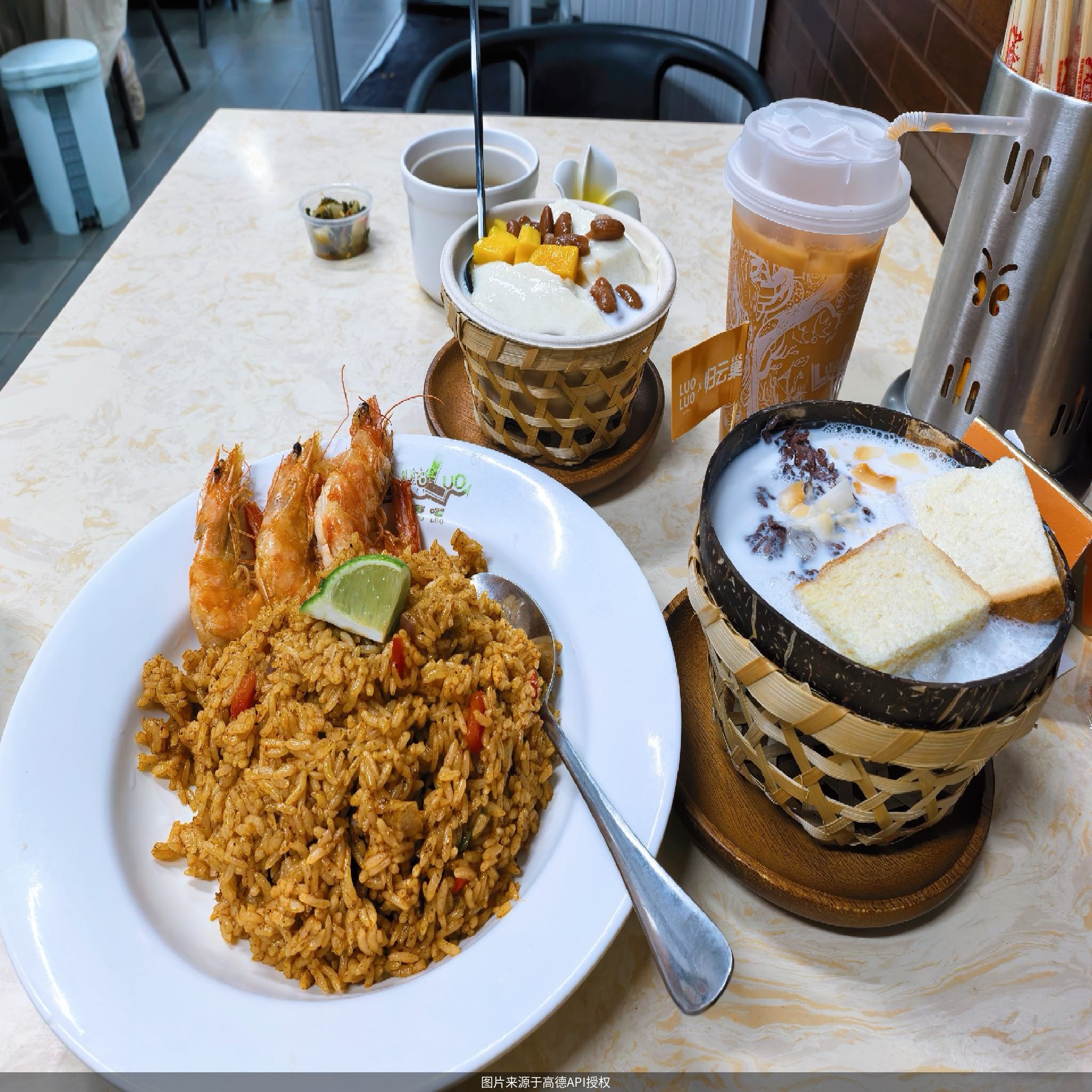
Luoluo is a Jinghong cold-drink institution of decades, its signature paruta a Southeast Asian import: coconut milk layered with sago, condensed milk, toast and ice, the crisp toast eaten fast, because soaked soft it becomes another dessert. Ice at 9 am carries no guilt at this latitude.
Beyond paruta, the mango ice and coconut sago both hold steady. The shop doubles as Banna's baseline for sweet: build your standard here, and every night-market paruta afterwards becomes gradeable.
Daizhuangyuan Dai Restaurant: Lemongrass Fish and Wrapped Grills
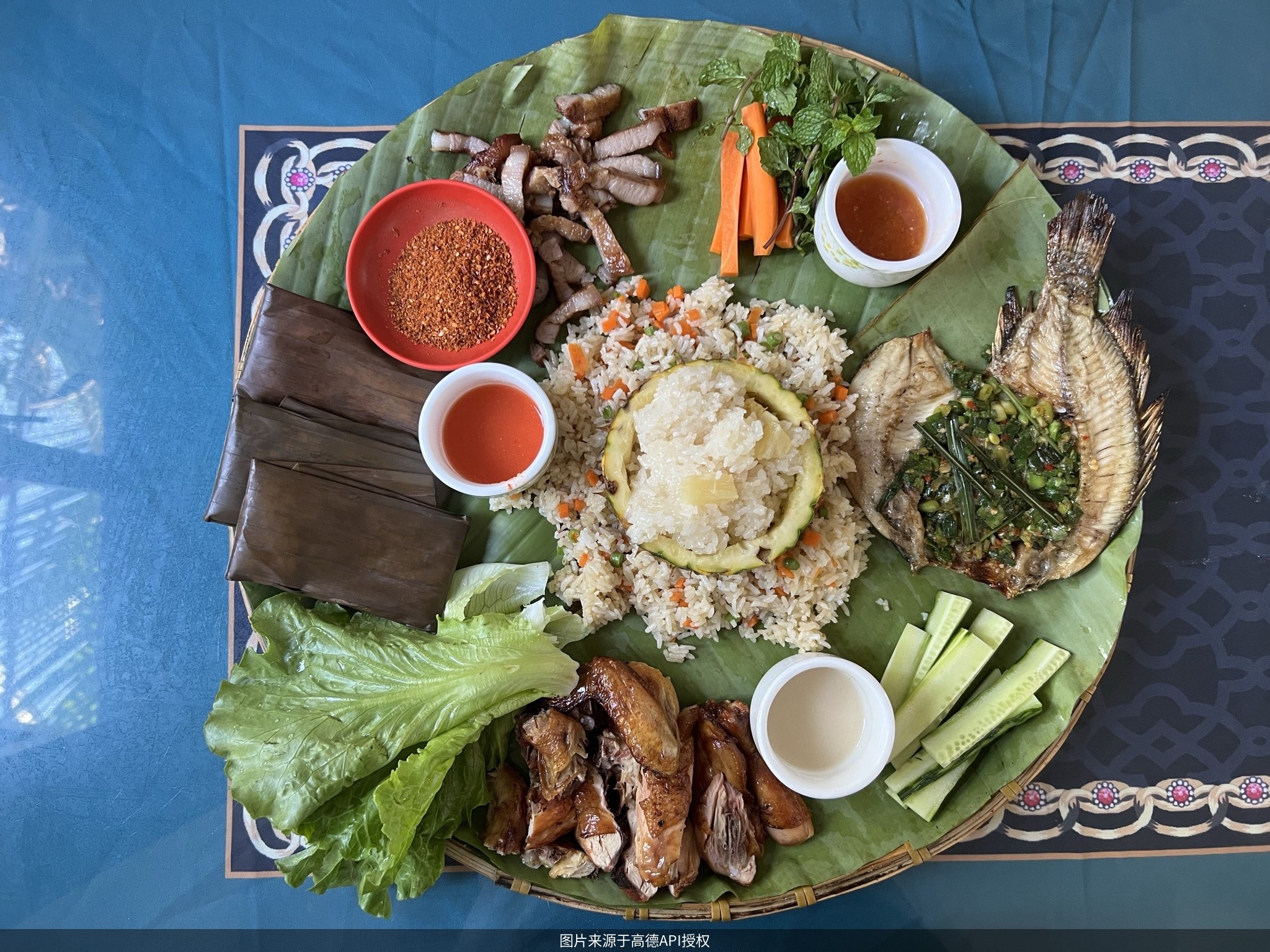
Noon calls for a veteran Dai kitchen covering the whole framework at once: lemongrass grilled fish is mandatory, the belly stuffed with lemongrass and sawtooth herb over slow coals, skin crisp, flesh sweet; pineapple rice's sweet stickiness balances the heat; for wrapped grills, take the mixed vegetables and the beef.
Ordering tip: Dai heat defaults to local tolerance, so out-of-town stomachs should request mild up front; the dipping sauces carry the soul, lime sauce for grilled things, sour-hot for greens. Two people manage three dishes plus a soup, no greed, since mushroom hotpot waits at night.
Wantai Lao Iced Coffee (Gaozhuang No.1): The Afternoon Buffer
Half past three is the buffer between proper meals, and Gaozhuang's Lao iced coffee fills it. Lao coffee sits on condensed milk, packed with ice, its sweet-bitter ratio rock steady; beyond coffee, the coconut slush and lemon tea both deliver.
The stop also does recovery duty: half an hour under a Dai eave watching the pagoda and passing Dai dress, rebuilding an appetite for dinner. The night market rolls out at six, and the timing lands exactly there.
Aishangjun Wild Mushroom Hotpot: Closing on the Forest's Flavor
Dinner goes to a pot of mushrooms. The broth bases on free-range chicken or pork ribs, with varieties tracking the season, the prized wild ones in the rains, cultivated types through the dry months. The umami of the broth is the rainforest in another form: drink a plain bowl first, then start the meats.
Mushroom eating has discipline: everything must boil through completely, the house will time it, so do not raid the pot early. Take the dry dip; the fungi need little adornment. Afterward walk the night market twenty minutes, closing a day whose taste spectrum ran from iced sweetness to mountain treasure.
| Getting around |
|
| Budget | Graze the day for RMB 100-180 pp; mushroom hotpot adds RMB 100-160 per head, making a full day about RMB 250-350 pp. |
| Best time | Year-round eating; June to October belongs to wild mushrooms, while dry-season pots lean on cultivated ones, and the night market hits stride after 8 pm. |
FAQs
Dai food runs hot. Any non-spicy options?
Yes: ask for the fish without chili, keeping the lemongrass and lime-leaf base; pineapple rice, coconut chicken and wrapped tofu all stand without heat; keep dipping sauces on the side for self-control. Say mild or none when ordering, and Dai kitchens are generous with tourist tolerances.
When is mushroom season? Does the dry season go without?
Wild mushrooms peak in the June-to-October rains, when the prized varieties flood the market at weather-driven prices. Dry-season pots lean on cultivated and dried types, freshness discounted but safety and broth character intact. The mushroom-obsessed should aim for July and August.
How real is the risk of mushroom poisoning?
Low at proper restaurants: edible species are screened, boiling times enforced, and the staff have seen every kind of tourist, so controls are strict. The risk concentrates in self-picked and unsourced mushrooms, which travelers must never touch. Skipping alcohol on mushroom day is house law, and any lip numbness or nausea means immediate medical care, naming what you ate.
How do I combine the night-market snacks without disappointment?
Rule of three tastes and one proper: small portions of three snacks, grilled pork belly, pounded chicken feet, pineapple rice as the steady trio, closed by one real staple. Skip pre-made coconut jellies and neon juices, choosing freshly cracked coconut and pressed sugarcane instead. Ask prices before eating, and market stalls expect twenty percent of haggling room.