
Five days is Banna's comfortable length: a day for Wild Elephant Valley, a day for the botanical garden, a day for Dai Park and Manting, a day for the Gaozhuang-and-river line, and a loose closer. One main event per day, afternoons left to recovery and markets, a rhythm that in the tropics is necessity, not luxury.
Lodging stays put in Jinghong all five nights, every day trip inside a two-hour drive. The budget's weight sits in cars and tickets, so ride-sharing saves real money, and guesthouses versus chains can open another twenty percent.
Itinerary at a glance
| D1 08:30 | Wild Elephant Valley: Raised Walkways and Asian Elephants |
| D1 17:00 | Gaozhuang Xishuangjing: The Pagoda and the First Dai Dinner |
| D2 08:30 | The CAS Tropical Botanical Garden, West Section: A Flood of Species |
| D2 14:00 | The CAS Tropical Botanical Garden, East Section: Green Stone Forest and Gully Rainforest |
| D3 10:00 | Dai Park: The Afternoon Session at the Splashing Ground |
| D3 15:00 | The Five Villages and Manchunman Temple |
| D4 09:30 | The Chief Buddhist Temple: Chanting under the Golden Roofs |
| D4 13:00 | Manting Park: A Full Afternoon in the Royal Garden |
| D5 09:00 | The Tropical Flower Garden or the Herb Garden: A Light Morning |
| D5 16:00 | The Lancang Cruise and the Starlight Market: The Five-Day Close |
The route, stop by stop
Wild Elephant Valley: Raised Walkways and Asian Elephants
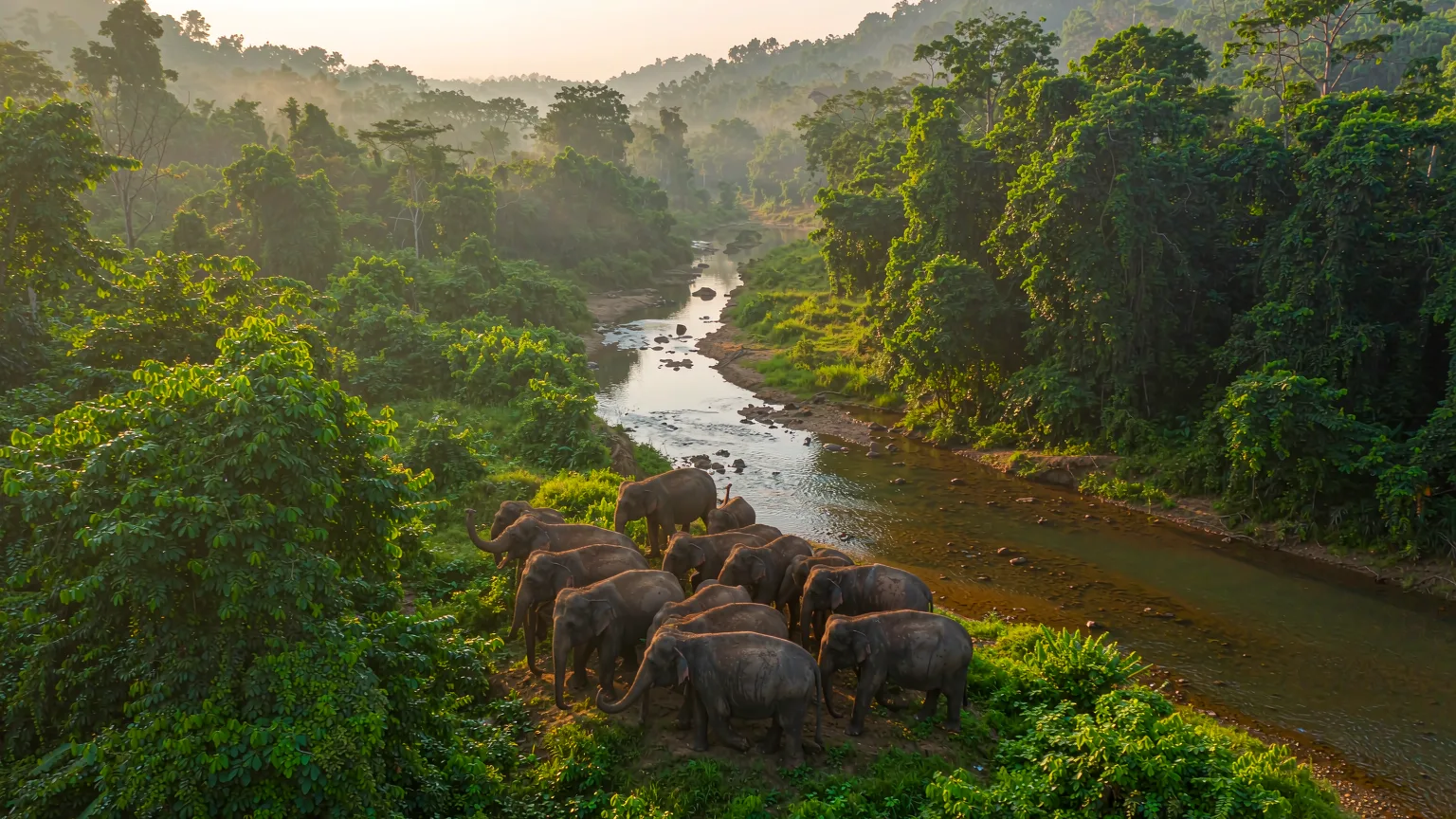
Open the five days at Wild Elephant Valley on the 8:30 first entry. The raised corridor runs the canopy above a gully rainforest, dawn the peak window for herds at the salt licks, ten quiet minutes at each observation point, silence the first rule.
Beyond elephants, the walkway is a living textbook of rainforest structure, buttress roots, stranglers and lianas woven together. Sightings are probability, so book the walkway itself as the certain yield and the mood stays right.
Gaozhuang Xishuangjing: The Pagoda and the First Dai Dinner
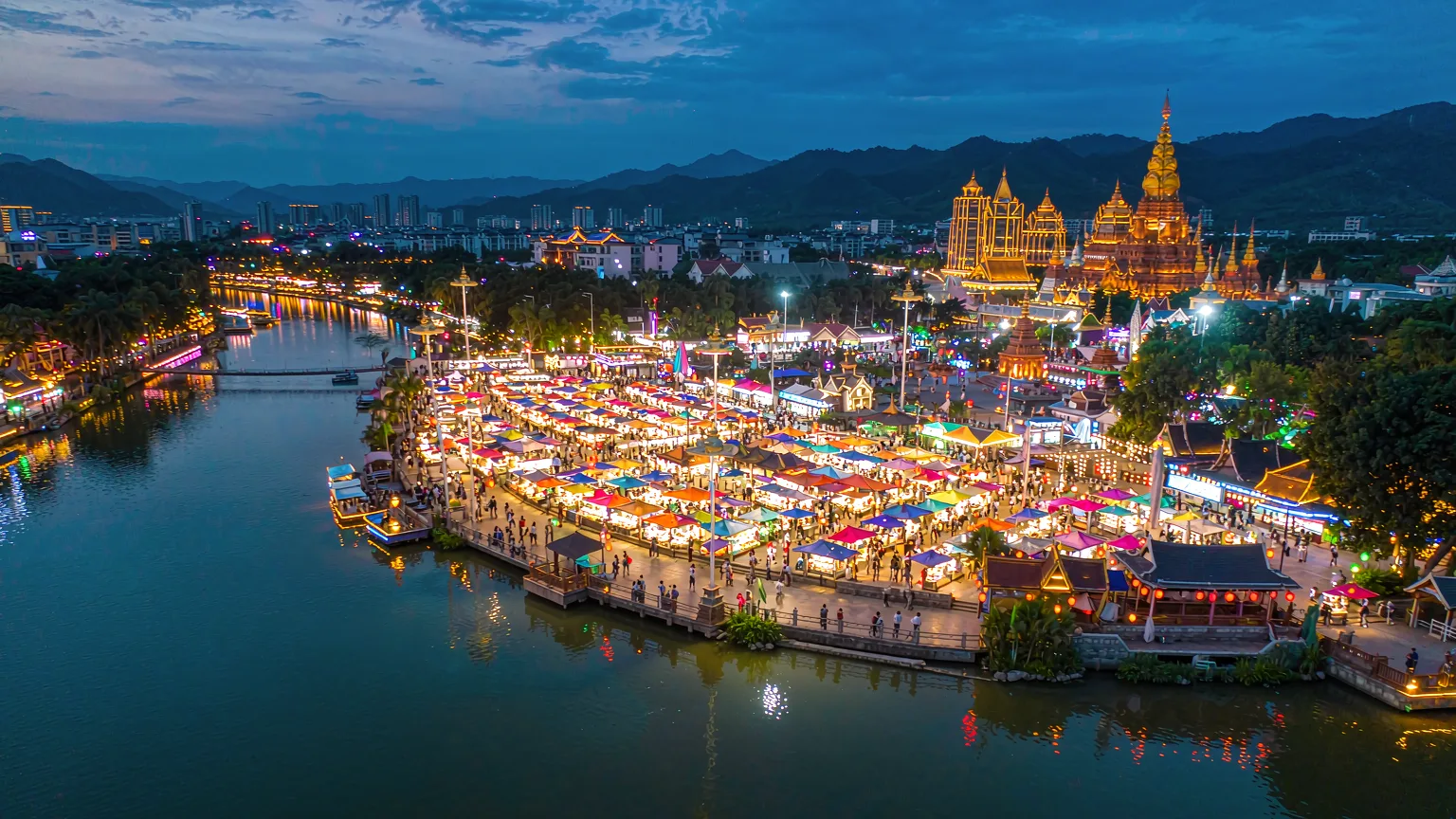
By late afternoon you are back in town at Gaozhuang's quietest hour: one circumambulation of the golden pagoda, a first pass down the fair streets of Dai houses and silver shops, then the viewing deck for the Lancang and the town's gentle skyline.
Dinner lands at a Gaozhuang grill, lemongrass fish with pineapple rice. Splitting day one between forest and street life sets the five-day tone.
The CAS Tropical Botanical Garden, West Section: A Flood of Species
Day two belongs wholly to the garden, about an hour from Jinghong. The west section is the classic: giant floating lilies, the dancing plant of the oddities garden, palms and figs, carts stopping at every gate while the audio guide gives species their stories.
The botanically unversed should beeline three spots: the giant lilies, the oddities garden, the notable trees. Covering a third by noon is ambition enough, so never fight it on foot.
The CAS Tropical Botanical Garden, East Section: Green Stone Forest and Gully Rainforest
The east section is the garden's wild face: the Green Stone Forest draping lianas over karst pinnacles until stone and forest grow as one, and the gully trail following a Luosuo tributary where buttress roots and stranglers run denser.
The east climbs harder than the west, so choose lines by fitness, carts reaching only the entrance. Sunset by the Luosuo closes the day, with an hour's drive back and an early bed.
Dai Park: The Afternoon Session at the Splashing Ground
Day three downshifts: a slow morning in town, departure for Ganlanba at midday. The splashing ground runs fixed daily sessions, visitors in Dai dress ringing the pool, water flying at everyone once the music starts, and children laugh here harder than anywhere else.
The dry take the outer ring, the committed pack a change of clothes, and the splash feeds straight into the village walk, one well-spent park afternoon.
The Five Villages and Manchunman Temple
After the splash, walk the villages: Manchunman and the rest built in stilted Dai style, farm tools in the open ground floor, living rooms and altars above, Manchunman Temple's golden roofs among coconuts and talipot palms, murals and a bodhi tree worth a slow look.
The lanes beat the main road, frangipani over walls and corn strings under eaves. Return by dusk and sleep early, banking energy for tomorrow's temple and garden.
The Chief Buddhist Temple: Chanting under the Golden Roofs
Day four enters the temple in the morning, the 10 am chanting the golden hour for sound and the light best for the golden roofs. The tiered main hall, the white elephant sculpture and the bodhi tree are the three musts.
One to two hours covers it, and the side gate leads straight into Manting Park, the line seamless. Covered knees and shoulders, shoes off in halls, hard rules both.
Manting Park: A Full Afternoon in the Royal Garden
Manting earns a full afternoon: the white pagoda and Release Lake as the core sights, the royal-elephant zone and palace remains adding history, carts answering tired legs, a lakeside seat watching the pagoda's reflection the standard rest move.
Night offers two doors: Manting's Mekong Night bonfire, or the Starlight Market at Gaozhuang. Show-goers slow the daytime further, market-goers skip a formal dinner for the stalls.
The Tropical Flower Garden or the Herb Garden: A Light Morning
Day five flexes, opening with a light town garden: the Tropical Flower Garden's blooms and crops, or the herb garden's thousand-odd medicinal species, two hours covering either and digesting the four days before.
One of the two suffices, both cheap and quiet, the shadiest, calmest stretch of the trip, made for slow walking.
The Lancang Cruise and the Starlight Market: The Five-Day Close
The afternoon cruise rereads the town from the water, both banks' lights and the pagoda's reflection at Gaozhuang collected in one hour. After docking, walk or hop back as the Starlight Market hits full voice.
The last chances go to supper and shopping: grilled fish, paruta, the souvenirs still pending. The departure mindset should match the arrival one, slowly.
| Getting around |
|
| Budget | Entries total about RMB 400-500, car share RMB 400-600, cruise and shows extra; five days with food and lodging run RMB 2500-3500 pp. |
| Best time | November to April is the prime dry season; May to October brings the greenest forest, with slack needed for afternoon showers. |
FAQs
What is the smartest five-day budget split?
Plan on a median of RMB 500-800 per day: lodging about thirty percent, transport and cars thirty, tickets and activities twenty, food twenty. The savings levers are ride-share, guesthouses and off-season timing; never scrimp on legitimate show tickets or the safety side of transfers. Tropical drinks and ices cost more than expected, so keep a float.
Is this route realistic with a child under five?
Realistic, with cuts: the valley and garden both run carts and shaded lines, the splash pool is a natural playground, Manting stays flat. What must change is tempo, one main event a day, afternoon hotel naps, night shows swapped for early ones or dropped. Mosquito and sun protection hold first priority throughout.
Which days tend to be most underrated across the five?
The Dai Park day and the flex day. Most skip the park as a children's item, though it is Banna's densest day of lived texture, while the flex day gets wasted on errands when the flower-garden, herb-garden and river-cruise trio is the trip's loosest, finest day. Fixing those two lifts the whole five.
Is the rainy season worth five days?
Yes, given flexible plans: the rains bring Banna's deepest green, prices down a fifth, crowds halved, at the cost of afternoon showers and slick ground. Operationally, strike hard each morning and move indoors by afternoon, with the garden pulled earlier or a museum swapped in on storm days. For photographers and rainforest lovers, the rains are arguably the pick.