
Seven days is the complete answer to Banna: most extract the valley and Gaozhuang and leave, yet the rest of Xishuangbanna holds three more layers, the garden's species density, the living present of border villages, and the rainforest giants of Wangtianshu. This plan runs easy to hard, city to wild and back, with a gentle fitness curve.
Structurally only one long haul exists, toward Wangtianshu: five nights in Jinghong or Menglun, the sixth toward Mengla, the seventh closing in town. One main objective a day, afternoons blank for the riverbank, the villages and your own tempo; at the end you will feel less like you ticked sights and more like you lived a short spell in Banna.
Itinerary at a glance
| D1 16:00 | Gaozhuang Xishuangjing: Arrival Day and the City Map |
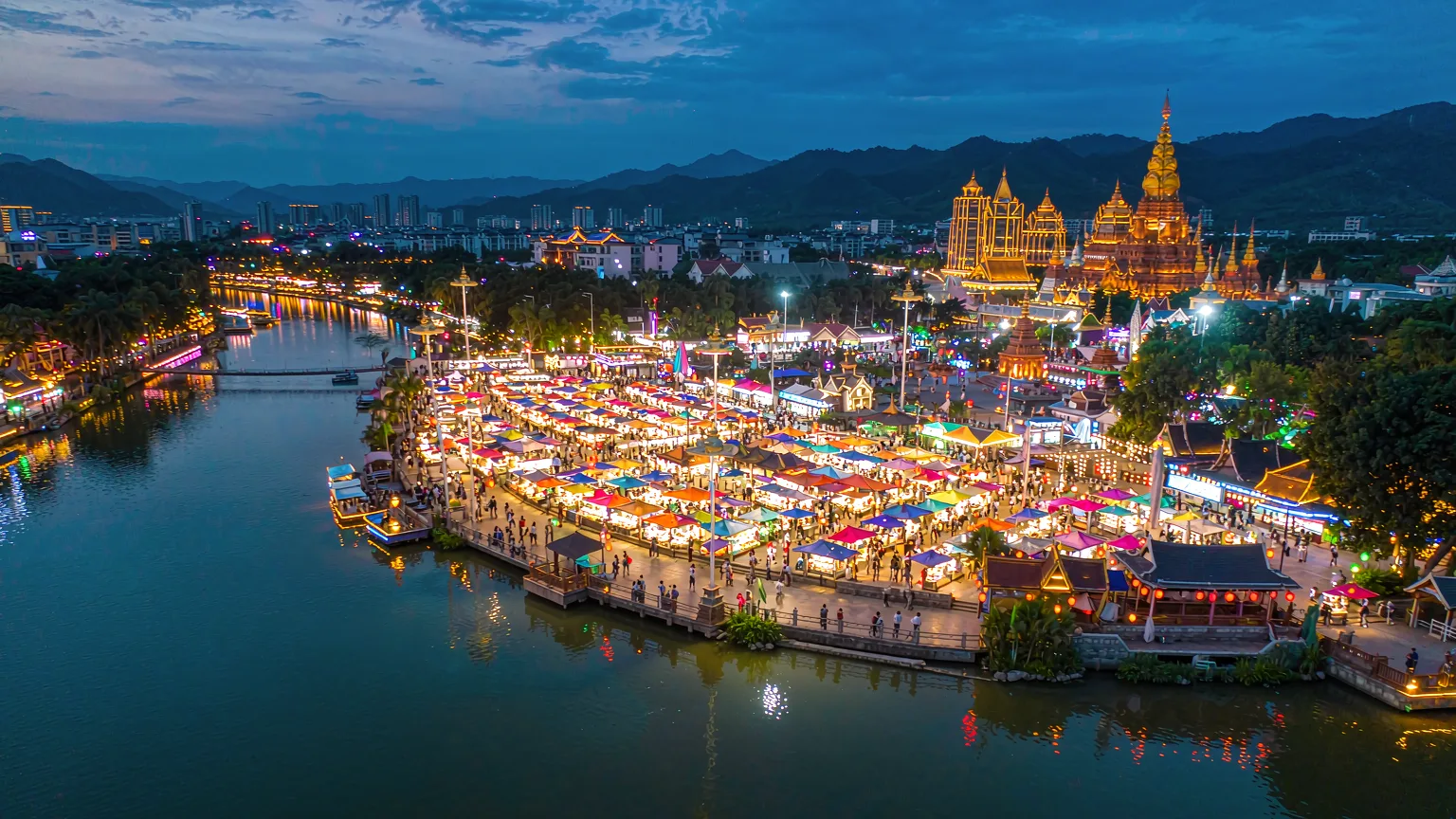
| D1 19:30 | The Mekong Starlight Night Market: First Supper of the Trip |
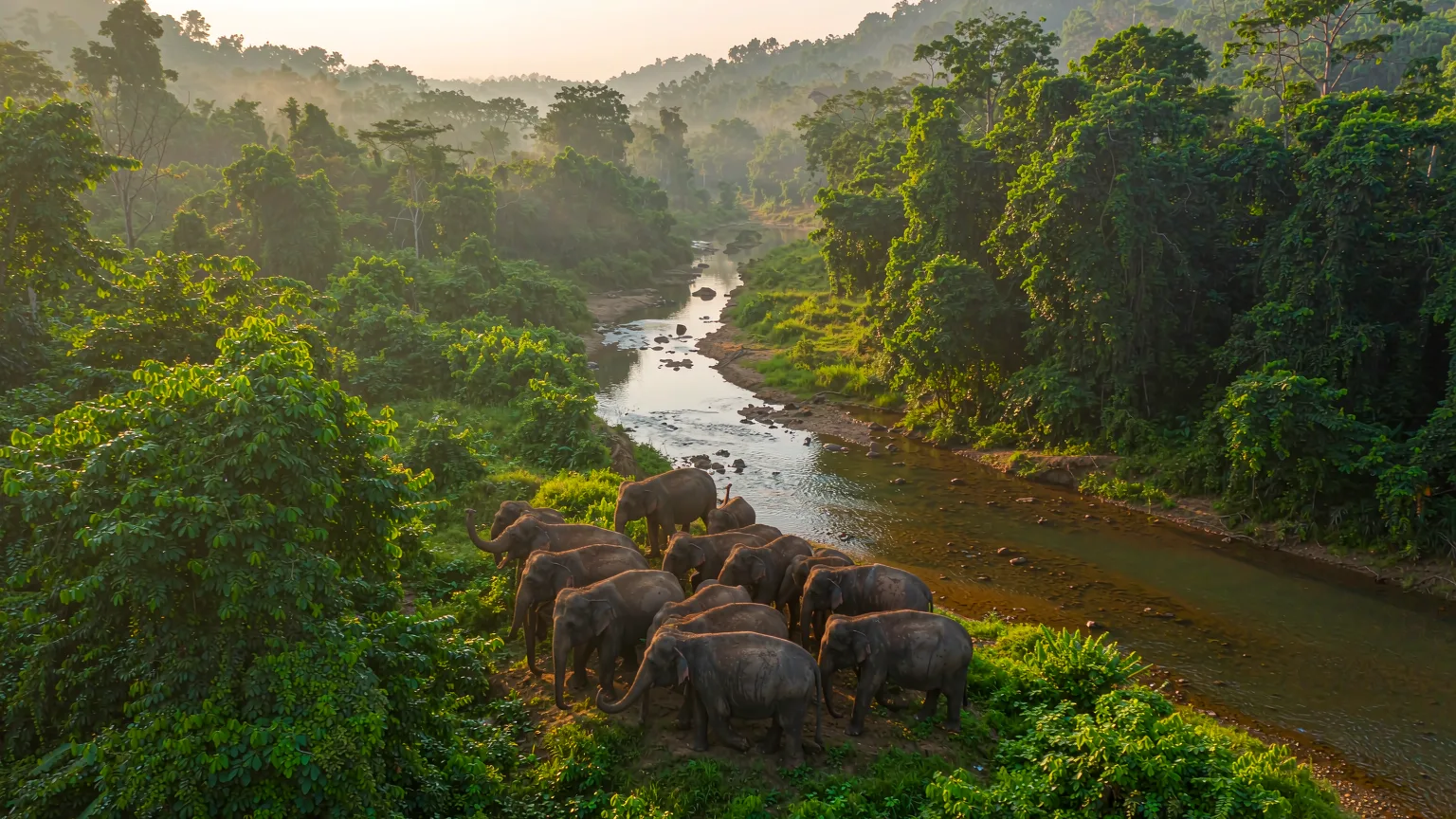
| D2 08:30 | Wild Elephant Valley: Rainforest and Asian Elephants |
| D2 15:00 | Xishuangbanna Primitive Forest Park: The Peacock Flights |
| D3 09:00 | Jinuo Mountain Village: Ethnography at the Rainforest Edge |
| D4 08:30 | The Garden's West Section and Menglun Town: A Flood of Species |
| D5 08:00 | The Garden's East Section: Green Stone Forest and Gully Rainforest |
| D5 20:00 | Night Walk in the Garden: Torches and Nocturnal Life |
| D6 10:00 | Dai Park: The Splash and Five Dai Villages |
| D6 15:00 | Manchunman Temple and a Dai Home Visit |
| D7 08:00 | Wangtianshu Scenic Area: Seventy-Meter Giants and the Canopy Walk |
| D8 09:30 | The Chief Buddhist Temple, Manting Park and the Museum: The Urban Close |
| D8 19:00 | The Mekong Starlight Night Market: One Last Paruta |
The route, stop by stop
Gaozhuang Xishuangjing: Arrival Day and the City Map
Arrive in the afternoon with one task: understand how Gaozhuang sits against the Lancang. Circle the pagoda, walk the fair streets, take the viewing deck at dusk for the whole town, and eat the first Dai dinner at the Starlight Market.
Schedule nothing requiring an early alarm; the next six days ride on tonight's sleep. The market doubles as provisioning: waterproof pouches, repellent, sunscreen, all cheaper at town supermarkets.
The Mekong Starlight Night Market: First Supper of the Trip
The arrival night opens properly at the Starlight Market: lemongrass grilled fish, pounded chicken feet and a cup of pressed sugarcane on a riverside plastic stool, the trip's taste baseline set on this first evening.
The market doubles as provisioning: waterproof pouches, repellent and sunscreen bought at town supermarkets. Crowds peak after 8 pm, so eat first and browse after.
Wild Elephant Valley: Rainforest and Asian Elephants
Day two is rainforest lesson one. The raised corridor runs over two kilometers at canopy height, dawn peak hours for herds at the salt licks, quiet patience at the observation points the only technique, with the museum adding elephant background and the forest supplying buttress roots, stranglers and cauliflory.
Recover in town after lunch. Elephant sightings are probability, so book the walkway itself as the certain yield and the mood stays right. Dai dinner at Gaozhuang, early bed.
Xishuangbanna Primitive Forest Park: The Peacock Flights
An easy add-on on the route back from the elephant valley. The peacock flights are the park's signature, hundreds of birds gliding down the ridge in several daily sessions, while the gully trail and the Aini village complete the ethnographic and botanical threads.
Lighter than the valley, two or three hours suffices. Recover in town by dusk, banking strength for the Jinuo hills and the week's rhythm.
Jinuo Mountain Village: Ethnography at the Rainforest Edge
Day three downshifts up the Jinuo hills. The drum legend, dress and food come clear through guide and performance, while the tea-plot and rainforest-edge trail stitches yesterday's botany to today's ethnography. The hills rank among the ancient Six Great Tea Mountains, so taste politely in the village.
Back to town by afternoon, filling in the Gaozhuang lanes left unexplored. Day three's load stays deliberately light, the week's first recovery slot.
The Garden's West Section and Menglun Town: A Flood of Species
Day four starts the garden's two-day dive, tonight at Menglun. The morning runs the classic west: giant lilies, the oddities garden, palms, with guide or audio as the core equipment, names and stories making the green density legible.
Pick two themed gardens for a deeper afternoon read, then sunset by the Luosuo. Sleeping at Menglun means entering the east section ahead of the crowds tomorrow, with night-walk bookings within reach.
The Garden's East Section: Green Stone Forest and Gully Rainforest
Sleeping at Menglun buys the early hour: into the east at eight, the Green Stone Forest draping lianas over karst pinnacles, the gully rainforest unfolding along a Luosuo tributary, buttress roots and stranglers denser than the west, the main line done by late morning.
Rest at the garden restaurant at noon, keeping the afternoon blank or backfilling missed west gardens. The climbing is real, poles and knee support earning their place, lines chosen by fitness.
Night Walk in the Garden: Torches and Nocturnal Life
The night walk crowns the garden's two-day dive: a guide leading torches to stick insects, frogs, nocturnal insects and owls, the system that only clocks in after the garden's lights go out.
Book ahead, sessions limited, and the Menglun overnight makes it seamless. Sleep early after, since tomorrow moves to Dai Park with a drive and a splash session to catch.
Dai Park: The Splash and Five Dai Villages
Day six turns to the human line, reaching Ganlanba before noon. Watch or join an afternoon splash session, then walk Manchunman Temple and the five villages, stilted houses, talipot palms and courtyard frangipani forming Banna's lived ground color.
If both earlier nights ran in town, tonight can sleep in an in-park Dai guesthouse; otherwise return by dusk. Supper and market restocking at Gaozhuang prepare tomorrow's long drive to Wangtianshu.
Manchunman Temple and a Dai Home Visit
The post-splash afternoon goes deeper into the village: Manchunman Temple's golden roofs and murals among coconuts and talipot palms, then a booked home visit upstairs over smoked tea, the host's family story and the stilt house's logic, farm tools in the open floor below.
Shoes off entering and never step the threshold; the tea and fruit are the host's courtesy, and buying a little of their tea or fruit at leaving is the best return gift.
Wangtianshu Scenic Area: Seventy-Meter Giants and the Canopy Walk
Day seven holds the trip's only long haul, about three hours toward Mengla. The wangtianshu is a dipterocarp giant, the canopy walk strung tens of meters up between crowns with the forest's three strata unfolding beneath, while the height-averse take the ground gully trail and look up instead.
Take a boat on the Nanla inside the site and read the rainforest once more from water level. Return to Jinghong by afternoon, closing on the temple by night or a last market lap, the week's memory filed here.
The Chief Buddhist Temple, Manting Park and the Museum: The Urban Close
If day seven went to Wangtianshu with a Mengla night, the eighth morning closes in town: chanting at the Chief Buddhist Temple, the white pagoda and Release Lake at Manting, then the Ethnic Museum in the afternoon stringing seven days of forest, villages and faith into one line.
This is the narrative loop: started in the night market's smoke, understood in the museum's display cases. Sit an hour by the river before packing, for deep travel should end slowly.
The Mekong Starlight Night Market: One Last Paruta
The last stop returns to the start: Gaozhuang's Starlight Market. One bowl of paruta, the remaining souvenirs, a while on the steps beneath the pagoda. Seven days of Banna is not a sight list but a set of concrete memories, elephant tracks, giant lily pads, smoked tea in a village, wind on the canopy.
A deep trip passes review by the confidence you leave with: by now you should answer why the rainforest grew this way, why Dai houses stand on stilts, why the border villages stay quiet. If you can, the seven days paid their fare.
| Getting around |
|
| Budget | Entries total about RMB 500-650, car share across seven days RMB 700-1100; the week with food and lodging runs RMB 3500-5000 pp. |
| Best time | November to April is the prime dry season, and a week routes around the rains; mid-April's festival is a special window needing a month's lead on bookings. |
FAQs
How do I choose between the seven-day and five-day versions?
By depth preference: the five-day version covers the essence, while seven adds the garden's two-day dive, the border village and Wangtianshu. First visit and short on time, take five; obsessed with forest and culture, or truly wanting slowness, take seven. Seven's daily intensity actually runs lower than five's, the slack is real.
How many times does the luggage move across seven days?
Ideally twice: pack once leaving Jinghong for Menglun, again when moving on. Never schedule a main event on a moving day, the commute is load enough. Confirm each night's room a day ahead, both Menglun and Gaozhuang run tight in season.
Is a solo seven days realistic? Does it cost much more?
Realistic, with tourist infrastructure friendly to solos. The cost premium concentrates in car legs, where ride-share thins it sharply, plus a twenty to thirty percent single-room gap. Safety is mature on main lines, just avoid remote riverbanks and mountain roads at night. Solo travelers actually chat deeper with guides and craftspeople.
Which three expenses should never be cut across seven days?
The garden's guiding including night walks, proper hired or shared cars, and mosquito-and-sun kit. The first decides whether you see landscaping or a rainforest system, the second carries the safety margin on mountain and long roads, the third decides whether the week is play or endurance. Tickets and meals are the parts to stop agonizing over.